There’s a specific kind of moral vanity that shows up in small-town thrillers, and His & Hers leans into it with a grin that’s almost mean. Everyone is convinced they’re the decent one in the story. Everyone has a tidy explanation for why their choices were “necessary.” And everyone, at some point, uses love, loyalty, or grief as a permission slip.
The setup helps. Netflix’s limited series adaptation of Alice Feeney’s novel drops estranged spouses into the same murder case: Anna Andrews (Tessa Thompson), a reporter pulled back toward the town she’s tried to outgrow, and Detective Jack Harper (Jon Bernthal), who’s still living inside the mess they left behind. If you’ve watched all six episodes, you already know the show isn’t asking “Who’s the hero?” It’s asking, “Who gets to feel heroic?”
Selflessness Is the Show’s Favorite Disguise
People in His & Hers keep describing themselves as protectors. They’re shielding someone, sparing someone, carrying something so another person doesn’t have to. It sounds noble until you notice how often the “protection” matches their personal comfort.
That’s the trick. A lot of harm in this story comes from choices that look generous from the outside. The characters are not lying every time they call themselves selfless. They’re editing. They’re curating a version of events where their motives stay flattering.
Anna Wants Redemption More Than She Wants Truth
Anna’s self-image is complicated, which makes her interesting and occasionally exhausting. She tells herself she’s chasing the story because she cares about justice, about the victim, about the truth getting buried under small-town politeness. And yes, she does care.
But Anna is also chasing a version of herself who still feels clean.
When she returns to cover the case, she’s not only confronting a murder. She’s confronting the life she abandoned, the people she outgrew, and the history she tried to pack away and label “handled.” If she solves the case, she gets to be competent again. If she exposes the rot, she gets to claim moral distance from it.
Jack’s “Duty” Comes With a Side of Control

Jack is the type of guy who believes in doing the right thing, and also believes he should be the one defining what “right” looks like. Jon Bernthal plays him with that familiar tension: tenderness right next to threat, like the tenderness is fighting for space.
Jack frames himself as the steady one. The cop. The adult. The person who keeps emotion out of it so the job gets done. That can read as selfless, especially when Anna’s approach feels impulsive.
But Jack’s suspicion of Anna isn’t pure professionalism. It’s personal. Part of it is fear, part of it is resentment, and part of it is the need to stay in control of the narrative, including the narrative of their marriage. When he blocks her, challenges her, or tries to steer her away from certain questions, he can call it “protecting the investigation.” He can also call it “protecting her.” The show makes room for a third option: protecting himself.
Friendship in This Town Is a Long-Term Debt
The Rachel Hopkins murder opens a door onto a whole ecosystem of old friendships: Zoe, Helen, and the social gravity of who stayed, who left, and who never got forgiven for either.
People talk about loyalty like it’s a virtue here, but it functions more like leverage. If you grew up together, you’re supposed to protect each other. If you know the secrets, you’re supposed to keep them and if you benefited from the group, you owe the group.
Lexy Weaponizes Vulnerability and Calls It Justice
Lexy, who is also Catherine Kelly, is a walking example of how easily victimhood can be turned into a blade. She has real pain. She also has ambition, envy, and rage that has had time to marinate.
Her version of selflessness is the most theatrical. She positions herself as someone who deserves restoration. She frames her moves as balancing the scales. When she manipulates, withholds, or escalates, she can tell herself she’s correcting a wrong.
The Mothers Are Not Saints, and That’s the Whole Nightmare
If you’ve finished the series, you know it eventually asks you to stare straight at the darkest version of “selfless” love. The story’s late reveal turns maternal devotion into something feral, something that can justify almost anything.
This is where His & Hers gets under your skin. Because in real life, we celebrate sacrifice. We praise parents who “would do anything” for their kids. We treat that as the highest form of goodness.
The show asks a blunt follow-up: what does “anything” include?
The Audience Gets Tempted to Pick a “Good” Side
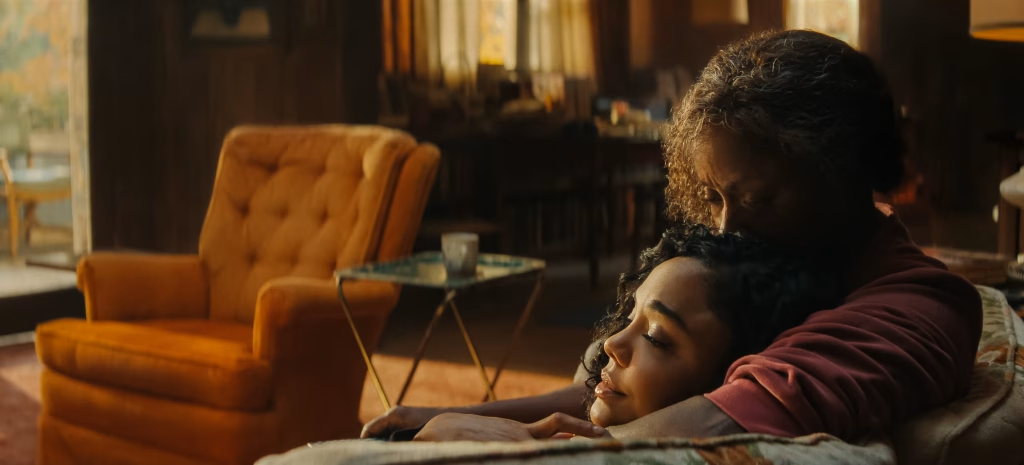
One of the smartest things His & Hers does is bait you into team selection. Are you an Anna person or a Jack person? Are you rooting for truth or stability and are you craving justice or closure?
The show knows that picking a side feels like a moral act. It makes you feel discerning, like you’ve identified the decent one. Then it keeps muddying the water until you realize your certainty was part of the fun.
The Real Villain Is Self-Image
The show’s bleak little thesis is that selflessness often comes with conditions. It’s offered to the people we’ve chosen, in the way that keeps us comfortable, and at the moment that protects our identity.
Anna wants to be the person who tells the truth, but she also wants to feel absolved. Jack wants to be the person who keeps people safe, but he also wants control. The town wants to be loyal, but it also wants to stay unaccountable.
That’s why His & Hers lingers after the credits. It isn’t only a murder mystery. It’s a series about how quickly “I did it for you” turns into “I did it for me,” and how rarely anyone notices the difference until it’s far too late.

Rachel Sikkema is a New Zealand-based writer and creative entrepreneur who explores the intersection of film, culture, and modern relationships. Through her articles, she examines how stories shape the way we connect, love and see ourselves – all for God’s glory. When she’s not writing about film and television, she’s watching Dexter and The White Lotus for the third time.