The smartest thing Top Gun: Maverick does with nostalgia is let it hurt.
That sounds obvious now, after the movie became the rare legacy sequel people actually wanted to rewatch. Before release, though, the whole thing looked risky. Tom Cruise back on a motorcycle. The old jacket. The old music. Another decades-later sequel asking audiences to clap because they recognized a logo.
Then the movie opens, and it has the nerve to take itself seriously.
The jets still gleam. The Navy still looks like a recruitment poster shot by someone with a weakness for sunset. Maverick still smiles like consequences are a rumor. But the film never treats the past as a cheap victory lap. Goose is gone. Iceman is older. Maverick has spent his life flying fast enough to avoid becoming a full adult.
The new characters work because they walk into that emotional weather. They are fresh blood, but they are also surrounded by ghosts.
That is the balance. Top Gun: Maverick brings the old feeling back, then gives the younger pilots enough pressure to make the sequel feel alive on its own.
Maverick Stays Legendary but Wounded
Pete “Maverick” Mitchell could have swallowed this whole movie.
A character like that is dangerous in a legacy sequel. Give him too much power and everyone else becomes decorative. Give him too little and fans wonder why they came back. The film threads that needle by making Maverick brilliant in the air and stuck everywhere else.
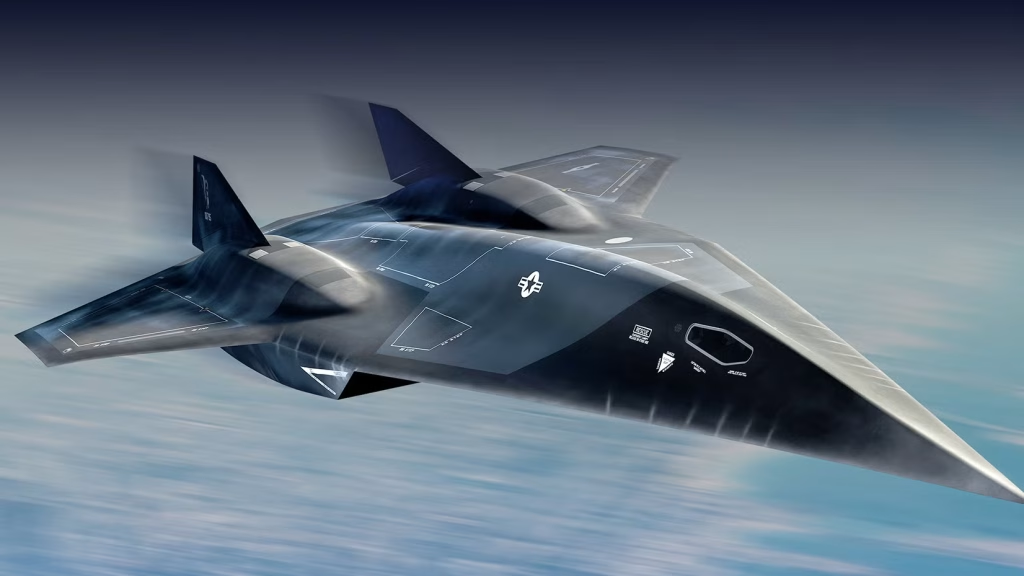
Tom Cruise gets all the movie-star framing you expect. He stands beside aircraft like they are old drinking buddies. He rides through golden light. He pushes the Darkstar past Mach 10 because someone told him the program was being shut down, and apparently that counts as emotional regulation in Maverick’s world.
But the movie keeps puncturing the myth.
After the test flight, he ends up dusty and confused in a diner while a kid tells him where he landed. It is funny, sure. It also says something sharp about him. Maverick can bend physics, but the world has moved on around him. The Navy sees him as useful only when disaster needs a maniac with experience.
That gives the younger pilots room to matter. They are not just students learning from a flawless icon. They are people staring at a living legend who also looks like a warning.
Rooster Gives the Past a Face
Rooster is the sequel’s best bridge between old and new.
Miles Teller walks in carrying Goose’s mustache, Goose’s shadow, and a grudge that has been aging for years. The movie knows the resemblance matters, but it avoids making Rooster a Goose tribute act. He has his own rhythm. He is guarded, slow to trust, and careful in the cockpit in a way Maverick finds maddening.
That caution gives him texture.
The old film’s tragedy comes back through Rooster rather than a speech. Maverick does not need to tell us he feels guilty every five minutes. We see it when he looks at Rooster across the room. We see it during the piano scene, where “Great Balls of Fire” turns from a fun callback into a tiny emotional ambush.
That scene could have been pure nostalgia candy. Instead, Maverick watches Rooster sing and seems to see two men at once. Goose, loud and alive in memory. Rooster, grown and angry in front of him. Cruise barely moves. The scene trusts his face, which is usually a good idea.
Rooster makes the original movie matter because he forces Maverick to answer for it.
The New Pilots Bring Their Own Temperature

The younger pilots could have felt like a checklist. One rival, one calm professional, one awkward sweet guy, a few extra helmets for the mission. The film avoids that flatness by giving each pilot a quick, clean flavor.
Hangman arrives like confidence learned to chew gum. Glen Powell plays him with a grin so bright it should probably require clearance. He is annoying in exactly the right way. You believe he is talented. You also believe several people have wanted to shove him into a locker.
Phoenix brings a cooler energy. Monica Barbaro makes her sharp without overplaying it. She watches the room, sizes up the men around her, and wastes very little oxygen trying to prove she belongs. That calm makes her stand out in a squad full of posturing.
Bob is the secret little gift. Lewis Pullman gives him a nervous, gentle awkwardness that makes him instantly memorable. He looks like the one guy who read every manual and actually enjoyed the appendices. In a movie full of swagger, that kind of quiet competence feels oddly refreshing.
Payback and Fanboy help fill the squadron with enough movement and banter that the group feels like a real class of elite pilots. They do not all need tragic backstories. Sometimes a smirk, a look, or the way someone reacts under G-force does the work.
The movie sketches fast, but the sketches stick.
Nostalgia Becomes a Test for the New Cast
The sequel never hands the old movie to the new characters like a trophy. It makes them earn space beside it.
That is why the training scenes work. Maverick teaches, but the younger pilots push back. They roll their eyes. They question him. They compete with each other. Rooster carries personal anger. Hangman sees weakness and pokes it because that is apparently his love language.
The old Maverick style becomes a challenge for the new generation.
He wants them to fly with instinct, but instinct means different things for each pilot. For Maverick, it means trusting the part of himself that reacts faster than fear. For Rooster, it means moving before caution traps him. For Hangman, it means learning that being the best pilot in the room has limited value when someone else needs saving.
The film uses nostalgia as pressure rather than decoration. The old ways matter only if they help these people survive.
That is much smarter than a movie full of winks. A lesser sequel would keep nudging the audience every time an old image appeared. Remember this? Remember that? Remember liking movies in 1986?
Maverick brings the feeling back, then puts it to work.
Penny Keeps Maverick in the Present
Jennifer Connelly’s Penny is easy to underrate because she sits outside the main pilot drama, but she helps the movie’s balance a lot.
She gives Maverick a present tense.
Without Penny, he could become entirely trapped between Goose’s death and Rooster’s anger. Penny reminds us that Maverick still has a life available to him if he stops treating departure as a personality. Their scenes have an adult ease that the movie needs. She likes him, but she has no interest in worshipping him.
That little sailing scene does more than people give it credit for. Maverick is suddenly out of his element. Penny knows what she is doing. He has to listen, adjust, and look mildly ridiculous in front of someone who sees through him.
For once, the cool guy has to learn the ropes. Literally.
Penny also helps the ending feel softer. When Maverick flies off with her, the image has plenty of gloss, maybe even too much. Still, it lands because the movie has spent time showing that he needs more than another mission. He needs somewhere to come back to.
Iceman Gives the Past Grace
Val Kilmer’s return as Iceman gives the film its most delicate piece of nostalgia.
The scene works because it has restraint. The movie does not turn Iceman into a cameo machine. He is not there to wink at the audience or repeat old lines for applause. He is there because Maverick needs someone who knew him before the grief hardened into habit.
Iceman’s role in the story is beautiful in a quiet way. He has protected Maverick’s career for years, which says so much about how their relationship changed after the original film. The old rival became the person keeping Maverick from being fully discarded.
That changes how the audience sees both men.
Kilmer’s presence carries real-life weight, and the film handles it with care. The scene lets silence do most of the work. Cruise drops the big grin. Maverick looks small, frightened, and almost boyish. It is one of the few times the movie slows all the way down.
The past feels alive there, not because the movie copied an old beat, but because time has clearly passed.
The Final Mission Belongs to Both Generations
The ending works because the mission needs Maverick and the new pilots.
Maverick proves the run can be done. Rooster hits the target. Phoenix, Bob, Payback, and Fanboy carry their pieces of the attack. Hangman gets the late save, which is both heroic and hilariously on-brand. The whole thing becomes a relay between old instinct and new trust.
That is the payoff the movie has been building.
Maverick cannot complete the emotional mission alone. Rooster cannot heal the past alone. The younger pilots cannot survive by swagger alone. Everyone has to give up a little control.
The F-14 escape is where the nostalgia becomes almost absurd, in a fun way. Maverick and Rooster stealing the old jet from the original era should feel silly. It does feel silly. The movie simply makes the silliness useful. Maverick’s past becomes the thing that might get them home.
By then, the film has earned the grin.
The Sequel Makes Room Without Surrendering the Myth
The reason Top Gun: Maverick balances old and new so well is that it respects both sides.
It lets Maverick remain magnetic. It also lets him be wrong, afraid, guilty, and lonely. It brings back Goose, Iceman, the music, the bar energy, the beach-body nonsense, and the jets screaming through impossible light. Then it gives Rooster, Hangman, Phoenix, Bob, Payback, and Fanboy enough space to make the mission feel shared.
That is the rare legacy sequel trick.
The movie never acts embarrassed by the old Top Gun. It also refuses to preserve it in glass. The past has consequences. The new characters inherit those consequences whether they asked for them or not.
Rooster carries Goose’s absence. Hangman turns old-school pilot ego into something brighter and more obnoxious. Phoenix gives the squad a steadier spine. Bob quietly becomes the audience’s favorite nervous genius. Penny pulls Maverick toward a future that involves more than another runway.
The final feeling is generous. Fans get the rush of recognition, but the movie avoids becoming trapped by it. New characters arrive with enough bite to keep the sequel from feeling like a tribute concert.
Maverick looks backward with affection. Then it banks hard into the present.
That is why it flies.

Rachel Sikkema is a New Zealand-based writer and creative entrepreneur who explores the intersection of film, culture, and modern relationships. Through her articles, she examines how stories shape the way we connect, love and see ourselves – all for God’s glory. When she’s not writing about film and television, she’s watching Dexter and The White Lotus for the third time.