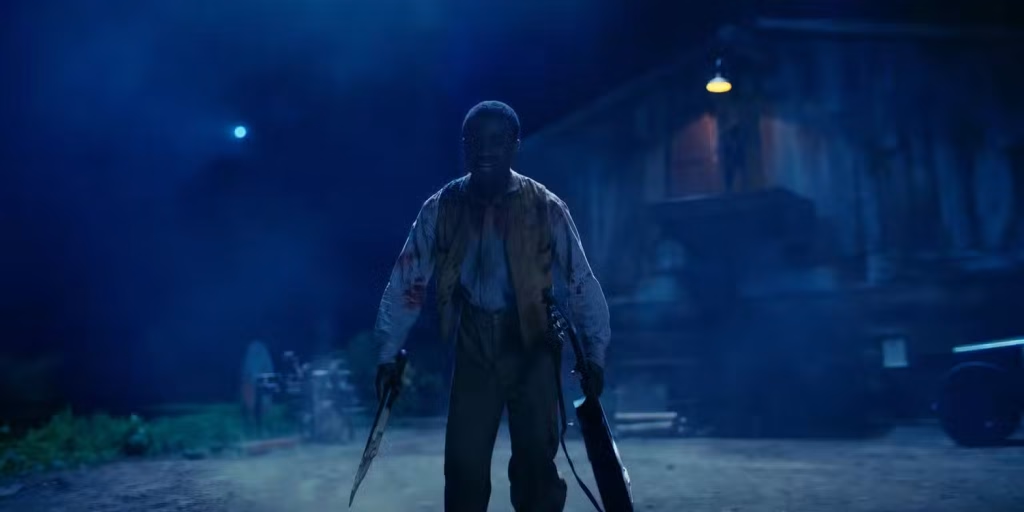
Sammie Moore walking into that church with blood on his shirt and a broken guitar in his hands is one of those openings that feels almost rude in hindsight. Ryan Coogler basically shows you the wound before he shows you the knife.
The first image of Sinners does plenty of horror-movie work. A young man staggers into a sacred space looking like he has crawled out of hell. His father, Jedidiah, sees him and understands that the night has gone very, very wrong. There is fear in the room, but also recognition. Sammie has crossed a line his father warned him about, and the proof is sitting right there in his hands.
That guitar matters immediately. Miles Caton plays Sammie like someone still half inside the music and half inside the nightmare. He looks shaken, exhausted, and strangely alive. The kind of alive that comes after a person survives something they will spend the rest of their life trying to translate.
The opening scene is a flash-forward, sure. Plenty of movies use that trick. Sinners uses it with more bite. It tells us that the film may have Michael B. Jordan playing two magnetic brothers, Smoke and Stack, but the soul of the story belongs to Sammie.
The Church Turns the Whole Movie Into a Confession
Starting in the church gives Sinners an immediate spiritual charge. Coogler knows exactly what that setting brings with it. Pews, scripture, stained silence, a preacher father, a son who has been somewhere he probably should have avoided.
The church is also the one place Sammie should be able to return. That makes his entrance feel loaded with shame and relief at the same time. He has survived, but survival has brought him back to judgment. His body carries the evidence. His guitar carries the rest.
This is where the film plants its first argument about sin. The word hangs over everything, but Coogler treats it with suspicion. Sammie has been told that blues music is dangerous, that the world outside the church can pull him away from God, that certain pleasures come with a cost. The opening does not simply prove his father right. Too easy. Too dull.
Instead, it asks a sharper question. What if the thing everyone calls sinful is also the thing that gives Sammie his voice?
That tension gives the opening its power. Sammie has blood on him because horror found him, but he has the guitar because music found him too.
The Broken Guitar Is the Whole Movie in One Object
The guitar in Sammie’s hands looks less like a prop and more like a relic. It has been through violence. It has been held too tightly. It has survived in pieces, which feels about right for a movie obsessed with inheritance.
Before we know anything about Smoke and Stack’s homecoming, Club Juke, or Remmick’s vampire hunger, we know this instrument will matter. Sammie clings to it like a witness. Maybe even like a body.
That is a perfect choice because Sinners keeps treating music as something physical. Songs leave marks. They call people in. They wake up history. Sammie’s blues performance later in the juke joint opens the film into something wild and ancestral, but the first scene has already told us the price of that gift.
The guitar also complicates Sammie’s relationship with family. He wants to play. His father wants to protect him. Smoke and Stack give him space to be bold, but their world drags him toward danger. The instrument sits right between those forces.
It is freedom, temptation, family history, trauma, and survival. A lot for six strings to carry, frankly, but the movie makes it work.
Sammie Enters as a Survivor Before We Know Him as a Musician

One smart thing about the opening is that it denies us the pleasure of meeting Sammie clean. We first see him after the damage. That changes how we watch every earlier scene that follows.
When Sammie later lights up around music, there is already dread under it. When Smoke and Stack pull him into their plans, the opening sits in the back of the mind like a warning bell. When the juke joint starts to feel warm and possible, we remember the church doorway and the blood.
That structure gives the movie a haunted shape. The night has already ended somewhere terrible. The fun comes with a shadow attached.
Miles Caton benefits from that setup because Sammie never feels like a simple innocent. He has sweetness, yes. He has nerves. He has the preacher’s-son energy of someone who has heard every warning twice. But the opening gives him a future scar before the story even begins. We watch the rest of the film looking for the moment that will make his face look like that.
It is a cruel little engine. Very effective.
The Scene Makes the Father and Son Conflict Hurt Early
Jedidiah’s role in the opening matters because he reacts as a father and a preacher at once. That is a rough combination for Sammie. One part of him sees his son in pain. Another part sees confirmation of everything he feared.
The film could have made him a flat scold. It chooses something more human. His fear comes from love, but love can still turn into a cage. Sammie needs more than safety. He needs a life large enough to hold his gift.
That is why the church scene hurts. Sammie returns to the place that raised him, yet he brings back something the church cannot easily contain. His music has brushed against death, community, desire, and the supernatural. His father’s world suddenly feels too narrow for what has happened to him.
Coogler loves that kind of pressure. He puts characters in rooms where history, family, and faith all start talking over one another. The opening scene is quiet compared with the movie’s later chaos, but it has that crowded feeling. Everyone in the room is carrying an argument.
The Horror Starts With Aftermath Instead of Attack
A lesser version of Sinners might have opened with a vampire kill. Fangs, screaming, blood splash, audience jolted into attention. Coogler goes for aftermath, which is much more interesting.
Aftermath makes the viewer lean in. We have questions before we have spectacle. What happened to Sammie? Why is the guitar broken? Who survived with him? Why does the church feel like refuge and courtroom at the same time?
The restraint also tells us what kind of horror film this wants to be. Sinners has gore and monsters, absolutely. It also has patience. It cares about the emotional residue after the violence. That first scene understands that fear can live in a person’s posture long after the immediate danger has passed.
Sammie standing there with the guitar says more than a monster reveal would have said. He looks like someone who has seen the truth behind a door that should have stayed closed.
The Opening Quietly Gives Away the Ending’s Emotional Shape
The beginning of Sinners prepares us for the film’s final movement without draining it of feeling. Sammie survives. That part becomes clear early. The suspense shifts from simple life-or-death stakes into something more delicate.
What will survival cost him?
That question matters more than whether he makes it out breathing. The opening shows a young man who has lived through the night, but it also shows someone changed. His gift has been tested. His innocence has been burned off. His connection to music has moved from dream to burden to calling.
By the time the film circles back to Sammie’s future, the opening feels even richer. The young man who enters the church will become someone who carries that night for decades. He will turn pain into music because that is what artists do when they get stuck with impossible memories. Lucky for everybody else. Brutal for him.
Why the First Scene Matters So Much

The opening scene in Sinners works because it gives the movie a pulse before it gives it a plot. Sammie enters with blood, silence, and a broken guitar, and suddenly the whole film has a question beating underneath it.
Can a person survive the thing that makes them who they are?
For Sammie, music is the answer and the danger. It pulls him away from the safety his father imagines for him. It pulls the vampires toward Club Juke. It also connects him to family, history, desire, grief, and a future he can actually claim.
That is why the church opening lingers. It shows Sammie caught between the sacred and the profane, but Coogler lets those categories blur until they feel almost useless. The blues may bring demons to the door, but it also brings the dead close enough to hear. It gives a frightened young man a voice big enough to outlive the night.
The movie begins after the damage because Sinners is fascinated by what remains. A son returns. A father looks at him. A guitar survives in pieces.
And somehow, even before the first real song, the whole room is already ringing.

Rachel Sikkema is a New Zealand-based writer and creative entrepreneur who explores the intersection of film, culture, and modern relationships. Through her articles, she examines how stories shape the way we connect, love and see ourselves – all for God’s glory. When she’s not writing about film and television, she’s watching Dexter and The White Lotus for the third time.