
Belinda Lindsey walking back into the White Lotus universe was never going to be a quiet thing. Natasha Rothwell’s wellness manager from season 1 carried one of the show’s rawest emotional arcs, and the way things ended with Tanya McQuoid felt like a wound the series had politely decided not to touch for a while. Season 3 changes that.
By bringing Belinda to Thailand and centering her in a story about wellness, money, and spiritual tourism. The show basically lets the ghost of season 1 drift through every massage room, gong ceremony, and mindfulness circle at this new resort. Thailand may be a fresh location, but Belinda turns it into a haunted house of unresolved labor, broken promises, and the messy afterlife of “self-care” as a luxury commodity.
How Belinda Ends up in Thailand
Season 3 plants Belinda at the Thai White Lotus through a staff exchange program. She’s sent from the Maui property to learn from the resort’s famed “holistic” offerings. On paper it looks like a promotion. She’s flown business class, given a beautiful villa, and, crucially, treated as a guest as much as an employee.
The twist is that Belinda never quite knows which side of the spa door she belongs on. She’s still expected to lead meditations, troubleshoot high-maintenance guests, and quietly fix problems nobody else wants to handle. The Thailand staff, including characters like Sritala (Lek Patravadi) and young employees played by Lalisa Manobal and Tayme Thapthimthong, welcome her in a warm but slightly wary way.
They see quickly that Belinda speaks fluent “rich people damage.” The hotel has plenty of that in stock thanks to families like the Ratliffs, couples like Rick (Walton Goggins) and Chelsea (Aimee Lou Wood), and a constellation of anxious Westerners trying to heal on a deadline.
Season 1’s Wound Lurking Under Every Sound Bath
You can feel the Tanya-shaped hole in Belinda’s life even before the show names it. When guests mention “this crazy heiress who died in Sicily,” Belinda’s face does the slightest flicker, and that’s all Rothwell needs. For viewers who remember season 1, every wellness sales pitch becomes a callback to that original betrayal. Belinda poured genuine care into Tanya only to be reduced to a line item on a balance sheet.
The Thai resort is obsessed with “transformative experiences,” “cleanses,” and death-adjacent rituals inspired by Eastern spirituality. Early on, Belinda attends a ceremony that frames suffering as something you can release if you just pay enough and breathe correctly. The irony is brutal. She is surrounded by Western guests trying to purge guilt and grief. She carries the emotional fallout of a woman who promised her a life-changing business deal and then sailed away into tragedy.
Watching Belinda Navigate the Ratliffs

The Ratliff family becomes Belinda’s main test case. Timothy Ratliff (Jason Isaacs) arrives as an exhausted patriarch trying to hold his family and company together. His wife and kids slide into the familiar White Lotus cocktail of boredom, resentment, and bad decisions.
Belinda is brought in to design a bespoke wellness “journey” for them, which quickly turns into unpaid emotional triage. Piper (Sarah Catherine Hook) in particular orbits Belinda in interesting ways. She’s young, restless, and stuck in a gilded cage. The season hints at a storyline where Belinda’s son Zion becomes a crucial figure in her coming-of-age. Some of that material famously stayed on the cutting room floor, including a big finale beat that would have made Piper’s arc more explicit, but even in the version we see, Piper’s search for autonomy mirrors Belinda’s own stalled dreams.
Thailand as a Spiritual Mirror
Choosing Thailand lets the show level up its critique of travel and wellness. Production filmed around Bangkok, Phuket, and Ko Samui, stitching together a resort that looks almost unreal in its beauty. The water is glassy, the temples glow at golden hour, and every yoga deck seems carved out of jungle mist.
Into that environment walks a group of wealthy Western guests searching for meaning through Thai rituals, Buddhist imagery, and detox packages that cost more than most people’s annual rent. The result is a season that keeps asking who gets to label something “healing,” and who gets hired to make that healing feel authentic.
The Finale, the Backlash, and What It Means for Belinda
By the time the finale hits its chaotic crescendo, Belinda is once again standing in a lobby watching wealthy lives implode. There are guns, secrets, and a genuinely tense shootout that turns the resort’s performative serenity into a crime scene. Viewers and critics were split on how satisfying that ending felt, with some calling the season too slow or the payoff underwhelming.
For Belinda, though, the finale lands in a painfully familiar place. She doesn’t get a big revenge monologue or a triumphant walkout. Instead, she gets something smaller and more in character: a choice about whether to stay in a system that keeps exploiting her gift for care, or finally bet on herself without a rich person’s promise hanging in the air.
Belinda as the Show’s Conscience
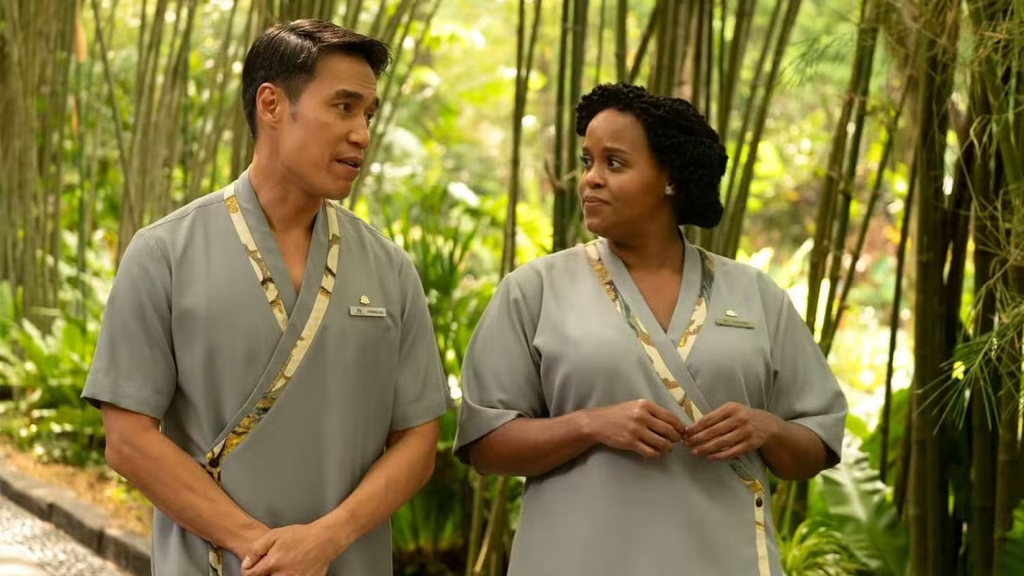
Across three seasons, The White Lotus has introduced a parade of unforgettable guests, from newlyweds to finance bros to emotionally radioactive heiresses. Belinda is the rare character who feels like the series’ conscience, even when she’s not given center stage.
Her return in Thailand links the whole anthology together. She reminds us that resorts remember. Staff remember. The money moves on to the next “transformational” destination, but the people who keep the place running carry the history.
Thailand has done what it was meant to do thematically: it’s turned the conversation toward death, spirituality, and the ways Westerners treat the East as a self-help buffet. Belinda’s presence makes that critique feel personal, not abstract. Tanya doesn’t just haunt her; she’s haunted by every guest who has ever mistaken her care for a limitless resource.

Rachel Sikkema is a New Zealand-based writer and creative entrepreneur who explores the intersection of film, culture, and modern relationships. Through her articles, she examines how stories shape the way we connect, love and see ourselves – all for God’s glory. When she’s not writing about film and television, she’s watching Dexter and The White Lotus for the third time.