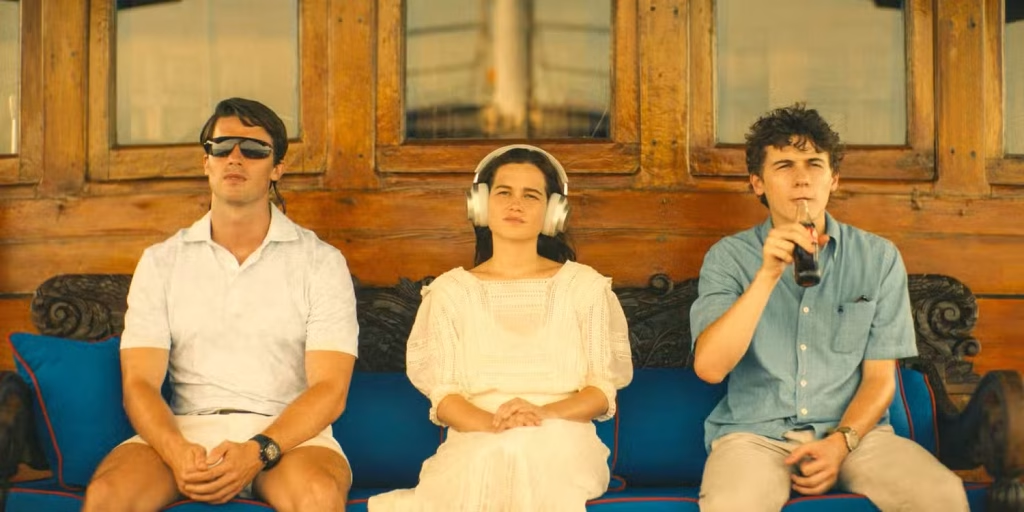
The third season of The White Lotus packs the Thai resort with stressed out adults pursuing “healing,” but some of the sharpest commentary belongs to the kids. Saxon, Piper, and Lochlan Ratliff arrive as background dressing for their wealthy parents Timothy (Jason Isaacs) and Victoria (Parker Posey), yet they quietly become one of the season’s most unsettling mirrors of Gen Z: extremely online, self aware, and already exhausted.
They are not there as comic relief. They are there as a case study in what happens when you grow up inside a brand your parents built, and then try to build one of your own on top of it.
The Ratliff Siblings Bring a New Version of Gen Z Into the Show
Earlier seasons sketched Gen Z through characters like Olivia and Portia, who acted as biting commentators on older generations while still mooching off them. In Thailand, Mike White takes the idea further. Saxon (Patrick Schwarzenegger), Piper (Sarah Catherine Hook), and Lochlan (Sam Nivola) are not just rolling their eyes at their parents, they are living inside the fallout of those adults’ choices.
They come from Durham, North Carolina, and they arrive at the White Lotus with the breezy entitlement of kids who have always had access to pools, flights, and emergency wire transfers. Yet the show keeps pushing in on their faces at moments when the all inclusive fantasy slips. They are already learning what it feels like when self invention runs into real limits.
Saxon Turns Confidence Into a Personal Brand
Saxon is technically a young businessman, but really he is playing the role of Young Businessman, complete with louder voice, broader stance, and a constant need to win. He spends much of the trip trying to impress Chelsea (Aimee Lou Wood) and establish dominance over Lochlan, using jokes, casual cruelty, and those slightly too intense bro-to-bro pep talks.
The full moon party becomes his worst nightmare, because it cracks the performance. In a haze of substances and bad decisions on the boat, boundaries blur with Chloe and with Lochlan. The encounter leaves Saxon rattled, especially once Chloe hints that more happened than he remembers.
This is where the self branding angle really lands. Saxon has curated a persona built on certainty and straightness, the kind of guy whose Instagram grid is gym selfies, flight pics, and “rise and grind” captions. The show hands him an experience that does not fit into that feed. His shame is not only about what he did. It is about the fear that he might not be the person he thought he was selling.
By the finale, he refuses a disturbing proposition from Chloe involving her and Greg (Jon Gries), then tries to reconnect with Chelsea in a more grounded way, taking her meditation advice and actually opening a book she recommends. It is not a full redemption arc, but it is a reset. For once, he chooses an action that does not boost the brand, it just protects his sanity.
Piper Tries to Brand Herself as Enlightened

Piper arrives with the clearest pitch of all three siblings. She is the spiritual one, the Ratliff child who wants to spend a year at a Thai monastery, renouncing comfort for meaning. Her parents view this as either a phase or a PR problem, depending on the scene, but Piper treats it like a mission statement.
The show gradually complicates that image. The monastery is not an aesthetic; it is a place with difficult food, rough conditions, and a schedule that leaves little room for curated introspection. Piper starts to flinch.
Lochlan Treats Rebellion as a Cry for Direction
Lochlan begins the season as the softest Ratliff, a high school senior with no clear plan and a strong instinct to please whoever is in front of him. He is the one most visibly uncomfortable with the family’s brittle energy. Instead of sharp sarcasm, he has nervous laughter.
That eagerness to please turns dangerous during the intense night on the boat with Chloe and Saxon. Under the influence, he initiates a sexual encounter with his brother. Later, when he tries to explain, he frames it as a twisted extension of his people pleaser tendencies. The scene is disturbing, but the psychology tracks. Lochlan has never learned how to say no, even to himself.
Their Self Branding Meets Very Old Disappointment

The Ratliff kids look modern, but their story is old. They arrive in Thailand with three competing pitches: Saxon the winner, Piper the seeker, Lochlan the nice one who will figure it out later. The resort tests each of those identities and reveals how flimsy they are when the people holding the money, secrets, and passports refuse to grow.
Gen Z often gets flattened into jokes about phones and slang, yet The White Lotus uses these siblings to explore a quieter kind of generational disappointment. These kids know the language of therapy and spirituality. They understand branding better than their parents do. They are still trapped in the same cycles of denial, betrayal, and emotional neglect that shaped Timothy and Victoria, only now with more data and less hope that anything truly different is coming.
The tragedy of Saxon, Piper, and Lochlan is not that they are shallow. It is that they are trying to improvise an adulthood in real time while the adults around them hide behind wellness slogans, financial maneuvering, and expensive “reset” trips.
The Ratliff kids leave the White Lotus the way most guests do, with tan lines, trauma, and no clear plan for changing their lives. Yet the season lingers on them because they embody the question the show keeps circling. If this is what privilege and awareness look like in your late teens and early twenties, what does it mean to grow up from here.

Rachel Sikkema is a New Zealand-based writer and creative entrepreneur who explores the intersection of film, culture, and modern relationships. Through her articles, she examines how stories shape the way we connect, love and see ourselves – all for God’s glory. When she’s not writing about film and television, she’s watching Dexter and The White Lotus for the third time.