By Rachel Sikkema
Published October 26, 2026

The ending of Netflix’s East of Eden gives Cal permission to live beyond the worst thing he has done. Aron is dead. Cathy has taken her own life. Adam is gravely ill after suffering strokes. At his father’s bedside, Cal receives one final word, “timshel,” which the story understands as “thou mayest.” Adam is telling his son that he still has the ability to choose who he becomes.
That is the answer behind the heartbreak. Cal’s cruelty has consequences he will carry for the rest of his life. His father’s blessing allows him to carry them without turning guilt into a permanent identity.
For a family that keeps dividing its children into the good one and the bad one, that small opening feels enormous. Someone finally stops handing down a verdict.
What Happens to Aron and Why Cal Blames Himself
Cal exposes the truth about their mother after Adam rejects the money he has earned. He takes Aron to Cathy’s brothel with the intention of hurting him. Aron subsequently joins the army and dies in France, leaving Cal convinced that he caused his brother’s death.
Cal understands exactly where to strike. Aron’s image of their mother belongs to the protected version of family life he has been allowed to believe in. Destroying that image briefly gives Cal power over the brother whose approval seems to come so easily.
There is something horribly recognisable about that impulse. Cal wants someone else to feel as injured as he does. For a moment, sharing the pain seems more satisfying than finding a way through it.
Then the consequences outrun his intentions.
The distinction matters when judging his responsibility. Cal deliberately wounds Aron. The war kills him. Cal collapses those events into a single accusation against himself because grief makes that terrible equation feel convincing. Admitting his cruelty is necessary. Believing that every later tragedy belongs entirely to him would leave very little room for living.
What Adam Means When He Says Timshel
Within East of Eden, “timshel” expresses the possibility of choosing a better action even after committing a terrible one. Lee develops this understanding through the biblical story of Cain and Abel. At the bedside, Adam gives that idea directly to Cal.
The word offers possibility. Cal still has work to do.
That is why the ending has more bite than a simple declaration of forgiveness. Forgiveness can sound like something another person gives you once. Choosing how to behave is a responsibility that returns tomorrow morning.
Cal has been frightened that his mother’s cruelty explains him completely. Once he recognises a capacity for harm in himself, he starts treating it as proof of an inherited fate. His reaction to Aron makes that fear feel justified.
Adam’s final word interrupts the conclusion Cal is drawing. He can acknowledge the resemblance without surrendering his future to it.
Joseph Zada’s Cal curling beside Christopher Abbott’s Adam makes the idea painfully physical. After so much desperate effort to earn a place in his father’s affections, Cal finally occupies that space. The son who tried to make himself valuable through money is allowed to be a frightened child beside his dad.
Why Adam’s Rejection Hurts So Much
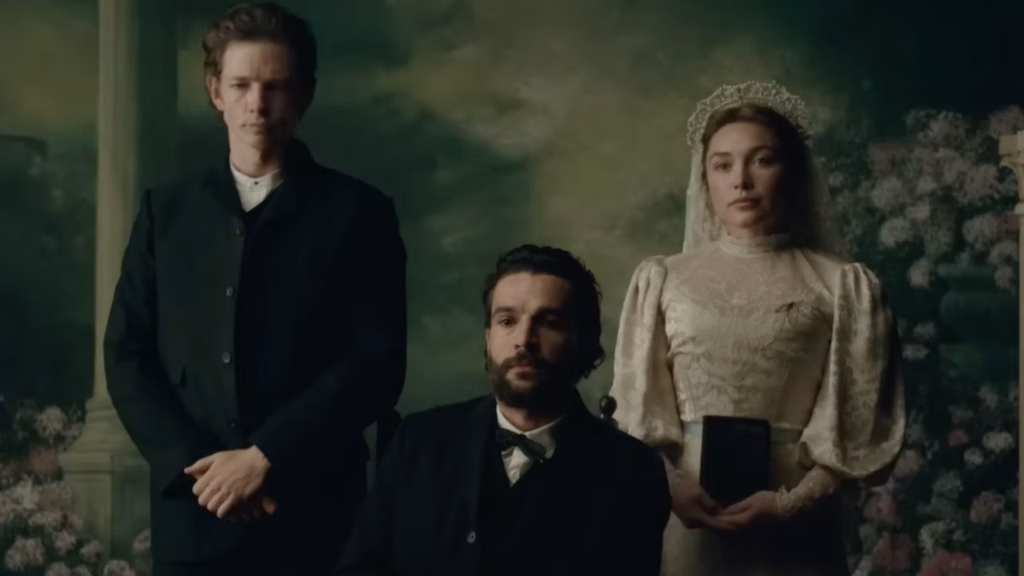
The rejected money carries two meanings. Adam sees profit connected to wartime suffering. Cal sees evidence that he can repair something his father has lost.
Both meanings exist in the same gift, which is why the scene hurts. Adam answers the financial question while Cal is effectively asking whether he deserves to be loved.
A parent can have a defensible moral objection and still handle a child’s vulnerability disastrously. Adam’s certainty leaves him poorly equipped to recognise the emotional risk Cal has taken. The boy has put his hope into something his father can count and hold. Watching it refused feels like watching himself refused.
That also complicates Adam’s position as the family’s supposedly good man. Good intentions offer limited comfort to the person waiting for affection.
The final blessing feels like Adam reaching, very late, for a language his son can actually hear. There is tenderness in that. There is also the ache of imagining how much might have changed if he had found it earlier.
What Cathy’s Final Visions Mean
Cathy’s final scenes bring her together with an imagined Charles and the image of her younger self. The return to the child reading Alice in Wonderland connects her adult devastation with implied childhood abuse. The precise incident remains unshown. Florence Pugh’s Cathy dies with that wounded child still present in her inner world.
I read this as the finale making room for the person who existed before Cathy learned to organise her life around control.
A child’s fear can remain alive inside an adult who frightens everyone else. That is an uncomfortable thought, especially when the adult has inflicted so much suffering. The scene asks us to hold those realities together.
Her victims still matter. So does the child she once was.
The imagined Charles gives her someone to address when ordinary human connection has become almost impossible. He belongs to the history she keeps carrying into the room. Their conversation feels like an exhausted mind returning to unfinished business.
The childhood imagery also gives her ending a terrible smallness. After all the power she has accumulated, her world contracts around an old wound. Control has failed to create safety.
Why Lee Makes the Ending Possible
Lee is the person who brings Cal back to Adam and presses for reconciliation. His intervention creates the opportunity for that final word.
That practical act deserves attention. A philosophy about freedom means very little to someone left alone with unbearable shame. Lee gives Cal another person to stand beside him while he faces it.
Hoon Lee’s character also exposes a weakness in the family’s obsession with inheritance. The Trasks spend so much energy worrying about what blood passes down. Meanwhile, someone who has chosen to care for them is doing the daily work that makes a different future imaginable.
I find that the most generous part of the ending. Cal’s opportunity to change grows out of a relationship. Someone stays close enough to insist that he still has one.
What the Ending Says About Escaping the Family Pattern

The title’s biblical echo places these characters outside paradise, where innocence has already been lost and people must live with knowledge of what they can do.
Cal reaches that position painfully. He knows he can be cruel. He knows love can be mixed with jealousy. Any decent life he builds will have to include that knowledge.
The finale leaves the future largely unwritten. Adam’s condition gives the reconciliation urgency, while the closing emotional emphasis rests on the contact father and son finally achieve. Cal receives an opening at the very moment he expects a sentence.
For me, that is where East of Eden earns its hope. Cal will never recover the version of his life in which he spared Aron that night. He can still become someone who responds differently the next time he is hurt.

Rachel Sikkema is a New Zealand-based writer and creative entrepreneur who explores the intersection of film, culture, and modern relationships. Through her articles, she examines how stories shape the way we connect, love and see ourselves – all for God’s glory. When she’s not writing about film and television, she’s watching Dexter and The White Lotus for the third time.