By Rachel Sikkema
Published October 19, 2026

Elizabeth Holmes may have hoped that spending time with her would make us reconsider the person we thought we knew. That is the most persuasive reading of her invitation to the filmmakers behind You Can See Everything. A notorious public figure offers access to her private life, with the possibility that familiarity will soften a judgment already formed.
Her precise expectations remain hers. But the invitation makes sense as a gamble on intimacy. Let people see enough ordinary life and perhaps the headline starts to feel inadequate. Perhaps they become uncomfortable with how easily they have reduced someone to it.
Nathan Fielder and Lance Oppenheim make that gamble an especially uneasy subject. Holmes opens the door 34 days before entering prison. Every moment of access arrives with a question attached. What does she hope this will change?
Ordinary Life Can Make a Powerful Argument
The public image of Elizabeth Holmes comes with unusually strong visual baggage. The black turtleneck. The carefully controlled presentation. A founder whose confidence helped sustain an extraordinary story about what her company could accomplish.
A documentary entering her private world immediately has something different to offer. Domestic surroundings give a public figure context beyond the familiar photographs. Time allows a person to become more specific.
That can be valuable. It can also be persuasive in ways that deserve attention.
Watching someone exist outside the circumstances that made them notorious encourages a particular kind of reassessment. We notice ordinary qualities and feel that we have discovered something the public account left out. The discovery belongs to us now. We may become protective of it.
I find that impulse fascinating because it flatters the viewer. Everyone else knows the headline. We have spent time with the person.
The difficulty is deciding what that extra knowledge actually changes. Someone can have a private life full of recognisable feelings while remaining responsible for serious harm. Familiarity gives us more to consider. It can also make us lose track of what we were considering in the first place.
Access Comes With Its Own Sales Pitch
There is an implied promise in allowing a camera close. Look how much I am willing to show you. Surely that willingness should count for something.
Sometimes it should. Access can expose contradictions that a controlled interview would keep safely out of reach. Staying with someone allows questions to develop. A filmmaker can return to an answer after its initial persuasiveness has worn off.
Yet access also gives the subject a way to demonstrate apparent openness before any difficult question has been resolved. The invitation itself begins doing reputational work.
Holmes’s decision is compelling because she had reason to know how firmly an image can take hold. A private portrait offers a chance to introduce competing impressions. Those impressions can be completely genuine and still serve her interests.
That distinction matters. Treating every ordinary gesture as a calculated trick would make the documentary impossible to engage with honestly. It would turn suspicion into a method that confirms itself forever.
The more interesting possibility is that Holmes could sincerely want to be understood while also wanting understanding to alter the consequences of how people see her. Those wishes can sit comfortably together. The audience has to decide where sympathy starts doing work that evidence should do.
Nathan Fielder Brings an Audience of His Own

Inviting Nathan Fielder into this situation adds a wonderfully awkward complication. His presence comes with expectations built by years of making viewers question the relationship between a person and a performance.
People familiar with his work are likely to watch for something beneath the apparent encounter. An uncomfortable pause may feel significant before we have worked out why. A straightforward answer can become suspicious simply because we expect another layer.
That gives Fielder considerable power before he asks anything.
It also makes the invitation harder to interpret. Did Holmes expect his scrutiny to lend credibility to the portrait? Did she think a sceptical filmmaker would be particularly convincing if he came to understand her? Those are useful questions precisely because the decision alone supplies no reliable answer.
There is an obvious appeal to winning over someone whose audience expects him to see through you. Their eventual sympathy could feel earned. A friendly interviewer offers comfort. A doubtful one offers the possibility of a more persuasive conversion.
Still, viewers should keep an eye on their own allegiance here. Fielder’s reputation can encourage us to treat him as the person who knows when a performance is happening. That is a lot of confidence to place in another participant’s judgment.
Being Misunderstood Is an Attractive Explanation
For someone living with public condemnation, the idea of being misunderstood must offer a powerful possibility. More time might help. More context might make the difference. Perhaps the right person could finally explain what everyone else keeps missing.
As an interpretation of Holmes’s invitation, that feels more plausible than assuming she expected one documentary to make everything disappear. A smaller shift would matter. Viewers could leave with doubts about their own certainty. They could start describing her with different words.
The promise of fuller understanding can also move attention toward the subject’s experience of being judged. We begin thinking about the burden of notoriety and the difficulty of living beneath it.
Meanwhile, the people affected by the conduct that created that notoriety may remain outside the room.
That is a problem of emphasis worth watching. A documentary has limited time even when it grants its central figure generous attention. Closeness to one person creates distance from others. The person whose face we keep studying can become the person whose feelings carry the most weight.
I would want any reassessment of Holmes to hold onto that imbalance. Her experience deserves examination. So does the ease with which access can make her experience feel like the whole story.
Showing Everything Still Leaves Someone Choosing
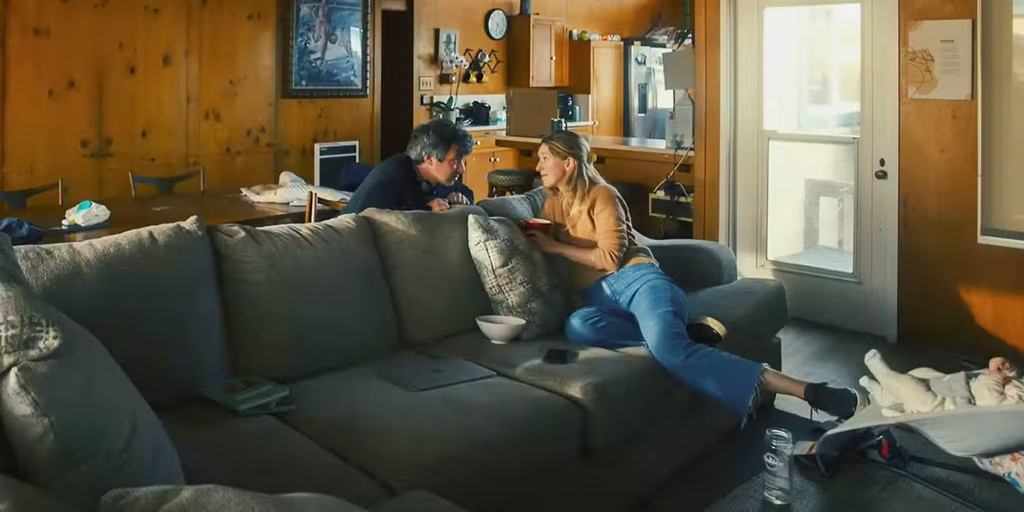
The title You Can See Everything contains a promise that documentary can never quite fulfil. A camera records a view. An edit arranges it. Even extensive access leaves a viewer dependent on decisions about what deserves attention.
Holmes could invite the cameras in. She could answer questions and offer parts of her life for observation. What those moments would mean once assembled remained another matter.
That is the risk at the centre of her choice. A moment offered as reassurance might produce doubt. An explanation meant to clarify could leave viewers studying the need to explain. The subject supplies material without owning every conclusion drawn from it.
The filmmakers face a related limit. They can make their interpretation persuasive while leaving the person herself partly unresolved. Audiences often want a final disclosure that will settle everything. Human behaviour rarely provides such tidy assistance.
My reading is that Holmes hoped proximity would make a difference. She offered the possibility of knowing her better, perhaps believing that a closer view would complicate the public verdict.
The question for us is what we do with that complication. We can recognise a person’s humanity and still examine the story she wants us to accept. We can feel the pull of intimacy without treating it as proof.
Holmes invited us to look longer. She gave us a reason to pay attention. What she could never guarantee was that attention would feel like forgiveness.

Rachel Sikkema is a New Zealand-based writer and creative entrepreneur who explores the intersection of film, culture, and modern relationships. Through her articles, she examines how stories shape the way we connect, love and see ourselves – all for God’s glory. When she’s not writing about film and television, she’s watching Dexter and The White Lotus for the third time.