Brad Pitt’s best choice in Heart of the Beast is giving Odin room to hold our attention. His performance as James Belmont makes the dog feel like someone worth watching closely. James looks to Odin and adjusts to him. We follow his lead. Their relationship becomes believable because Pitt seems interested in what his scene partner might do next.
That sounds straightforward until you remember how much attention Brad Pitt attracts simply by appearing on screen. Put him beside a German Shepherd and there are two extremely watchable faces competing for your eye. Pitt makes that competition useful. Odin can take a moment for himself while James’s response tells us something about the man beside him.
The dog gets plenty of the affection. Pitt does some of his best work making sure it lands.
Watch Where James Puts His Attention
There is a lovely example of the relationship in the woodland image of James sitting beside Odin. James turns towards him with his arms resting across his knees. Odin looks ahead. The two occupy the moment differently.
James appears to be checking in. Odin has something else on his mind.
That small difference gives the image life. A more insistently sentimental version would have them gazing into each other’s eyes until we understood exactly how moved we were supposed to feel. Here, James’s attention is enough. We can see where his concern goes without the dog having to return it on cue.
It also feels familiar. Spend time with an animal and you spend a surprising amount of it watching them do very little. You study their face while they consider a noise beyond your hearing. Occasionally they notice you staring and look faintly inconvenienced.
Pitt makes that attention a useful part of James’s character. This is a guarded man whose interest in Odin gives us access to him. We learn something by noticing whom he watches.
I find that more persuasive than a speech explaining the size of their bond. Affection can look quite ordinary from the outside. Someone keeps checking that the other one is all right.
A Movie Star Can Afford to Wait
Pitt brings an immediate sense of capability to James. The weathered clothes help. So does the ease with which he belongs beside a floatplane or carries himself through rough terrain. We accept him as someone with practical experience before he has explained much.
That leaves him room to be quiet.
A performer with less confidence in their screen presence might work harder to keep every moment occupied. Pitt can let our eyes move towards Odin. James remains present because we are aware of him watching and responding.
This is where the familiar idea of an animal “stealing” a film starts to feel a little unfair to the human actor. Sometimes the other performer has helped make the theft possible.
Odin is naturally compelling. He has alert ears and a face we want to read. Pitt gives those qualities somewhere to land dramatically. A glance becomes part of an exchange because James seems to register it.
The effect depends on patience. Allowing a beat to belong to the dog can make the next human response more interesting. We have had time to wonder what Odin is attending to. Now we want to know whether James has noticed it too.
There is pleasure in watching an actor trust that process. The scene has room to breathe, and the audience gets something to do.
Odin Gets to Remain a Dog

The temptation with an animal character is to make every look mean something reassuringly human. A tilt of the head becomes sympathy. A pause becomes a carefully considered moral position.
Anyone with a dog has probably committed this offence before breakfast.
Heart of the Beast benefits from the uncertainty in Odin’s reactions. He can be responsive without being completely readable. His attention may shift for reasons James understands better than we do, or for reasons James has to work out.
Pitt’s performance helps preserve that uncertainty. James has a relationship with Odin rather than a running explanation of him. The dog has habits and needs that exist beyond the demands of a particular emotional beat.
His prosthetic leg makes his physical experience especially difficult to overlook. Moving through the wilderness asks something of Odin’s body. James has to account for that as their journey continues.
The bond becomes more convincing when it contains practical judgment. How much can Odin manage? What does he need now? James’s concern has to turn into a decision.
Those questions keep the dog involved in the action. He has a presence that changes what James can do. Giving Odin the scene means taking that presence seriously.
Toughness Becomes More Interesting Beside Him
James’s military background gives his reserve an understandable shape. He is accustomed to functioning under pressure. Pitt carries that experience into the role without needing to make James constantly announce his competence.
Odin complicates it.
A man can look ready for whatever the wilderness throws at him and still be frightened for the animal at his side. That concern makes James’s toughness feel less settled. His ability to endure pain offers limited comfort when someone else might be hurting.
Pitt has often been good at making confidence watchable. Here, I am more interested in what happens when James has reason to doubt whether confidence will be enough.
The dog gives that doubt a focus outside James himself. Concern draws him out. He has someone to attend to even when exhaustion makes his own body increasingly difficult to manage.
There is a recognisable awkwardness in that kind of affection. Some people can look after another creature much more easily than they can talk about what it means to them. They check an injury or stay nearby. Ask them to explain their feelings and the conversation gets considerably shorter.
Pitt makes James’s practical manner compatible with tenderness. The care comes through the same person who knows how to keep moving.
The Reaction Belongs to Both of Them
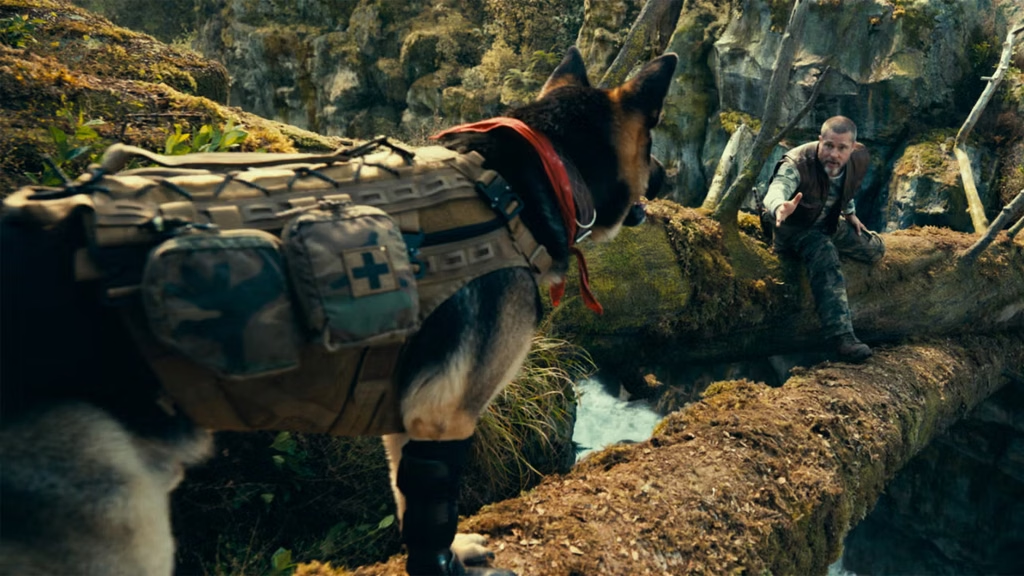
Of course, a screen relationship like this is built by more than an actor’s restraint. David Ayer’s direction and the editing determine how long we watch Odin. The animal work makes those moments possible in the first place.
What Pitt contributes is a believable person on the other side of the exchange.
That sounds modest. It is essential. We can admire an expressive dog on screen without believing in the life he supposedly shares with the human lead. James has to make their familiarity feel established.
Pitt gives us enough to imagine the ordinary hours around the adventure. The waiting. The checking in. The way a person gradually learns which movements deserve attention and which mean their dog has found something interesting to smell.
That imagined familiarity makes the danger matter. We have a sense of two companions with an existing rhythm being forced through circumstances that keep disrupting it.
I prefer those moments to any invitation to marvel at how moving a dog film can be. Give the relationship a little space and the emotion usually finds its own way in.
Pitt understands the value of looking towards Odin and letting us look too. Sometimes the dog holds our attention for longer. James is still there beside him, and the longer we watch, the more that matters.

Rachel Sikkema is a New Zealand-based writer and creative entrepreneur who explores the intersection of film, culture, and modern relationships. Through her articles, she examines how stories shape the way we connect, love and see ourselves – all for God’s glory. When she’s not writing about film and television, she’s watching Dexter and The White Lotus for the third time.