By Rachel Sikkema
Published October 8, 2026

Heart of the Beast and The Covenant offer a demanding answer to the question of what we owe a rescuer. We owe them care that survives the emergency. James Belmont’s responsibility to Odin continues after their military service, just as John Kinley’s responsibility to Ahmed continues after he reaches home. Being saved creates an obligation to notice whether the one who saved you is still suffering.
Both films make gratitude physically inconvenient. It costs strength, safety and the comforting idea that survival lets you close a chapter. Brad Pitt’s James must keep caring for a wounded dog while his own body fails. Jake Gyllenhaal’s Kinley must risk the life he recovered to help the man who made that recovery possible.
The revealing difference is what each film imagines as repayment. The Covenant gives its soldier someone to go back for. Heart of the Beast asks its soldier to secure a future he may never share. Together, they make a persuasive case that the real measure of gratitude is what you are willing to do after somebody has already given you everything they can.
The Rescuer Has a Life Beyond the Rescue
Dar Salim’s Ahmed gives The Covenant its moral weight because he arrives with priorities of his own. He has a family to protect and a sharp understanding of the dangers around him. His usefulness to the American soldiers occupies only part of his life.
That matters when he hauls the injured Kinley across hostile terrain. The effort takes time. It hurts. Every stretch of ground exposes Ahmed to further danger, and the film makes us sit with the labour required to keep another person alive.
Kinley’s survival becomes something Ahmed has worked for with his body.
Odin brings a different kind of history into Heart of the Beast. His prosthetic leg makes the cost of military service visible before the wilderness ordeal has fully begun. He has already been hurt. The dog James depends on also needs accommodation and protection.
There is a tendency in these stories to treat loyalty as an endlessly renewable resource. The faithful companion gets up again because that is what faithful companions do. Odin’s injuries make that expectation feel selfish. How much more should this animal have to endure to prove a devotion James already knows exists?
I find both films strongest when they let their rescuers look exhausted. Heroism becomes harder to consume as a pleasant idea once somebody has to carry its weight.
Going Home Leaves Kinley With Unfinished Business
The nastiest idea in The Covenant is that Kinley can be safely home while Ahmed remains in danger partly because he saved him.
The rescue has worked beautifully for one man. The other has become a target.
That imbalance turns Kinley’s recovery into something he struggles to inhabit. His home offers the ordinary comforts Ahmed and his family still lack. Each day of safety gives him another reason to remember how he obtained it.
The phone calls about visas are especially effective because they shrink a matter of life and death into an administrative problem. Kinley knows exactly what Ahmed did. Getting that knowledge translated into action is another ordeal entirely.
There is something infuriating about watching urgency meet hold music. The bureaucracy can keep operating while the person who needs it runs out of places to hide.
Kinley’s return to Afghanistan gives the film its action-driven answer. He accepts personal responsibility where the process has failed Ahmed. The satisfaction comes from seeing him finally make his gratitude useful.
Ahmed deserves safety for himself and his family regardless of whether Kinley feels indebted. Kinley’s debt gives that larger obligation a face he cannot comfortably forget.
James Has to Make Care Part of Survival

Heart of the Beast keeps its obligation close enough to touch. James and Odin are stranded together after the plane crash. The needs of one immediately affect the chances of the other.
A struggling companion changes the pace of a journey. He changes what you carry and where you stop. James has to make decisions with Odin’s damaged body in mind while managing his own failing strength.
That is a more intimate test than a declaration of loyalty. A promise can sound magnificent when everyone is warm and rested. Keeping it while frightened and injured requires repeated effort.
The relationship also complicates James’s image of himself as a capable solitary man. He has withdrawn into a life where he can keep much of the human world at a distance. Odin still requires tenderness from him. Feeding and tending to the dog give his days a responsibility that isolation cannot erase.
Their dependence moves in both directions. Odin gives James companionship and a reason to keep going. James gives Odin the care that his competence as a working dog can make easy to overlook.
I prefer those practical expressions of attachment to any grand claim about a man and his best friend. Watching someone make room for another creature’s weakness tells us plenty.
Ahmed and Odin Deserve Different Kinds of Recognition
The comparison has a limit that makes it more interesting. Ahmed is a man making decisions within a political situation. He can assess risks, challenge Kinley and think about the consequences for his family. His agency deserves to remain central to his heroism.
Odin depends on humans to understand needs he can never explain in their language. His training makes him extraordinarily useful. It also places greater responsibility on the people who decide what to ask of him.
Ahmed’s story carries the anger of a promise left unfulfilled. Odin’s raises the question of how people care for an animal after benefiting from his service.
Both films push against the habit of valuing a companion primarily for what he can do for the lead character. Ahmed should get to raise his child in safety. Odin should get to rest without another danger demanding his attention.
Those ordinary futures are the point. A rescuer deserves days in which nobody needs rescuing.
The Final Obligation Is to Let the Other Life Continue
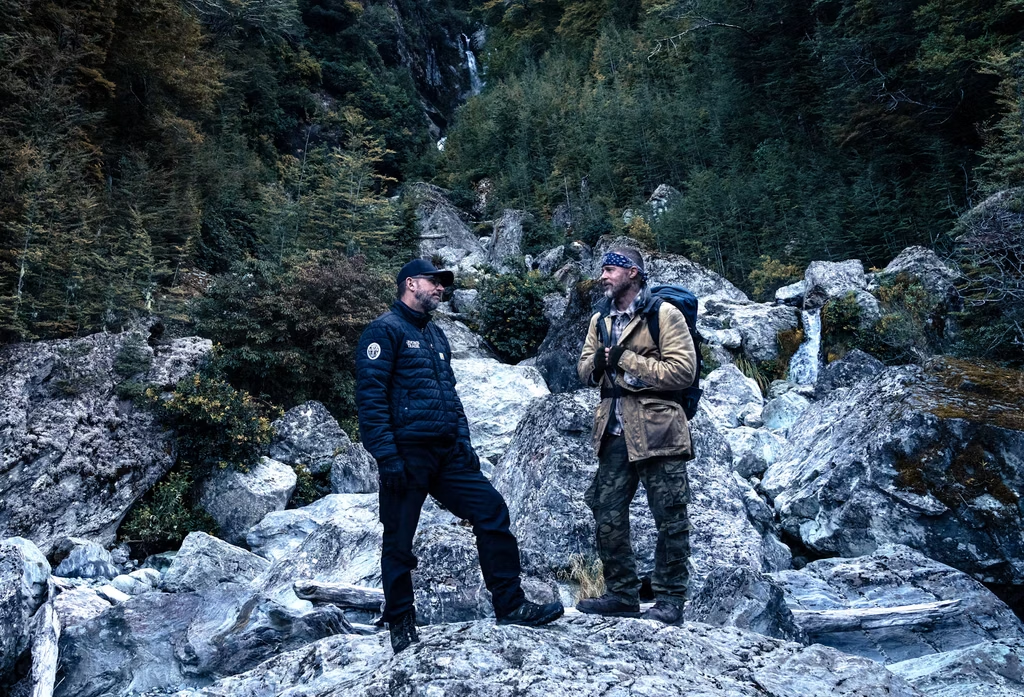
The endings give this shared concern very different emotional shapes.
In The Covenant, Kinley acts to bring Ahmed and his family out of danger. The story allows the rescue to come back around. The man who once depended entirely on Ahmed can use his restored strength on Ahmed’s behalf.
Heart of the Beast makes James confront the possibility that his own strength has run out. His final letter passes on knowledge of Odin and asks for the dog to receive care after James is gone.
That practical gesture is devastating. James has to imagine someone else understanding his companion. He has to prepare Odin for a life beyond their partnership, even while their bond is the thing keeping him emotionally present.
The letter extends his care past the point where his body can deliver it. Someone else will have to finish the work.
These films leave me thinking about the comfort we take in calling someone loyal. It is a lovely word for the person receiving that loyalty. Ahmed and Odin make us consider what happens on the other side of it.
Kinley honours Ahmed by going back. James honours Odin by helping him go on. Both finally treat being saved as a reason to protect another life long after their own rescue has earned its applause.

Rachel Sikkema is a New Zealand-based writer and creative entrepreneur who explores the intersection of film, culture, and modern relationships. Through her articles, she examines how stories shape the way we connect, love and see ourselves – all for God’s glory. When she’s not writing about film and television, she’s watching Dexter and The White Lotus for the third time.