If you watched Smile 2 and walked out thinking “wow, that was a lot”, you are absolutely right. Parker Finn takes the basic curse from the first film and pours it into a new container, turning Naomi Scott’s pop star Skye Riley into both victim and spectacle. Under all the jump scares and stadium lights, though, the sequel hides a lot of tiny choices that deepen the story and set up what comes next.
This is a tour through those details, from the opening scene to the last horrible sounds over the credits.
The Opening Quietly Changes the Rules of the Curse
The film opens just six days after Rose Cotter’s death in the first Smile, with Joel (Kyle Gallner) trying to beat the Entity by gaming the curse. He wants to make one murderer kill another in front of him, so he can technically be a “witness” without feeling like a direct accomplice. Instead, the plan collapses, the wrong person dies, and Joel gets taken out by a truck in the chaos.
The important detail is not only the timeline connection to Rose, but the fact that Lewis Fregoli, a bystander, ends up inheriting the curse. The Entity does not care about intent or moral cleverness. It only cares that someone, anyone, sees the death.
Lewis Fregoli’s Name Is a Full Psychological Easter Egg
Lukas Gage’s character is not only a drug dealer and ex-classmate. His surname is doing thematic work. Fregoli syndrome is a rare delusional condition where someone believes different people are actually one person in disguise, usually a persecutor following them around.
That is basically the Smile Entity in a nutshell. It shows up in the faces of strangers, loved ones, therapists, backup dancers, and crowds, but underneath it all you have one relentless presence that Skye cannot escape. Naming the first person she sees die “Fregoli” is a neat, quiet way of telling you what sort of nightmare she is walking into, without anyone ever stopping to explain it on screen.
Skye’s Pop-Star World Mirrors Rose’s Clinical One

On paper, Smile and Smile 2 could not look more different. Rose worked in a hospital. Skye lives on talk shows, stages and press events. But the film keeps echoing the first movie in a way that you mostly feel rather than consciously notice.
The Drew Barrymore cameo is one of the obvious touches. Skye sits on a couch, telling a personal story in front of cameras, an audience and producers who want emotional honesty but also good TV. Rose had patients and supervisors instead of fans and executives, yet both women sit inside systems that turn their pain into content.
The Teleprompter Meltdown Is More Than a Public Freak-Out
At Darius’s fundraiser, Skye’s teleprompter appears to freeze and then feeds her horrible lines about how success has ruined her life. She spirals into a rant that tanks the room and injures an elderly host as she bolts offstage.
On a first watch, it plays as a classic “celebrity meltdown” moment, the kind tabloids love. On a closer look, this scene quietly fuses three core ideas of the sequel. The teleprompter glitch shows the Entity’s ability to hijack technology and public space, not just private hallucinations. The rant gives Skye’s real anger some room, which makes it feel less like pure possession and more like the curse using genuine pain as a script.
The Fake Retreat Tips You off That Skye Has Lost the Timeline
Once Skye wakes up at the “retreat,” the movie starts to feel strangely glossy again. Her mother and manager Elizabeth (Rosemarie DeWitt) hovers, staff talk about self-care, and the upcoming tour hangs over every conversation. It feels like a reset after the brutal apartment scene where the Entity throws Skye around and forces that huge arm down her throat.
This section is where a lot of viewers miss how long Skye has already been under the Entity’s control. Most of what she experiences from that apartment attack onward plays out as a hallucination while her body lies onstage in Herald Square Garden, in front of thousands of fans.
The Abandoned Pizza Hut and the Freezer Plan Carry Quiet Symbolism
The meeting place Morris chooses, a dead Pizza Hut, is such a specific choice that it almost becomes background comedy. Peter Jacobson plays Morris like a man who has spent too long in the conspiracy trenches, tracking the Entity ever since it killed his brother, but the setting does more than give them a creepy location with a walk-in freezer.
You have Skye, a polished global brand, stepping into the shell of another brand that people gutted and left behind. It is not subtle that the solution on the table is to stop her heart, then revive her, essentially killing the “product” so the person can live.
The Entity’s Final Form Turns the Audience Into Part of the Monster
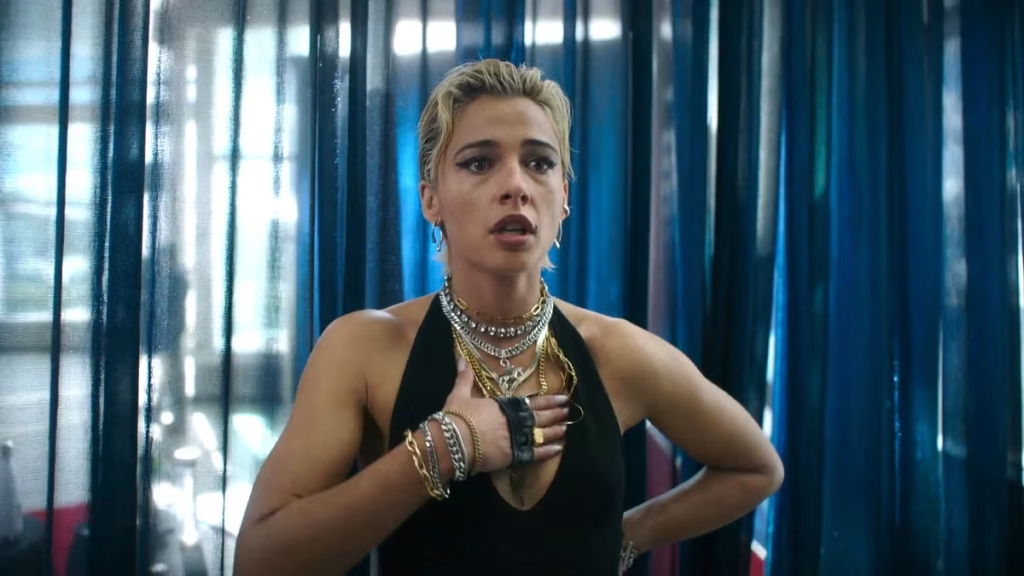
The climax at Herald Square Garden is where the film cashes in all those earlier hints about crowds, cameras and performance. Skye thinks she has reached a final confrontation inside a more grounded hallucination, but the Entity tears its stomach open to reveal a towering, skinless creature full of nested smiling mouths.
On a design level, it is nightmare fuel. On a thematic level, those mouths do not just reference victims. They also mirror the real audience. The curse only moves when someone watches the death.
Why These Details Make the Sequel Stick With You
Seen once, Smile 2 plays like a slick, nasty follow-up with a great central performance from Naomi Scott and a bigger body count. Look closer at the names, locations, tiny continuity breaks and career choices, and it becomes a lot more pointed.
Those little details are why the film lingers in your head longer than you might expect. You walk in for a supernatural scare, and you walk out thinking about how often we treat real people like haunted content, replaying their worst moments on an endless loop.

Rachel Sikkema is a New Zealand-based writer and creative entrepreneur who explores the intersection of film, culture, and modern relationships. Through her articles, she examines how stories shape the way we connect, love and see ourselves – all for God’s glory. When she’s not writing about film and television, she’s watching Dexter and The White Lotus for the third time.