
If you watched Run Away and felt like the plot kept shape-shifting under your feet, you’re not imagining it. This is one of those thrillers that hides its real story in plain sight, then waits for you to connect the dots later. On a first watch, it plays like a frantic missing-person nightmare.
On a second watch, it starts to look like a family implosion that was already underway, and the “runaway” part is almost the least surprising element.
The “Viral” Moment Is Not Background Noise
Early on, Simon Greene’s attempt to physically drag Paige home explodes online, and the show treats it like a plot accelerant rather than a random modern touch. That clip doesn’t merely embarrass Simon. It changes the rules of the hunt. Suddenly, the search isn’t private, and Simon isn’t only a dad, he’s a public villain or a public martyr depending on who’s watching.
Once you clock that, a lot of later choices snap into focus. People approach Simon differently because they’ve already decided who he is. Police pressure shifts. Tips come in for the wrong reasons. And Simon’s own decision-making gets warped by humiliation, pride, and the need to “fix” the narrative, not only the family.
Paige’s Body Language Tells You What Her Words Won’t
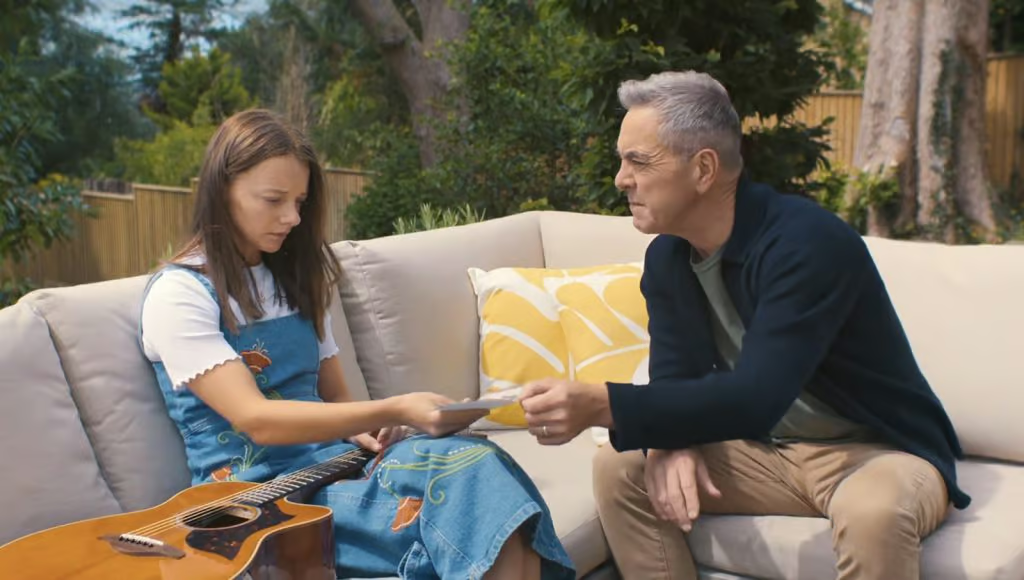
Ellie de Lange plays Paige with a specific kind of guarded exhaustion. Watch what she does when Simon closes distance. She doesn’t react like a rebellious kid staging a dramatic exit. She reacts like someone who’s learned that closeness comes with conditions, interrogation, and consequences.
That detail changes how you read almost every scene with Simon. His desperation is real, but so is his habit of control. When Paige withdraws or lies, it stops looking like pure teen chaos and starts looking like survival tactics from someone who’s been managed her whole life.
The Show Keeps Pointing at Addiction, Then Quietly Points Past It
The premise puts Paige’s drug use front and center, and it’s easy to file her disappearance under “addiction storyline.” But the series keeps slipping in small moments that suggest drugs are more consequence than cause.
The way Paige reacts to certain names, the way she flinches around certain men, the way she goes blank when adults talk over her, all of it implies a deeper rupture. Later revelations don’t come out of nowhere. The show has been laying emotional groundwork the whole time, even when it’s busy throwing plot grenades.
Aaron’s Presence Is a Clue, Not a Love Story

Aaron Corval is introduced like the kind of boyfriend thrillers love to use as a red flag. Then he’s dead, and the story tries to make you play the usual game: Who killed him?
But the small detail that matters is how Paige reacts to Aaron compared to how other people talk about him. Other characters treat him like a boyfriend, a dealer-adjacent parasite, a convenient suspect. Paige treats him like a trap she can’t fully escape, even when she wants to. That difference is doing heavy lifting. It primes you for the later truth that Aaron isn’t merely a bad influence, he’s tied into the family’s hidden history in a way that recontextualizes everything.
Ingrid’s Calm Is the Loudest Sound in the Room
Minnie Driver’s Ingrid Greene doesn’t read like the typical “worried mother” template. She’s too composed in the wrong moments, then suddenly raw when you wouldn’t expect it. The show uses that contrast as a breadcrumb trail.
Once you know Ingrid has a past connected to a cult called The Shining Truth, her calm stops feeling like strength and starts feeling like training. A person who’s lived through coercion learns to present the acceptable version of emotion. That makes her both sympathetic and terrifying, because it means she can compartmentalize when the stakes get bloody.
The Cult References Are Planted Like Street Signs
The Shining Truth doesn’t arrive as a single, dramatic reveal. It creeps in through small references: an old name, a seemingly random connection, a symbol that lingers a beat too long. The show wants you to feel, before you understand, that the Greene family isn’t only dealing with a missing daughter. They’re dealing with an inheritance of secrets.
This is where Run Away gets smarter than its own chaos. The cult angle reframes “family secrets” as a literal system, not a metaphor. It also explains why certain adults respond with panic rather than shock when the story turns violent. Some of them have been waiting for the past to return.
Elena’s Side Case Is a Mirror Held up to Simon
Ruth Jones plays Elena Ravenscroft, a private investigator hired to find another missing person, and the show braids her storyline through Simon’s. At first it can feel like extra plot. Then you notice how often her scenes echo his, but with one crucial difference: Elena listens.
Elena’s investigation highlights what Simon misses because he’s always forcing the next move. She watches patterns and notices how institutions fail the vulnerable. She treats missing people as human beings instead of problems to solve. That contrast changes how you judge Simon. He’s not evil, but he is single-minded in a way that creates collateral damage.
Isaac Fagbenle’s Skepticism Is More Emotional Than Professional
Alfred Enoch’s DS Isaac Fagbenle doesn’t play as a stock detective. His skepticism has a personal edge, like he’s seen this exact kind of respectable-family narrative before and knows how often it’s a performance.
Little moments, an extra pause before a question, a look that says “I don’t buy this,” are telling you that the police storyline isn’t only about evidence. It’s about what society tends to excuse when a well-off father says he’s trying his best. The show nudges you to consider how Simon’s status protects him, even as he spirals.
The Finale Hinges on One “Small” Truth That Isn’t Small at All
Ultimately, the series reveals that Ingrid killed Aaron, and it also drops the gut-punch that Aaron was Paige’s half-brother, born from Ingrid’s time in the cult. On paper, that sounds like peak thriller escalation. In practice, it’s the key that retroactively unlocks earlier scenes.
Suddenly, Ingrid’s fear is not abstract. Simon’s blindness has a shape. Paige’s shame has context. The story shifts from “bring our daughter home” to “our family was built on buried harm.” And the title Run Away stops sounding like a warning aimed at Paige. It starts sounding like a warning aimed at everyone.

Rachel Sikkema is a New Zealand-based writer and creative entrepreneur who explores the intersection of film, culture, and modern relationships. Through her articles, she examines how stories shape the way we connect, love and see ourselves – all for God’s glory. When she’s not writing about film and television, she’s watching Dexter and The White Lotus for the third time.