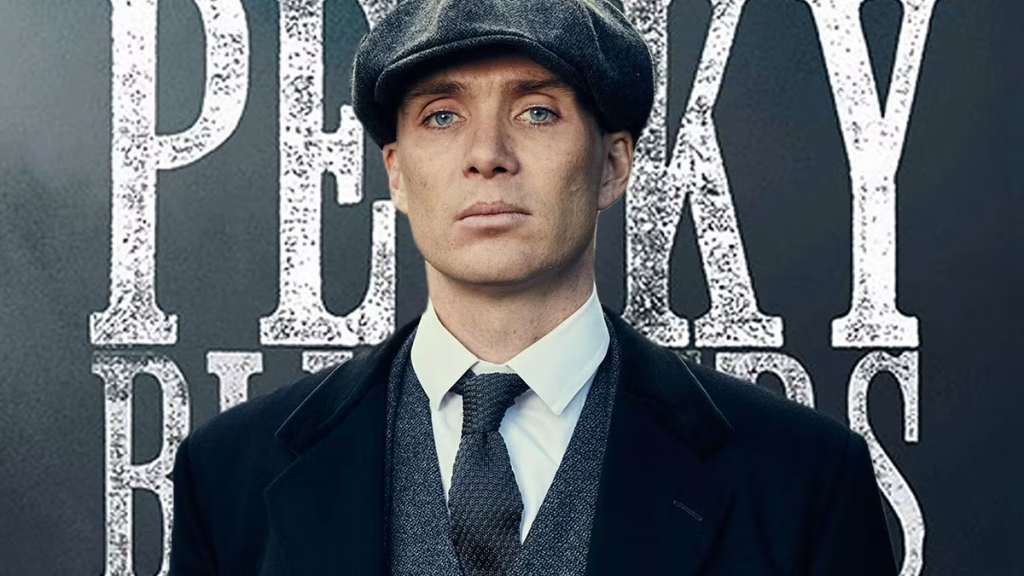
When a Peaky Blinders project uses a title like The Immortal Man, it is obviously trying to do more than sound cool. And yes, it does sound cool. But the interesting part is that the title points straight at the thing that has always made Tommy Shelby such a magnetic character. He moves through the world like someone who has already had his proper meeting with death and come back with a different relationship to fear.
That idea matters even more in the new film, which brings Cillian Murphy back as Tommy Shelby, with Steven Knight writing the story and Tom Harper directing. The movie is set in 1940, with Tommy pulled out of self-imposed exile and back into a world of war, family damage, and unfinished business. Knight has also said the title came to him before the full explanation did, which honestly feels very Peaky Blinders in itself. Sometimes the mood arrives before the logic.
It Starts With Tommy’s Wartime Psychology
The clearest way to understand the title is to look at how Tommy has always behaved. He has never acted like a man who expects a long, peaceful, sensible life. From the beginning, he has carried himself like someone living on borrowed time. This makes him almost impossible to intimidate.
Knight has explained that this goes back to an imagined wartime experience in which Tommy and his comrades were trapped in no man’s land, certain they were about to die, only to survive. Out of that came a mindset that everything afterward was extra. Everything was a bonus. That is basically the engine of Tommy Shelby as a character. He does not approach risk like an ordinary gangster. He approaches it like a man who already spent his fear.
That is where “immortal” first makes sense. Not literally, of course. Tommy is not a fantasy hero and Peaky Blinders has never been that kind of story. He is “immortal” in the psychological sense. He behaves as if death has already had its chance. That attitude gives him his strange power over other people, because most men flinch and Tommy usually doesn’t.
The Title Fits Tommy’s Legend
There is also a difference between being alive and being larger than life. Tommy Shelby crossed that line years ago. Within the world of Peaky Blinders, he stopped being just a man in a cap with a sharp suit and sharper plans. He became a story people tell each other. A warning. A myth. A name that enters a room before he does.
That is a big part of why The Immortal Man works so well as a title. Tommy’s real gift has never been simple toughness. It is his ability to turn himself into legend. He knows that power is partly about what people believe you are capable of.
So the title reflects the version of Tommy that survives in other people’s minds. Even when he disappears, he still hangs over Birmingham like weather. You can defeat a man. It is much harder to defeat an idea once it has settled into a city’s bones.
It Is Also About Legacy
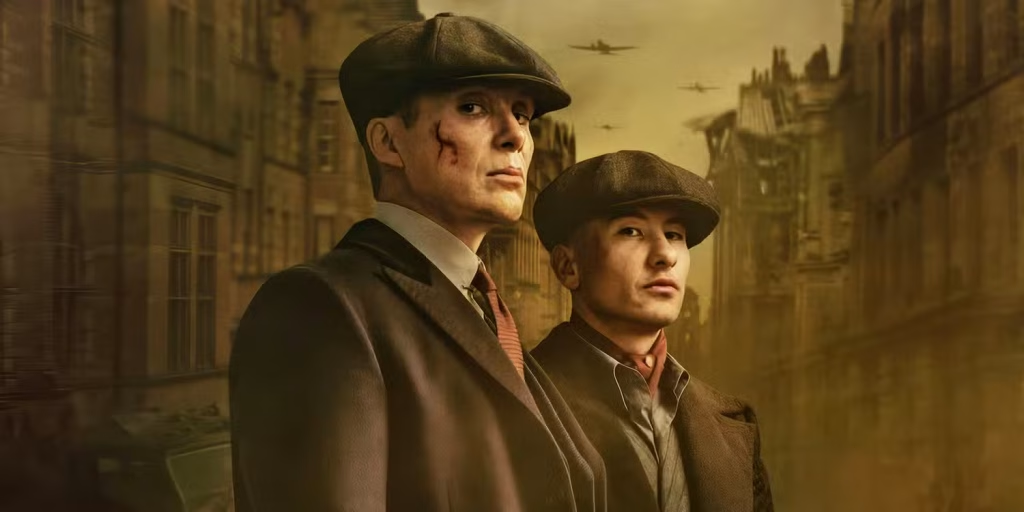
The title has another layer, and this one may be the richest. Knight has said the film ties the phrase to legacy as well, including Tommy writing a book for his children. That detail changes the meaning of “immortal” in a really telling way. It stops being only about surviving danger and starts being about what remains after you.
That fits Tommy perfectly. He has always been torn between building an empire and trying to justify it. He wants to protect his family. He also keeps dragging them deeper into his wars. He wants control, but his need for control usually leaves wreckage behind. So when a title points toward immortality, it naturally raises the question of what part of Tommy deserves to last.
Is it the businessman? The soldier? The brother? The father? The criminal kingmaker? With Tommy, those versions never sit neatly beside each other. They grind against each other. That tension gives the title some real weight, because immortality here is not automatically flattering. Being remembered is not the same thing as being redeemed.
The Timing of the Film Makes the Title Sharper
The film’s 1940 setting matters too. This is a world shaped by another war, which means the story pushes Tommy back toward the historical forces that formed him in the first place. The official synopsis frames the plot around family, nation, and a reckoning with his own demons, and that turns the title into something almost judgmental. If a man has treated every year as bonus time, what has he done with it?
That is why the title feels more thoughtful than something like The Last Shelby or Tommy’s War would have. Those would tell you what happens. The Immortal Man tells you what the story is really chewing on. It asks whether a man can outlive himself through memory, violence, family, or myth, and whether any of those forms of survival are worth much if they hollow him out along the way.
It also suits Murphy’s version of Tommy, which has always relied on restraint rather than noise. Tommy is memorable because he seems half present and half haunted. Calling him “immortal” captures that ghostly quality. He often feels like somebody already standing on the border between this world and the next.
Why the Title Feels Right for Peaky Blinders

Peaky Blinders has always mixed gangster storytelling with something more poetic and fatalistic. It likes smoke, prophecy, trauma and family curses. It likes men who act as if destiny has them by the throat. In that kind of world, a title like The Immortal Man does not feel exaggerated. It feels on brand.
More importantly, it fits the emotional logic of the series. Tommy Shelby has spent years acting invincible while carrying wounds that never healed. He built his identity around being the man who can keep walking through fire. The title names that identity. However, it also quietly questions it. What does immortality cost?
That is what makes the title more than a dramatic flourish. It gets at the central contradiction of Tommy Shelby. He feels impossible to kill in spirit. However, that same spirit has trapped him for years.
The Immortal Man works because it captures both sides of Tommy at once. He is the man who survived, the man who became myth. He is also the man desperate to leave something behind. For a character like Tommy Shelby, immortality was never going to mean living forever. It means lingering long after the smoke clears.

Rachel Sikkema is a New Zealand-based writer and creative entrepreneur who explores the intersection of film, culture, and modern relationships. Through her articles, she examines how stories shape the way we connect, love and see ourselves – all for God’s glory. When she’s not writing about film and television, she’s watching Dexter and The White Lotus for the third time.