By Rachel Sikkema
Published October 25, 2026

The new killer in The Whisper Man is Francis Carter Jr., the son of imprisoned murderer Frank Carter. He abducts Jake while recreating his father’s crimes in a desperate attempt to earn his approval. Jake survives and reunites with Tom, but Pete dies helping rescue his grandson. Francis survives the confrontation at the house, only to be murdered by his own father in prison.
The final scene supplies a gentler revelation. Jake’s mysterious friend, the girl in the blue sweater, looks exactly like his late mother Rebecca as a child. The photograph establishes that connection while leaving room for both a supernatural explanation and one rooted in grief.
Those answers give the ending its ugly emotional shape. Francis spends the film trying to reach a father who wants to destroy him. Tom still has time to listen to his own son.
Who Is the New Whisper Man?
Francis Carter Jr., played by Owen Teague, is the man responsible for the new kidnappings. His father Frank, played by Michael Keaton, remains incarcerated for the original murders.
Francis has been living under the name George Carrington. Detective Amanda Beck finds him at the home of the psychologist connected to his childhood. His apparently ordinary identity conceals both his relationship to Frank and his continuing obsession with him.
The copycat crimes grow out of that obsession. Francis believes that becoming like his father might finally make him worthy of his attention. Murder becomes a horrifying bid for recognition.
There is something especially miserable about that motive. Francis has built his adult life around an audience of one. Every imitation carries the same impossible request for affection from a man whose cruelty already shaped his childhood.
That history helps explain him while leaving his responsibility intact. He chooses to inflict terror on children. The film asks us to see the damaged child inside the killer while continuing to fear the adult he has become.
What Was Norman Collins Hiding?
Norman Collins, played by Hamish Linklater, killed Dominic Barnett. His involvement in the original Whisper Man case makes him a convincing suspect in Jake’s disappearance, but Francis is Jake’s abductor.
Norman arranged access to the remains of Tony Smith, Frank’s missing fifth victim. Barnett facilitated that grotesque visit. When Barnett mocked him, Norman murdered him. Both bodies eventually turn up inside Tom and Jake’s house.
Norman also supplied something Frank wanted in exchange for access to Tony’s remains. He helped connect Frank with his son.
That makes Norman a useful distraction because the evidence against him points toward real wrongdoing. His secrets belong to another part of the same web. Clearing up his role still leaves the investigators with a child to find.
The basement discovery also vindicates Jake’s unsettling references to a boy in the floor. Tom has been living above evidence of the horror his son keeps trying to describe. It is an especially nasty way to turn a family home into a place where a child’s fear deserves immediate attention.
Does Jake Survive, and What Happens to Pete?
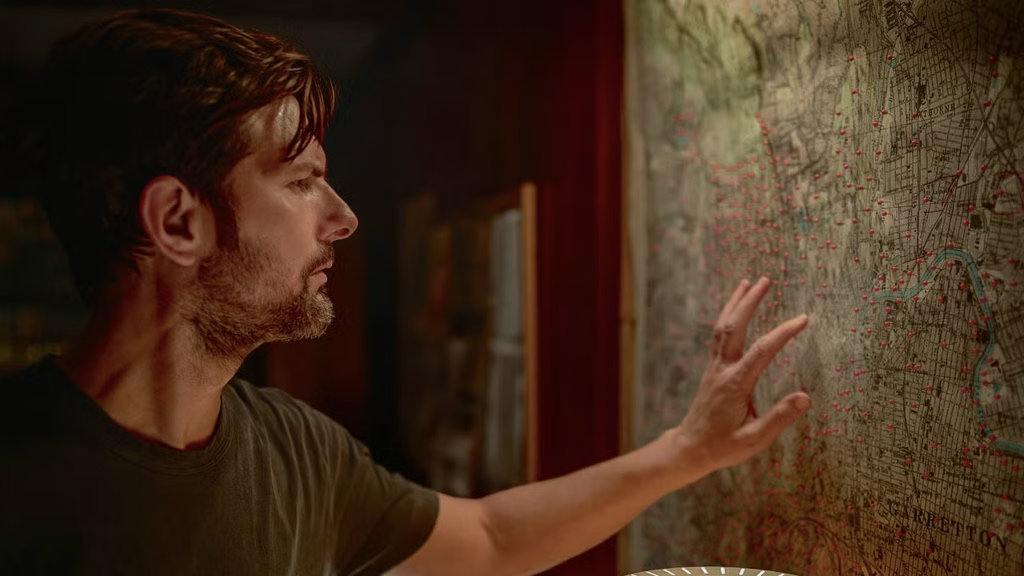
Jake survives the final confrontation. Pete Willis, played by Robert De Niro, suffers a fatal wound while helping save him.
After Amanda discovers Francis, he attacks her and escapes with Jake. Pete obtains the crucial information from Frank by promising him access to his son. The search returns to Tom’s house, where Francis has taken the boy.
During the struggle, Francis stabs Pete in the stomach with a screwdriver. Pete still manages to help Jake escape. Tom pursues Francis upstairs, where the weakened attic floor gives way beneath the killer.
The fall incapacitates Francis. His death comes later.
Pete’s sacrifice closes the distance between him and Tom through a terrible act of protection. Their estrangement has left Tom with years of anger, and saving Jake gives Pete one last chance to show up for his family.
The revelation about Mister Night adds another ache. Tom’s remembered childhood visitor was Pete coming to see him and read to him. Affection existed inside that broken relationship, even though Tom grew up without understanding what those visits meant.
A loving memory can complicate an unhappy childhood. It can also leave an adult grieving all the ordinary evenings that should have followed it.
Why Does Frank Kill His Own Son?
Frank wants access to Francis so he can kill him. His talk of a family reunion disguises the violence behind his request.
Pete’s explanation is that Frank’s original victims served as substitutes for his son. Covering their faces allowed him to impose another identity on the children he murdered. The prison scene completes that pattern when Frank pulls Francis’s shirt over his face and strangles him.
Francis approaches the reunion still searching for closeness. Frank exploits that longing right up to the moment of murder. The apparent invitation to intimacy makes the scene particularly revolting. Francis has spent his life imagining what his father’s acceptance might feel like, and Frank uses that hunger to get him within reach.
This is where the ending becomes harder to enjoy as straightforward punishment. Francis has committed appalling crimes and must be stopped. Watching his father finally destroy him also reveals the full extent of the trap he has spent years walking into.
Frank’s letter to the recovering Amanda extends his satisfaction beyond the cell. He thanks the investigators for helping him obtain what he wanted. With Pete dead, Amanda becomes the recipient of his tormenting correspondence.
Who Is the Girl in the Blue Sweater?

The girl resembles Rebecca, Jake’s mother, as she looked during childhood. Tom recognises the connection when he sees an old photograph.
The film leaves her precise nature open. She can be understood as Rebecca watching over Jake, or as a comforting presence his mind creates while he struggles with bereavement. His apparent awareness of the hidden body gives the supernatural reading considerable force.
Emotionally, the photograph changes how we understand Jake’s conversations. The mother he has lost has remained present in his experience of the world. Tom has been trying to parent through his own grief while struggling to understand the form his son’s grief takes.
For me, the uncertainty makes the final scene more affecting. A fully explained ghost would demand rules. This image asks Tom to reconsider what Jake has been telling him.
After the violence, Tom and Jake move into Pete’s home. Their future still contains loss, but the ending gives Tom something practical to carry forward. He can make room for his son’s fear and strange little stories. He can listen before frustration takes over.
Jake has survived being unheard once. The last scene gives his father a reason to listen more closely.

Rachel Sikkema is a New Zealand-based writer and creative entrepreneur who explores the intersection of film, culture, and modern relationships. Through her articles, she examines how stories shape the way we connect, love and see ourselves – all for God’s glory. When she’s not writing about film and television, she’s watching Dexter and The White Lotus for the third time.