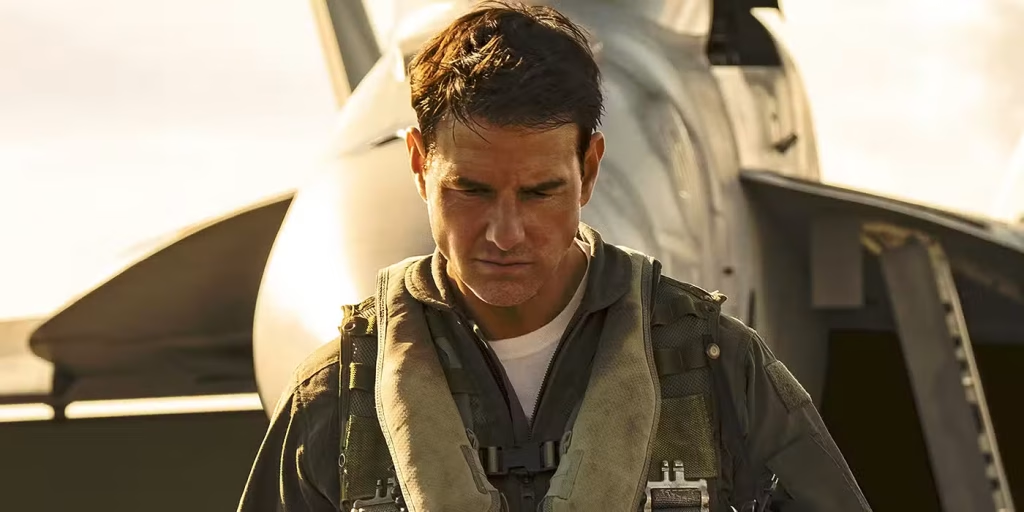
The final mission in Top Gun: Maverick has one huge advantage over a lot of modern blockbuster finales.
You can actually tell what is happening.
That sounds like a low bar until you remember how many giant action movies end with a swarm of grey debris, ten characters yelling into headsets, and one glowing target the audience is supposed to care about because the score told them to. Maverick does something much harder. It makes the mission simple enough to follow, then tense enough to hurt.
By the time those jets drop into the canyon, the movie has already done the hard work. You know the route. You know the timing. You know which part of the run will punish hesitation and which part will punish arrogance. You know Rooster freezes a beat too long. You know Hangman trusts himself a little too much. You know Maverick has built this whole thing around pushing young pilots into the same kind of danger that wrecked his life decades earlier.
So the final mission works as action. It also works as emotional payback.
That combination is why it still feels so sharp even when you know every beat.
The Movie Teaches You the Mission Before It Asks You to Fear It
The biggest reason the finale lands is simple craft.
The film spends a big chunk of its middle section drilling the mission into your head. Not in a boring way. In a useful way. By the time the real run begins, the audience already understands the geography of the danger.
Low altitude through the canyon. Avoid radar. Pop up at exactly the right moment. Hit a tiny target. Pull up hard. Survive the missiles. Deal with whatever is waiting in the sky after that.
That clarity changes everything.
A lot of action scenes try to create tension through confusion. Top Gun: Maverick goes the other way. It gives viewers a clean map, then starts setting parts of the map on fire. Every rehearsal matters because it teaches the audience where the panic will come from later. Every failed attempt leaves a bruise on the final mission before it has even started.
So when Maverick proves the course can be flown, the scene does more than make him look cool. It gives the movie a ruler. From that point on, everyone else is being measured against a standard the audience has already felt in their body.
You do not need a character explaining stakes every thirty seconds. The stakes are built into the route.
The Mission Feels Physical in a Way Most Blockbusters Do Not
There is a particular kind of strain in Top Gun: Maverick that keeps the finale grounded.
You see it in faces. In breathing. In the ugly pressure pulling at cheeks and eyes inside the cockpit. The actors do not look like they are politely pretending to be under stress while sitting in front of a green screen. They look rattled. Sweaty. Slightly miserable. Good. That is what high-speed flight should do to a human face.
The physicality matters because the mission asks for precision under punishment.
The canyon run feels dangerous because the jets look heavy. The turns feel violent. The pull-up feels brutal. Even the little pauses in the action have tension packed inside them, because the movie has taught you what a late move costs. A second matters here. A wobble matters. A pilot losing focus matters.
That kind of material weight changes the emotional tone of the finale.
The audience senses that this mission could genuinely break bodies, not just scratch some digital paint. It brings the action closer to the bones. You are not watching abstract heroics. You are watching people get shaken around inside expensive metal tubes while trying to thread a needle above death.
There is something deeply satisfying about a blockbuster remembering that machines have mass.
Rooster Turns the Mission Into Something Personal
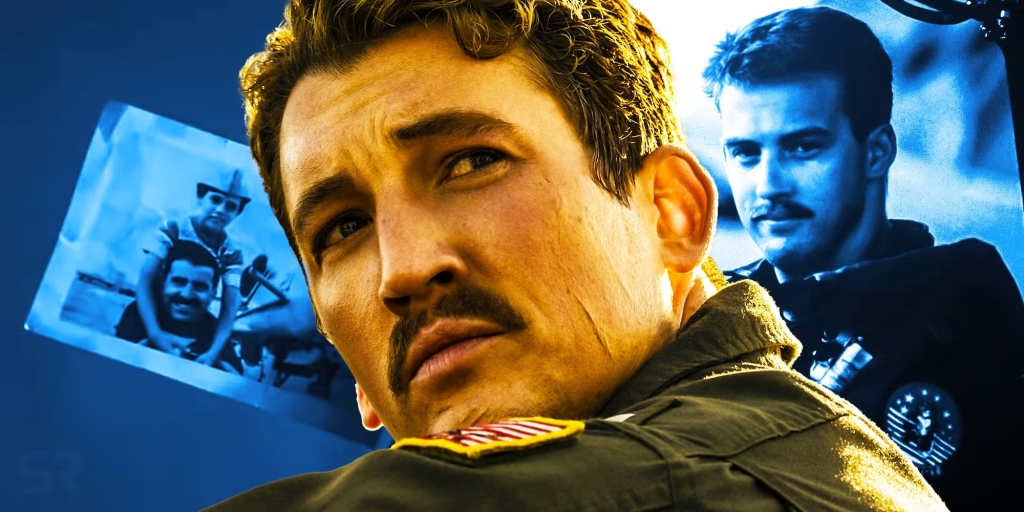
The finale would still work as a clean action sequence without Rooster. It would not linger the same way.
Rooster is the human crack running through the whole mission.
Miles Teller plays him with a careful kind of restraint that pays off beautifully here. Rooster flies with caution because caution is how he survives. Maverick keeps pushing him toward instinct, toward commitment, toward the kind of no-hesitation flying that made Goose’s death such a permanent wound in the first place.
That tension gives the mission teeth.
Every time Rooster needs to move quickly, the movie activates a deeper fear. He is not just trying to hit a target. He is trying to fly in the emotional shadow of a dead father and a surrogate father who made huge decisions for him without permission. So when the mission asks him to trust Maverick’s plan under impossible pressure, it asks more from him than skill.
It asks for surrender.
That is why his run at the target matters so much. The scene works because the audience has spent the whole film feeling the friction between his caution and Maverick’s belief in him. When he commits, the mission becomes more than a military operation. It becomes the moment where Rooster steps fully into the movie’s emotional center.
The bomb lands. So does the character work.
Maverick’s Sacrifice Gives the Action a Bruise
Then the film does something smart. It refuses to let the target strike be the end of the emotional tension.
Maverick taking the hit for Rooster gives the finale its bruise.
Of course Maverick would do that. He has been carrying Goose’s death like old shrapnel for thirty years. Saving Goose’s son is not a tactical decision for him. It is reflex. The kind of reflex built from guilt so old it has shaped his entire adult life.
That moment works because the movie has avoided turning Maverick into a saint.
He is brilliant, but he is also the man who pulled Rooster’s papers. He is protective, but his version of protection leaves damage behind it. He teaches these pilots how to survive while also bringing them into the kind of danger that made him emotionally unfinished in the first place.
So when he takes the missile, the sacrifice feels earned and messy. Heroic, yes. Also painfully predictable. This is exactly how Maverick would try to solve a problem he helped create. He would throw himself at it at high speed.
Cruise plays the scene with just enough control. No giant speech. No wobbling self-pity. The decision arrives like muscle memory, which makes it hit harder.
The F-14 Stretch Should Be Silly and Somehow Gets Away With It
There is a point in the final mission where Top Gun: Maverick simply dares you to go with it.
Maverick and Rooster steal an old F-14 from the enemy base. On paper, this is nonsense. Delicious nonsense, but nonsense all the same. The movie has already asked the audience to accept a trench-run-style bombing mission, and now it tosses in a stolen classic jet from the original Top Gun like it found one extra dessert in the kitchen.
And it works.
It works because the film has earned a little absurdity by being disciplined everywhere else. The nostalgia here has purpose. Maverick knows this aircraft. His past suddenly becomes practical. Rooster has to trust him in a space that feels directly connected to Goose, to the first film, and to everything Maverick has spent years trying to outrun.
The sequence also gives the finale some looseness.
After all the canyon stress, the F-14 section lets the movie breathe just enough to change flavor. Maverick and Rooster bicker. Panic and confidence keep swapping seats. The scene becomes adventurous in a scrappier way. It feels less like the mission briefing and more like survival by instinct, which is exactly Maverick’s native language.
A film this tightly constructed needs one section where panic gets to improvise. The F-14 stretch gives it that.
Hangman Arrives at Exactly the Right Second
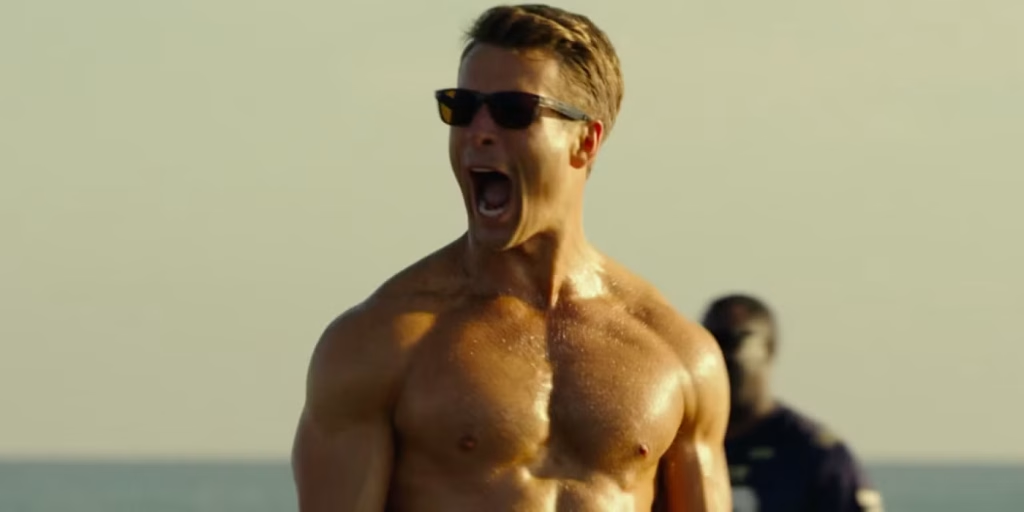
Hangman’s late entrance is one of the great crowd-pleasing moves in the whole movie.
Glen Powell spends the film building Hangman as a smirking rival with elite-pilot confidence and a face that clearly knows it has lighting on its side. He is there to needle Rooster, challenge Maverick’s choices, and generally behave like the human version of a wink. That setup matters because it makes the payoff clean.
When Hangman shows up to save Maverick and Rooster, the scene lands for two reasons.
First, it is satisfying on a pure movie level. The right guy arrives in the right frame at the right second. No notes.
Second, it completes his role in the team. Hangman has spent the whole film as the pilot who trusts himself above all else. Here, that self-belief still exists, but it finally serves the group. He gets to be heroic without losing the smug little edge that makes him fun.
That balance is key.
The film never tries to sand Hangman down into a bland team player. He stays Hangman. He just becomes useful in a way that proves Maverick’s training worked on more than one level.
Sometimes a movie earns the right to let a handsome menace fly in and save everyone. This one earns it.
The Finale Understands Release
The carrier deck ending works because the mission has built enough pressure to deserve a release that big.
People hug. Rooster forgives. The sun glows like the Navy negotiated directly with heaven. It is all a little shameless. Good. This movie thrives when it trusts old-fashioned payoff.
The reason it does not feel cheap is that the emotional release belongs to the characters first. The mission matters because it turns Maverick and Rooster’s relationship into action. Rooster goes back for him. Maverick sacrifices himself for him. They survive together. By the time they stand on that deck, the audience has already processed the real ending.
The target was one thing. The healing was the actual event.
That is the final trick. The mission works because the movie never lets it remain only a mission. It becomes a course built out of Maverick’s guilt, Rooster’s fear, Hangman’s swagger, and the whole film’s obsession with whether instinct can save people or destroy them.
So yes, the canyon run is thrilling. The missile dodges rule. The F-14 sequence gets away with murder. Hangman’s save hits like a cheer button wired directly into the audience.
But the final mission in Top Gun: Maverick works so well because it gives all that spectacle something bruised and human to carry.
The jets scream. The emotions do too. That is why the whole thing flies.

Rachel Sikkema is a New Zealand-based writer and creative entrepreneur who explores the intersection of film, culture, and modern relationships. Through her articles, she examines how stories shape the way we connect, love and see ourselves – all for God’s glory. When she’s not writing about film and television, she’s watching Dexter and The White Lotus for the third time.