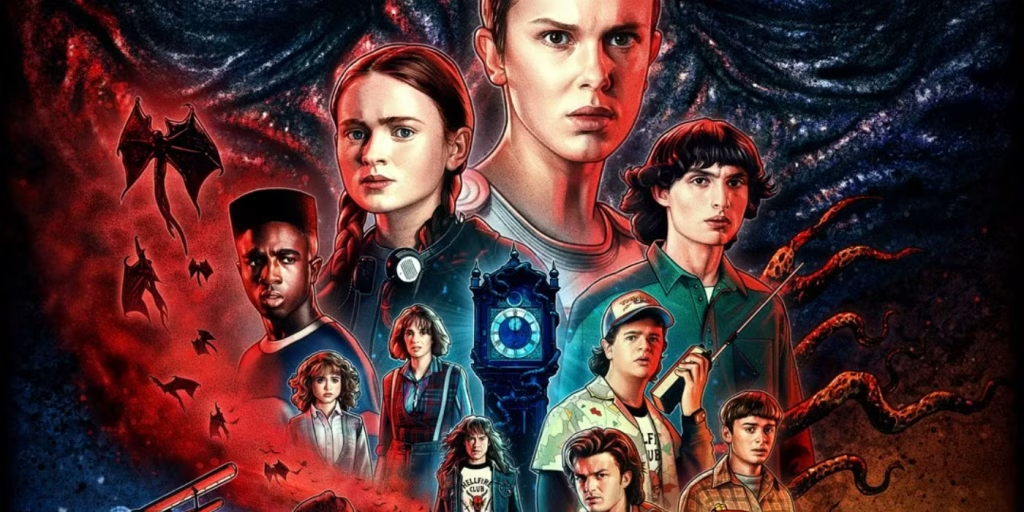
Stranger Things season 4 is packed with big swings, but the show’s most emotionally loaded gamble sits inside one red, cracked, impossible space: Vecna’s mind. Every time Max Mayfield steps into that psychic nightmare, the season tightens its focus. It stops being about gates and government vans and becomes a story about a girl who is not sure she wants to live, facing a monster who wants to make that decision for her.
The Max vs Vecna mind sequences are not just cool horror set pieces. They are where the season admits that the scariest place is not the Upside Down at all. It is the inside of your own head.
Max Carries Her Grief Into the Mindscape
By the time season 4 begins, Max, played by Sadie Sink, has pulled away from everyone. She is living in a small rented house, glued to her Walkman, nursing headaches and blank stares. The show never needs a character to spell it out. Her grief for Billy, her abusive stepbrother, and the guilt she carries over his death sit on her like a physical weight.
That is what makes her such a compelling target for Vecna, the new big bad of season 4, played with a slow, theatrical menace by Jamie Campbell Bower. Vecna does not just kill people. He stalks and studies them first, peeling back every layer of self loathing until their worst thoughts are the only ones they can hear.
Vecna Turns Guilt Into a Weapon
When Max finally slips fully into Vecna’s control in “Dear Billy,” the mind world he drags her into is tailored to her specific pain. The setting looks like a shattered version of the Creel house, suspended in the air, lit blood red, littered with floating debris and broken fragments of Hawkins. It is familiar enough to feel personal, but twisted enough to be hostile.
“Dear Billy” Turns Memory Into a Way Out

The escape in “Dear Billy” has become the iconic Max vs Vecna sequence for a reason. Once Vecna pins her to that bone-covered altar in his mind lair, it looks like the end. In the real world, Lucas, Dustin, and Steve hover around her body in the graveyard, shaking her, shouting her name. In the mind world, Max is paralyzed, floating in midair, while Vecna prepares to break her apart.
What saves her is not a sudden power, and it is not Eleven swooping in from the sub plot in the desert. It is Kate Bush on a cassette tape. Earlier in the episode, Nancy and Robin learn that music helped Victor Creel survive his own encounter with this entity. That detail pays off when the boys slam Max’s headphones over her ears and “Running Up That Hill” cuts into Vecna’s spell.
The Finale Turns Max’s Mind Into a War Zone
The season returns to the same battleground in the finale, but the rules have shifted. This time Max goes in as bait. She admits that Vecna never fully left her, that she still feels him “in the back of her head.” Instead of pretending she is fine, she sits on the bleachers at the old Hawkins High snow ball and lets herself slip into a trance, hoping the others can reach Vecna’s body while he is occupied.
The mindscape now weaponizes her happiest memories. Vecna brings her back to the school gym where she danced with Lucas at the “Snow Ball” at the end of season 2. He corrupts it, staining the scene in red and turning the harmless decorations into something ominous. For Max, no memory is safe anymore. The place that once symbolized a tiny normal teenage moment now becomes the staging area for her torture.
Eleven, played by Millie Bobby Brown, joins the fight inside Max’s head, transforming the mindscape into a three way tug of war. Vecna is ripping through Max’s psyche, Eleven is trying to hold him off, and outside, Lucas is physically fighting Jason to keep the headphones on her. The editing jumps between locations and layers of reality, but the emotional center is simple. Max is the one who pays the price.
Performance Turns Concept Into Something Painfully Real
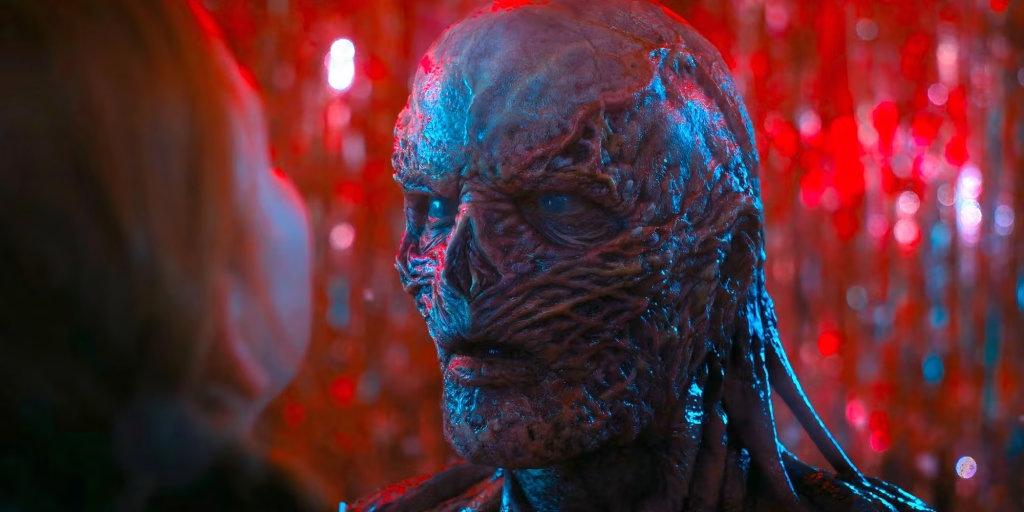
On paper, all of this could have felt like overblown genre metaphor. What sells it is how grounded the performances are. Sink plays Max with a defensive sarcasm early in the season, then lets that shell crack in the graveyard scene. When she reads the letter to Billy, her voice shakes in a way that is not pretty or noble. It sounds like a teenager stumbling through feelings she does not have language for yet.
The Real Monster Lives in Max’s Head
What makes those scenes stick is that the show never treats Max as weak for struggling. It treats her as brave for staying. The mind lair is terrifying, but the point is not that Vecna is unbeatable. The point is that Max, even at her most broken, can still reach for connection, hold onto music, and run toward the possibility of another day.
Season 4 leaves her fate unresolved on purpose. Her body survives, her mind is somewhere we cannot see yet, and Vecna is still out there. For now, the Max vs Vecna sequences stand as some of the most powerful television the series has produced, not because of the spectacle, but because they take teenage pain seriously and let a scared girl fight for her own life in the loudest, most cinematic way possible.

Rachel Sikkema is a New Zealand-based writer and creative entrepreneur who explores the intersection of film, culture, and modern relationships. Through her articles, she examines how stories shape the way we connect, love and see ourselves – all for God’s glory. When she’s not writing about film and television, she’s watching Dexter and The White Lotus for the third time.