This article discusses major spoilers.
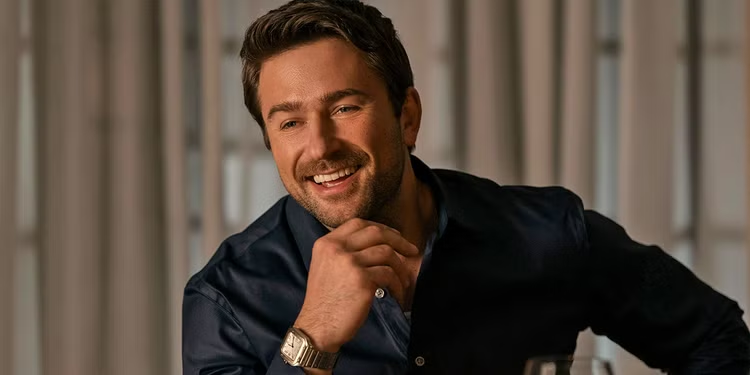
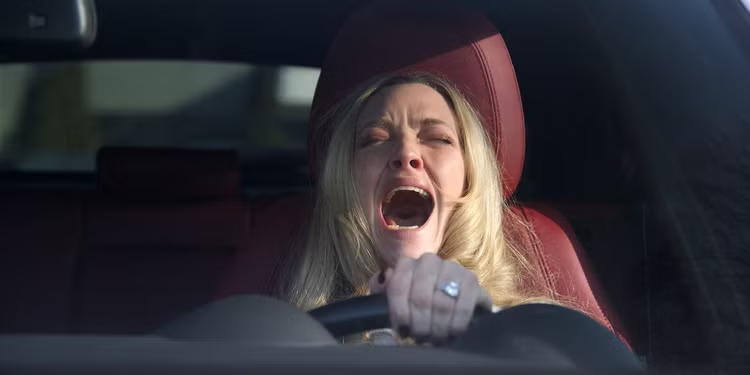
Paul Feig’s The Housemaid starts out like a glossy, gossipy domestic thriller. A young woman named Millie Calloway (Sydney Sweeney) needs work fast, and a live-in job with the wealthy Winchesters sounds like a reset button. Nina Winchester (Amanda Seyfried) seems flighty, volatile, occasionally cruel. Andrew Winchester (Brandon Sklenar) seems steady, attentive, safe. You can feel the movie nudging you toward a familiar question: which spouse is the real problem here?
Then there’s a moment where the film stops playing “messy rich-people drama” and slips, almost politely, into horror. It isn’t a jump scare. It’s a click.
The Movie Teaches You the Wrong Kind of Tension First
For a while, the dread looks social, not supernatural. Millie enters a world of money that feels clinical and performative: a big house, a bright palette, a mother who can turn a minor inconvenience into a day-ruining event. The early discomfort comes from watching Millie try to be invisible while also being perfect, which is a special kind of exhausting.
Nina’s behavior pushes the story toward the “unreliable woman in a beautiful house” lane. Seyfried plays her with a sharp edge that makes every scene feel like it could curdle at any second. Millie’s employment depends on tolerating it, and the film keeps reminding you that she doesn’t have the freedom to simply walk out and pick a different job.
That’s the key setup trick. The movie convinces you the threat is emotional chaos and class humiliation. It wants you to brace for humiliation, not confinement.
The Lock Is the Real Genre Switch
The moment The Housemaid tips into horror is when Andrew escorts Millie up to the attic room and locks the door from the outside.
On paper, that sounds like a plot point. On screen, it functions like a ritual. The film has already shown you the attic as a slightly “off” space, but you file that away as atmosphere. When the lock turns, the movie weaponizes something you thought was just production design. The room was never merely small or inconvenient. It was a cage that had been waiting for the story to catch up.
What makes it quietly terrifying is how mundane it feels. No dramatic speech. No villain monologue. Andrew doesn’t need one. He uses the same calm, reasonable tone he’s been using all along. He performs concern, then performs disappointment, then performs control. The horror lands because the violence is administrative. The message is clear: you are not a guest here, and you are not an employee either. You are property.
This is also where the house itself changes shape in your head. A staircase stops being elegant and starts being a chute. A doorframe becomes a boundary line. Even the silence reads differently, because the film has taught you that the Winchesters’ home runs on unspoken rules. Once the lock clicks, those rules finally reveal what they were always for.
The Scariest Part Is How “Reasonable” It All Looks
Lots of horror movies rely on darkness, storms, old wallpaper, a sense that the building is cursed. The Housemaid goes the other way. The house looks pristine. That cleanliness becomes the threat.
Andrew’s control doesn’t arrive as rage. It arrives as standards. The film frames domestic tasks, lists, and expectations as a language of obedience. It’s the kind of coercion that hides behind politeness and “good taste.”
The lock moment works because it retroactively stains everything. That guest room you thought was slightly humiliating now reads like a premeditated containment strategy.
The “nice” husband who smooths things over now reads like someone who has been managing perceptions, not emotions. The movie doesn’t suddenly become about a dangerous man. It reveals that it has been about a dangerous man the whole time.
The Attic Reframes Nina, and That’s Part of the Horror Too
Once the film shows you the lock, it forces you to reconsider Nina’s behavior. The story reveals that Nina wasn’t spiraling randomly. She was surviving a system Andrew built, and she had learned to look unstable because it was the only shape of resistance available to her.
That reframe carries its own punch. The film isn’t only saying, “Surprise, the husband is the villain.” It’s also saying, “Look how easily everyone believed the wrong story.” The house, the money, the marriage, the polished dinner parties, they all function like evidence in Andrew’s favor. He doesn’t need to be charming to control people. He just needs to look plausible.
The horror isn’t only in what he does behind closed doors. It’s in how the world outside those doors helps him.
Millie’s Survival Instinct Turns the Movie Sharper
Sweeney plays Millie as someone who has trained herself to stay small until she can’t anymore. That’s why the lock moment hits so hard. It traps a character who has already been living with limited options. Millie isn’t naïve. She’s cornered.
And when the movie moves into its final stretch, it leans into a grim, satisfying reversal. Millie stops trying to decode the household’s mood swings and starts treating the situation like a direct threat to her body. The film shifts from psychological dread to something more visceral and explicit, with Andrew’s punishments escalating into overt torture.
Why This Moment Sticks After the Credits

The lock works as a horror beat because it’s simple, physical, and irreversible. It’s also painfully believable. A lot of viewers can’t relate to haunted basements or demonic dolls, but many people understand the vulnerability of being in someone else’s home, dependent on their goodwill, trying not to make a mistake.
The Housemaid takes that everyday anxiety and follows it to its worst conclusion. The film uses a clean suburban setting to show how captivity can look like comfort from the outside. It uses a polite voice to deliver something brutal. And it chooses a moment that feels almost too small to count as a turning point, until you realize it’s the most important sound in the movie: the soft, final click of a door that was designed to keep someone in.

Rachel Sikkema is a New Zealand-based writer and creative entrepreneur who explores the intersection of film, culture, and modern relationships. Through her articles, she examines how stories shape the way we connect, love and see ourselves – all for God’s glory. When she’s not writing about film and television, she’s watching Dexter and The White Lotus for the third time.