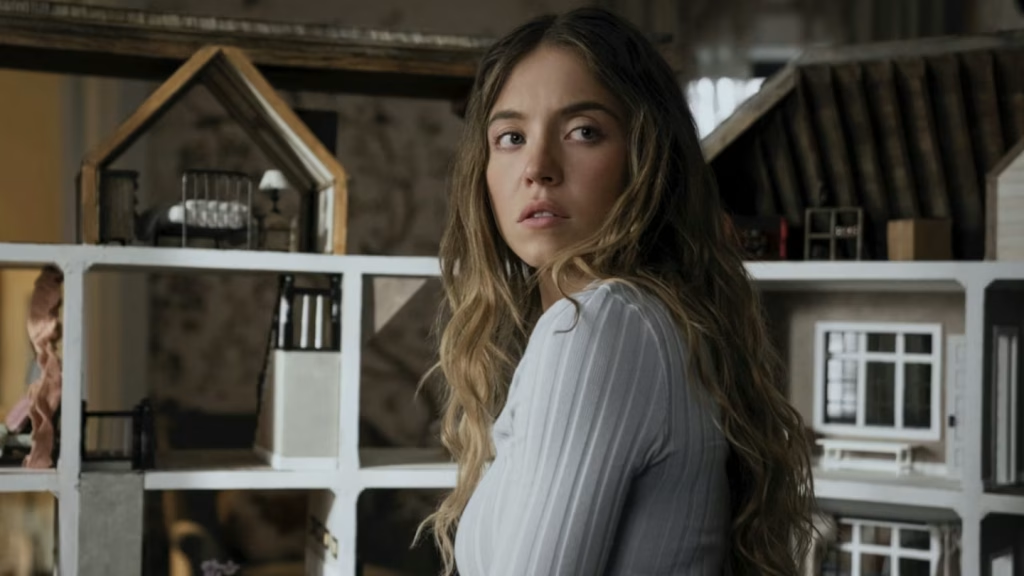
If you walked into The Housemaid cold, you’d probably assume the power dynamic is simple: rich family, desperate hire, and a big house that swallows you whole. And for the first stretch, the movie wants you to stay comfortable in that assumption. Millie Calloway (Sydney Sweeney) needs the job, Nina Winchester (Amanda Seyfried) feels unpredictable, and Andrew Winchester (Brandon Sklenar) plays the polished, reasonable husband who looks like he’s doing Millie a favor by treating her like a person.
But the longer you sit with it, the clearer it gets that The Housemaid isn’t asking “Who’s the villain?” as much as it’s asking “Who understands the rules of this house?” Because in this story, power doesn’t come from money alone. It comes from control of space, control of narrative, and the ability to make someone doubt their own reality.
I’m going to talk spoilers, because the power question only really lands once you know what’s been happening behind the scenes.
The House Is the First Weapon
The Winchester home looks like safety from the outside: manicured, expensive, the kind of place where you expect problems to be solvable with the right phone call. Inside, it’s built like a soft trap. Millie’s attic room has a sealed window and a lock that can keep her in. That detail matters more than any line of dialogue, because it tells you the house has been designed, emotionally and physically, to make a person small.
That’s the first clue about who holds the real power. It isn’t Nina because she signs the paycheck. It’s whoever can decide where people are allowed to exist, where they can go, and what happens when they try to leave.
Nina Looks Unstable, but She’s Playing a Longer Game
For a big chunk of the movie, Nina reads like the classic wealthy-problem character: moody, erratic, and impossible to please. The point isn’t that she’s harmless. The point is that her instability becomes the story everyone agrees to tell about her.
Once you learn what Nina has lived through, her behavior snaps into focus as something sharper than “she’s losing it.” Nina has already been trapped in that attic room. She already knows what Andrew is. And she already knows how easy it is for a charming man to turn a woman into a headline about hysteria, breakdowns, and “what a shame.”
Andrew’s Power Is Coercive Control, Not Charm

Andrew is the movie’s cleanest portrait of how power can look polite. He doesn’t need to rage in public because he has other tools: isolation, credibility, and the ability to frame events so he always looks like the reasonable one. When he plays calm, people believe him. When he looks concerned, people side with him.
The house supports his control, and so does the story he’s built around himself. Nina gets labeled “unstable.” Millie gets labeled “criminal.” Andrew gets labeled “provider.” That’s a rigged courtroom before anything even happens.
His most frightening power move isn’t even the violence. It’s the way he turns “care” into surveillance and “forgiveness” into ownership. When he locks Millie in the attic and demands she hurt herself as punishment, he’s not improvising. He’s repeating a ritual. He has done this before, and he expects the house to back him up.
If you want the blunt answer to the title question, Andrew holds power for most of the film because he controls the environment and the narrative. He makes other people’s credibility feel temporary.
Millie’s Power Is Her Refusal to Stay Cast as the Victim
Millie walks in with the least obvious power: she has nothing to lose, and she’s learned how to read danger quickly. The movie makes a smart choice by giving her a past that follows her into every room. Her parole status and record don’t just add backstory; they change how every character treats her. She is always one mistake away from being disbelieved.
And that’s exactly why she becomes dangerous to Andrew.
Millie’s power isn’t that she can out-rich the rich people or out-lawyer Andrew. It’s that she can see the pattern and she can act. When she fights back, it isn’t framed as a superhero moment. It’s messy, desperate, and deeply human.
Enzo Shows How Power Can Be Quiet and Still Matter
Enzo Accardi (Michele Morrone), the groundskeeper, sits in an interesting position. He’s inside the Winchester world but never truly part of it. He sees things, he hears things, and he understands that official channels won’t save anyone in that house.
Enzo’s power is limited, and the movie doesn’t pretend otherwise. He can’t simply march in and stop Andrew, because Andrew’s power is social and institutional as much as it is physical. But Enzo represents a different kind of leverage: witness.
The Ending Argues That Power Is Also About Who Gets Believed

The final stretch makes a pretty bold claim: in a world that’s already decided who counts as “credible,” survival can require narrative engineering. Nina and Millie don’t defeat Andrew in a tidy moral universe where truth wins automatically. They win by understanding how the world outside that house will interpret what happened.
That’s why the staging of events matters. That’s why the policewoman Jessica Connors becomes a quiet hinge point. She recognizes the inconsistencies, but she also knows the cost of pushing against a story that has already been socially accepted. The film turns that into a grim kind of realism: justice isn’t only about evidence. It’s about which version of reality people are willing to carry.
And then the epilogue twist lands like a cold wink. Millie walks into another interview, another house, another husband-shaped shadow in the background. It’s not a victory lap. It’s a mission statement. Millie’s power at the end is that she chooses the terms of her next move.
So Who Really Holds the Power?
If you’re measuring power by money, Andrew wins until he doesn’t. If you’re measuring by physical control, Andrew wins until Millie refuses to comply. But if you’re measuring by strategic understanding, Nina is the one who turns the whole story. She sees the trap, anticipates the next victim, and builds an exit that doesn’t rely on anyone suddenly becoming kind.
The movie’s real answer is a little meaner and a little more interesting: power belongs to whoever can name what’s happening.

Rachel Sikkema is a New Zealand-based writer and creative entrepreneur who explores the intersection of film, culture, and modern relationships. Through her articles, she examines how stories shape the way we connect, love and see ourselves – all for God’s glory. When she’s not writing about film and television, she’s watching Dexter and The White Lotus for the third time.