The image everyone remembers from Weapons is those children sprinting into the dark with their arms stuck out like airplane wings. It looks absurd for half a second, then the absurdity curdles. Kids should look clumsy when they run at night. These kids look summoned.
Zach Cregger knows that image has trailer power. Seventeen children leave their beds at 2:17 in the morning, all from the same classroom, all gone before anyone can make sense of the doorbell footage. It is a clean horror premise, the kind you can explain in one breath and ruin a whole dinner with.
But the missing kids are the bait. The thing that lingers after Weapons is much smaller and nastier.
It is the sight of ordinary adults becoming tools.
The Town Keeps Reaching for Someone to Blame
Maybrook reacts to the disappearances with a speed that feels horribly believable. The parents need a shape for their grief, so Julia Garner’s Justine Gandy becomes that shape. She taught the class and survived the morning after. She has a messy personal life and a face that looks guilty when she is simply exhausted.
Garner plays Justine with that brittle, almost translucent intensity she does so well. She seems like someone who has been trying to pass as fine for years and has finally lost the paperwork. When the town turns on her, the movie gets something sharp about public suspicion. People want an answer before they want the truth.
Josh Brolin’s Archer Graff is the most painful version of that impulse. He is a father with nowhere useful to put his terror, so he turns it into investigation, accusation, and blunt force certainty. Brolin makes him feel dangerous and broken at the same time. You understand why he cannot sit still. You also want him out of every room he enters.
That early stretch has plenty of dread, but it is human dread. Grief makes people ugly. Communities love a scapegoat. Police departments move too slowly for parents whose children vanished in pajamas. All of that hurts because it has weight.
Then Weapons starts showing us people whose ugliness has been replaced by obedience, and the movie becomes much colder.
Gladys Makes the Body Feel Borrowed
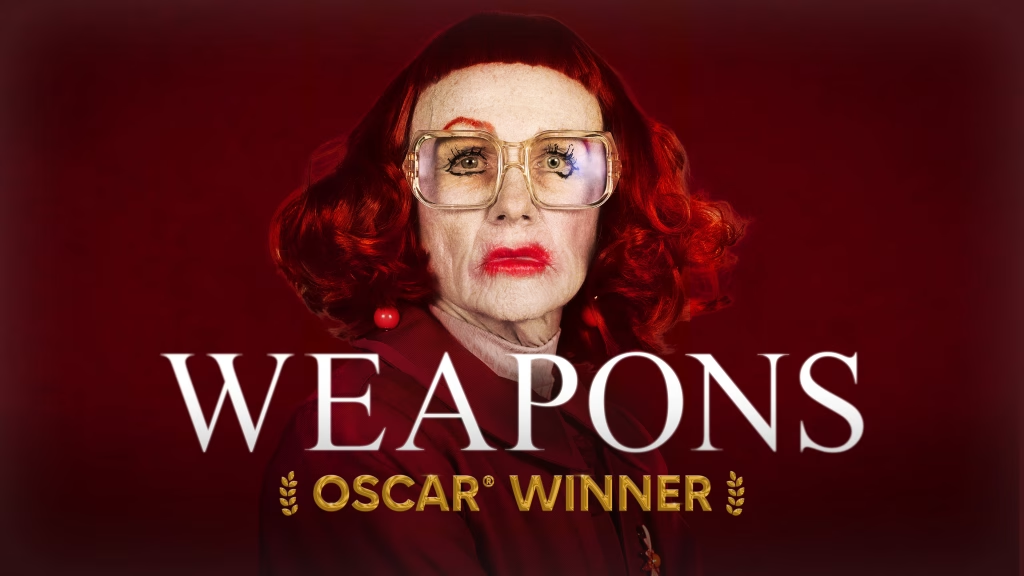
Amy Madigan’s Aunt Gladys is the film’s real nightmare engine, and her performance has that awful storybook quality where funny and vile keep touching hands. She looks like someone’s weird relative from a childhood visit you tried to forget. Too bright, too powdered. Too pleased with herself.
The genius of Gladys is how she makes control look domestic. The horror around her does not arrive as thunder and Latin chanting. It sits inside a house with covered windows. It uses hair, plants, bowls, basement stairs, and the sickly intimacy of a family space gone rotten.
That matters. Weapons keeps taking places that should protect people and making them feel compromised. A bedroom. A classroom. A family home. A principal’s office. The movie understands that suburban horror works best when the threat has already found the spare key.
Gladys does something worse than murder for much of the film. She turns people into extensions of herself. Parents sit slack and emptied out. School staff become useful. Adults who once had names, routines, grudges, and jobs become moving parts in someone else’s appetite.
That is the creepiest thing in Weapons. The body keeps walking, but the person has been pushed somewhere far away.
The Adult Victims Are More Frightening Than the Children

The children’s disappearance is terrifying because kids carry instant emotional stakes. A vanished child changes the air in a room. Seventeen vanished children changes the air in an entire town.
Still, the kids spend much of the movie as an absence. They are an open wound, a question, a pattern in grainy footage. The adults are the ones we watch degrade in real time.
Cregger has a nasty eye for the moment a person stops seeming fully present. A face held too still. A movement that arrives half a beat late. Someone standing in a room with the blank patience of furniture. These images lack the operatic charge of the kids running down the street, but they get under the skin in a different way.
Because adults are supposed to have defenses. They have car keys, phones, language, suspicion, shame. They can call somebody and explain.
Weapons strips all of that away. It turns adulthood into a costume that offers zero protection once the spell has settled in.
That is why Benedict Wong’s Marcus Miller hurts more than expected. He brings such warmth and decency to the principal that watching him get pulled into Gladys’ orbit feels personally insulting. The movie has a cruel little talent for making you care about people right before it uses them badly.
The Title Keeps Getting Uglier
The word Weapons sounds blunt at first, almost too simple. You expect guns, knives, maybe the weaponized grief of the parents. Cregger gives us something slipperier. A weapon can be a child. A parent. A teacher’s reputation. A town’s panic. A body with the self removed.
That idea gives the movie its sickest charge. Gladys does not need an army in the usual sense. She needs people near enough to touch, cut, charm, dose, or direct. The horror is logistical. She turns human beings into resources.
This is where the film feels most connected to Barbarian, even though the shape is larger and more sprawling. Cregger loves basements, sure, but he seems even more interested in the social machinery that lets horror keep operating. People ignore signs and protect themselves first. People make assumptions that help the wrong person.
In Weapons, the supernatural explanation never wipes away the ordinary rot. The town already has anger. The police already have limits. Justine already has wounds people can use against her. Archer already has a need to punish someone. Gladys pushes on weaknesses that were sitting there in daylight.
That makes her power feel less like a random curse and more like an infection finding soft tissue.
Alex Is the Saddest Part of the Machine
Cary Christopher’s Alex Lilly gives the film its most unsettling stillness. As the one child left behind, he carries a terrible amount of narrative pressure, but the performance stays small. He looks trained by fear. Careful in the way children become careful when the adults around them are unsafe.
Alex’s house is the film’s true haunted location. The covered windows make it feel cut off from time. The parents inside seem less like guardians than props arranged by a cruel stage manager. Every room has the feeling of a secret that has been sweating for days.
What makes Alex so disturbing as a character is the way survival has taught him procedure. He knows what must be done. He knows where things go. He knows how to move around the monster in the house. That kind of knowledge in a child feels obscene.
The ending gives him agency, but it never plays like clean triumph. Once children have been made into weapons, even rescue looks contaminated. The violence has a release to it, and maybe even a grim joke, but it also leaves a bruise. Those kids come back from somewhere adults sent them. Childhood resumes in theory. The movie gives you every reason to doubt theory.
The Scare That Stays After the Lights Come Up

A lot of horror movies build their power around the fear of losing children. Weapons uses that fear well. It knows exactly how awful those empty desks look. It knows the sound a parent makes when panic has become a permanent condition.
Yet the film’s deeper fear is about losing ownership of yourself.
That is why the possessed adults stick with me more than the central mystery. Their blankness has a hideous intimacy. They are close enough to recognize and far enough gone to feel unreachable. The person is still there as evidence, but agency has been stolen.
Gladys is frightening because she makes people useful. Not dead. Not monstrous in some grand cinematic way. Useful. That word has a nasty little click to it.
By the time Weapons shows its full hand, the missing children have become part of a larger violation. The town thought the nightmare was a question of where they went. The real horror is what someone could make them do, and how easily adults could be folded into the same design.
That is the image I keep returning to. A person standing in a familiar room, waiting for instructions that should never have entered their head. A home that looks like a home until you notice every will inside it has been replaced.
The kids running into the night sell the movie. The adults waiting in silence are what make it rot.

Rachel Sikkema is a New Zealand-based writer and creative entrepreneur who explores the intersection of film, culture, and modern relationships. Through her articles, she examines how stories shape the way we connect, love and see ourselves – all for God’s glory. When she’s not writing about film and television, she’s watching Dexter and The White Lotus for the third time.