
There are crime thrillers that win you over with plot, and there are crime thrillers that win you over with people. The Rip sits comfortably in the second camp. You can feel the engine of this movie running on paranoia, pressure, and a big, sweaty ticking clock, but the thing that keeps it from turning into background noise is the relationship at the center.
When Matt Damon’s Lieutenant Dane Dumars and Ben Affleck’s Detective Sergeant J.D. Byrne start making choices that blur the line between survival and self-interest, their history shows up in every look, every interruption, every slightly too-long pause.
You can call it star power if you want, but that undersells what’s happening. Damon and Affleck don’t have to sell “bond.” They start with it, then the movie spends two hours testing how much it can take.
The Setup Gives Them the Perfect Pressure Cooker
The Rip opens with the Miami-Dade Police Department’s Tactical Narcotics Team already under strain. Captain Jackie Velez (Lina Esco) is dead, rumors are swirling about crooked cops, and the unit is the kind of workplace where loyalty is both currency and weapon.
Then comes the tip: a stash house in Hialeah, a quiet entry, and a discovery that detonates the entire operation. Dumars and Byrne lead the team inside and find a mountain of cartel cash hidden away, the kind of number that doesn’t feel like money so much as a life-altering event. The moment they see it, the movie stops being a procedural and becomes something closer to a trust exercise held at gunpoint.
This premise needs two leads who can make professional competence feel like a personality trait, not a job requirement. Damon and Affleck do that effortlessly. They carry themselves like cops who’ve done this dance a thousand times, which makes every later crack in the routine feel alarming.
Dumars and Byrne Feel Like a Real Partnership, Not a Screenplay Idea
The movie doesn’t waste time explaining why Dumars and Byrne work well together. It shows you in the small stuff: the way they divide tasks without talking, the way Byrne reads Dumars’ mood shifts, the way Dumars anticipates Byrne’s objections before he makes them.
That’s where chemistry actually lives. It’s not in big speeches about brotherhood. It’s in how quickly two actors can establish shared rhythm. Damon and Affleck have that rhythm baked in, and The Rip smartly leans on it whenever the plot threatens to get too busy.
Byrne also has an emotional tether to the case because of his relationship with Jackie Velez, and Affleck plays it with a guarded, simmering edge. He doesn’t turn Byrne into a grief machine. He turns him into a guy trying to keep functioning while carrying something heavy. Damon matches that energy by giving Dumars a watchful, managerial calm that reads like leadership until you realize it could also be control.
When the pressure rises, their dynamic doesn’t snap all at once. It frays. That’s much more interesting.
Their Banter Feels Earned, Not “Written Funny”
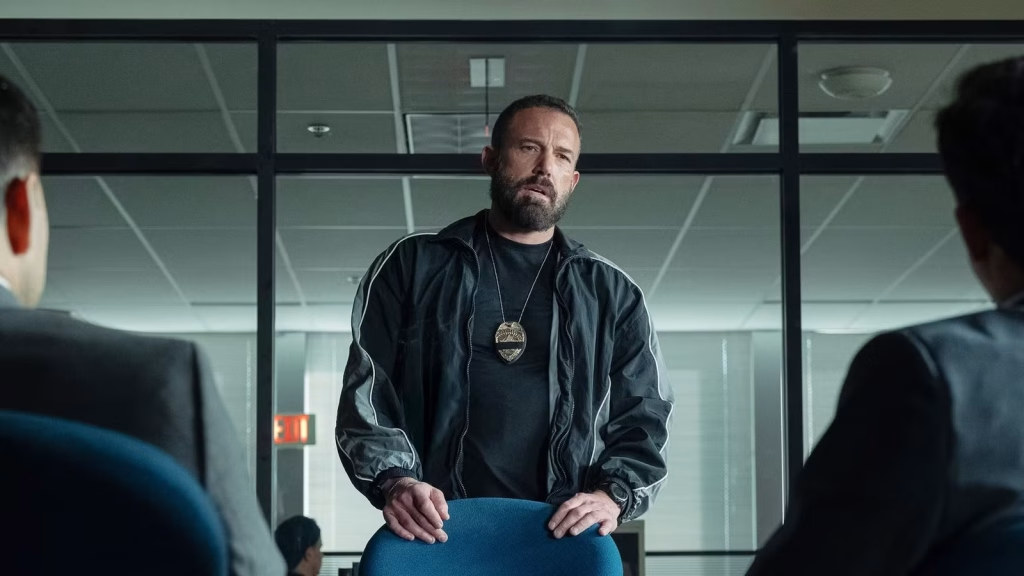
A lot of modern action thrillers confuse quips with character. The Rip avoids that trap most of the time because Damon and Affleck are good at conversational messiness. They overlap. They cut each other off. They let jokes land sideways.
When they tease each other, it doesn’t feel like comic relief airlifted in from another movie. It feels like two coworkers using humor to keep the room from turning into a panic spiral. And once the situation gets truly unstable, the jokes dry up in a way you notice. That shift registers emotionally because the earlier lightness felt natural.
Their shared history also lets them play moments that are funny and tense at the same time. You can laugh, then immediately think, “Wait, should I be laughing right now?” That uneasy feeling is exactly what a paranoia thriller wants.
The Movie Weaponizes Trust, and They Make It Hurt
Here’s the uncomfortable truth at the center of The Rip: the heist element doesn’t come from outsiders first. It comes from the idea that someone inside the unit might decide they deserve a piece.
Dumars makes a key decision early that changes everything. He withholds information, controls the scene, and treats standard procedure like an optional suggestion. Damon plays those choices with enough restraint that you can believe Dumars thinks he’s protecting his people, at least at the start. That ambiguity matters. If Dumars reads as a cartoon villain, the movie becomes a simple moral lesson. Instead, he reads like a guy who’s good at his job and now thinks that means he can outsmart the consequences.
Affleck’s Byrne becomes the audience’s emotional barometer. He’s loyal, but he’s not blind. He wants to believe in Dumars, and you can see the exact moments where belief starts requiring effort. That’s where their chemistry becomes plot. The movie doesn’t need to explain the stakes with extra exposition because their faces do it. A slight change in Byrne’s tone can make a scene feel like a breakup.
Why Their History Outside the Film Actually Helps Here
There are times when “these actors go way back” becomes a marketing line that doesn’t show up on screen. The Rip is a case where the audience’s awareness of Damon and Affleck’s long-running creative relationship adds texture, even if you try to ignore it.
The film benefits from the sense that these two characters have known each other long enough to communicate with shortcuts. The audience buys the shortcuts because the actors sell them without trying. That matters in a story that moves fast and stacks complications. The movie can keep the pace up because it doesn’t have to stop and prove the partnership in every scene.
Chemistry Is the Difference Between a Solid Thriller and a Sticky One

Plenty of crime thrillers have good premises. A stash house, cartel money, a team under suspicion, and a night that keeps getting worse is a recipe that basically guarantees competence. What’s harder is making the audience care who walks out whole.
The Rip works because Damon and Affleck make the central partnership feel lived-in. They give the movie its human pulse, the thing you keep tracking even when bullets start flying and plans start collapsing. You’re not only watching a mess unfold. You’re watching two men try to decide what they owe each other when the easiest option is to choose themselves.
That’s why the film sticks. The action creates the noise, but their chemistry creates the meaning.

Rachel Sikkema is a New Zealand-based writer and creative entrepreneur who explores the intersection of film, culture, and modern relationships. Through her articles, she examines how stories shape the way we connect, love and see ourselves – all for God’s glory. When she’s not writing about film and television, she’s watching Dexter and The White Lotus for the third time.