By Rachel Sikkema
Published November 18, 2026

Yes, his brother’s betrayal changed Dane Cook’s career. Losing millions to his half-brother and business manager, Darryl McCauley, damaged his financial security and disrupted the fxuture he had imagined for himself. The emotional fallout also made an already difficult professional transition harder. Cook has acknowledged that his career was cooling when the theft came to light in 2008. The betrayal arrived during that slowdown and made finding his next direction considerably more painful.
That distinction matters in Funny Money. Brett Harvey’s documentary gives audiences a fuller understanding of what was happening behind Cook’s public image. It also leaves room for a less convenient truth. A comedian can lose cultural momentum while suffering something devastating that the audience barely understands.
The film’s strongest contribution is making those two experiences visible together.
The Money Represented a Future He Was Already Planning
The obvious damage is financial. Years of work had produced earnings that should have given Cook room to decide what came next. Discovering that someone inside his family had stolen millions transformed that security into a crisis.
Cook has described wanting to expand his production company and move further into directing and producing. He imagined using his success to help other performers get projects made. Those ambitions depended partly on the money he believed he had saved. The theft disrupted his ability to pursue them on his own terms.
There is a substantial difference between having enough public recognition to land another job and having the resources to choose your next several years. An established performer can still earn while losing the freedom that earlier success was supposed to buy.
That is where the career question becomes more interesting. A stolen fortune can mean a project postponed indefinitely. It can mean accepting work because rebuilding has become urgent. It can also mean spending time dealing with the wreckage when that time might otherwise have gone into writing or developing something new.
The specific career Cook might have built remains hypothetical. His account does establish that he had plans beyond extending his arena-comedy peak.
Cook’s Career Was Already Changing

Any explanation of Cook’s trajectory has to make room for how enormous his fame became.
For a stretch of the 2000s, his physical delivery and excitable storytelling seemed to be everywhere. Albums such as Harmful If Swallowed helped turn him into a comic whose fans treated familiar routines almost like songs. His internet following became part of his professional identity. Then came film roles and the kind of exposure that makes an entertainer difficult to avoid.
That level of visibility tends to produce exhaustion as well as devotion. Cook became a particularly easy target for people who disliked the loudness of his act or the audience surrounding it.
In discussing Funny Money, he has been candid about feeling tired of his own saturation. He has also described struggling to explain what had happened once public attention began moving elsewhere.
That admission gives the story credibility. The theft offers a serious explanation for the strain he was under. Audience tastes and the backlash around his success still belong in the picture.
It would take far more evidence to assign every missed opportunity or change in popularity to McCauley. The useful conclusion is narrower. Cook entered a difficult stage of his career carrying a private disaster that made adapting to it harder.
Why Trusting His Brother Mattered So Much
The family relationship gives the financial story its weight.
Cook has explained that having McCauley involved in his business made him feel protected. Show business came with unfamiliar contracts and people whose motives he questioned. His brother represented someone connected to the life he had before fame.
McCauley’s responsibilities grew alongside the business. What began with practical assistance developed into control over finances. Cook describes trusting the financial summaries his brother supplied. The arrangement depended heavily on the belief that their shared history meant something dependable.
That belief helps explain why the discovery could reach into Cook’s working life so deeply. Once the person handling your money has deceived you, even ordinary professional decisions can acquire a miserable extra layer of doubt.
Who gets access? Whose reassurance means anything? How much checking is enough?
For someone whose livelihood involves getting onstage and projecting confidence, those questions can be exhausting. The public sees the performer who knows how to command a room. The person making decisions afterward has to work out whom he can trust.
There is something especially ugly about success becoming the mechanism through which a family member can hurt you.
What Funny Money Adds Beyond the Theft Headline
The headline gives audiences a famous comedian and an enormous financial loss. The documentary expands the circle around that event.
Harvey includes relatives and people connected to the business and investigation. That broader range of accounts gives the story a life beyond Cook’s recollection. There are other relationships to examine and other people who experienced parts of the situation he never saw.
Cook has said he kept his distance from Harvey’s other interviews during production. Watching the material introduced him to details he had previously missed. That makes the filmmaking process itself relevant. Even the person at the center of the story was still learning what had happened around him.
The value here is perspective. A short account of stolen money can make the consequences sound finite. Discovery, investigation, punishment, move on.
A family betrayal resists that tidy sequence. Knowing how money disappeared can leave the emotional question painfully open. Cook still has to reconcile the brother he remembers with the conduct he eventually discovered.
That unresolved relationship gives the film more staying power than the size of the loss alone.
The Documentary Changes How His Absence Looks
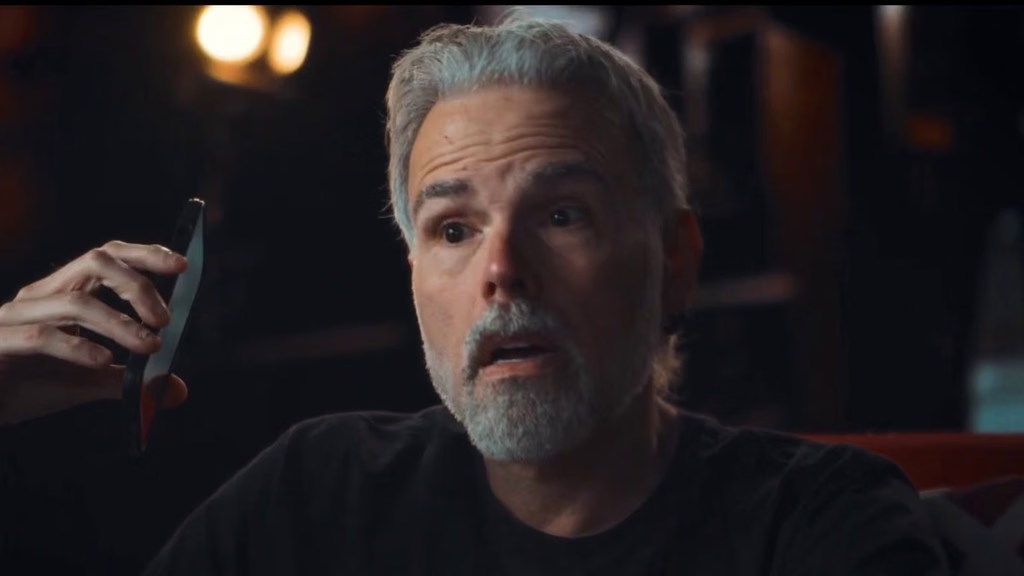
For viewers who remember Cook mainly as a huge star who became less visible, Funny Money supplies missing context. A familiar celebrity story about fading popularity becomes more complicated once the personal crisis enters the frame.
It is possible to dislike his comedy and recognize the damage done to him. Sympathy requires very little adjustment to anyone’s taste in stand-up.
The film also gives Cook an opportunity to tell a story he struggled to fit into his usual format. He has discussed trying material about the theft and feeling that jokes gave the experience too little room. A documentary allows him to stay with the confusion without having to earn a laugh every few sentences.
His brother’s betrayal changed the resources he had available and the emotional circumstances in which he worked. Funny Money makes that disruption easier to understand while leaving the career he might have had open to speculation.
For Cook, perhaps the most meaningful shift is that he can finally discuss those lost possibilities in public. He spent years being recognizable for the confidence of his act. Now there is room to hear what happened when that confidence failed him.

Rachel Sikkema is a New Zealand-based writer and creative entrepreneur who explores the intersection of film, culture, and modern relationships. Through her articles, she examines how stories shape the way we connect, love and see ourselves – all for God’s glory. When she’s not writing about film and television, she’s watching Dexter and The White Lotus for the third time.