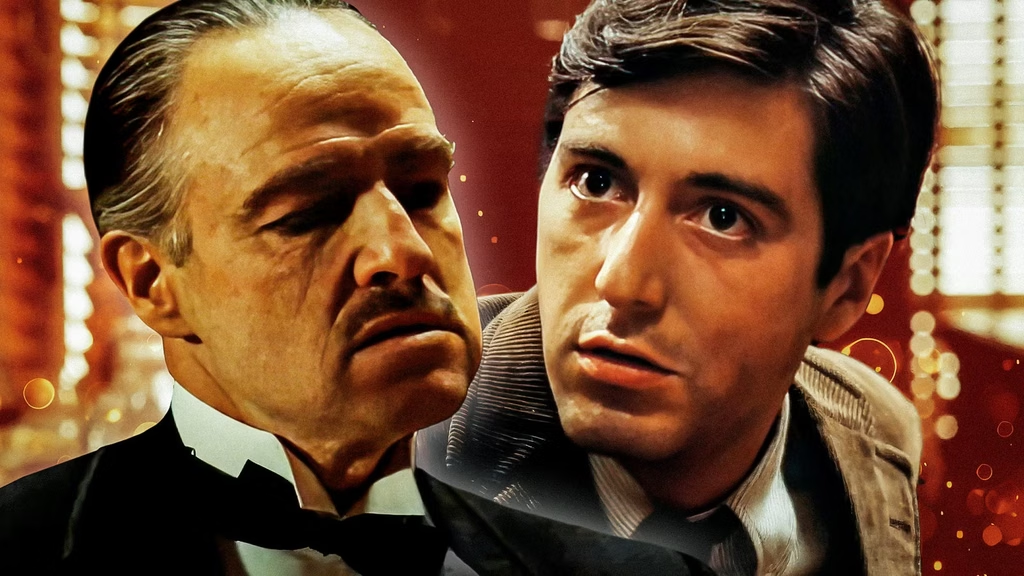
When Michael Corleone proposes killing Sollozzo and Captain McCluskey in The Godfather, the men around him laugh. His older brother Sonny finds the idea especially entertaining. Here is the college boy with the military record explaining how he will shoot a drug dealer and a police captain over dinner.
Michael lets the laughter pass. Then he addresses the practical objections.
That is the moment Al Pacino really gets under my skin. Michael sounds prepared. He understands the problem with killing a police officer and has an answer for how the family can handle the resulting publicity. He makes a double murder sound like the sensible proposal everyone else has been too distracted to consider.
And for a few dangerous seconds, you can find yourself agreeing with him.
He Gives Us Good Reasons to Trust Him
Francis Ford Coppola gives Michael an enormous advantage at the wedding. He gets to explain the Corleones to Kay Adams, which also means he gets to explain them to us.
In his uniform, sitting beside Diane Keaton’s Kay, he looks like someone who has found a life beyond the family business. He can tell the horrifying story of how his father helped Johnny Fontane escape a contract because he appears to have some distance from it. Kay registers the brutality. Michael understands why she would.
Pacino makes that early ease appealing. There is room in his face for amusement. He seems capable of recognising how strange his family looks from the outside.
We carry that impression with us. Later, when Michael starts proposing violence, some part of us still hears the young man who could see the whole arrangement clearly. His intelligence has already earned our confidence.
The film is wonderfully nasty about using that confidence. Michael keeps the calm delivery as his choices become monstrous. We have to work out exactly when the person we trusted began using our trust against us.
The Hospital Makes His Argument for Him
The hospital sequence gives Michael a powerful case.
His father lies vulnerable in a building where the protection has mysteriously disappeared. Michael recognises the danger and moves him. Outside, he persuades Enzo the baker to stand with him and bluff the approaching men into believing they are armed guards.
These are brave, useful things to do. Michael acts while other people have left his father exposed.
Then comes the lovely, terrible detail with the lighter. Enzo’s hands shake. Michael’s are steady. Pacino gives the discovery a small beat, almost as though Michael has just learned something interesting about his own body.
I always find that more disturbing than a grand declaration of intent. A capacity has revealed itself. He can function here.
McCluskey then punches him in the face, giving physical force to everything the family believes about legitimate authority. The police captain is protecting the people threatening Vito. Michael has evidence that the respectable world offers very little help.
His reasoning starts from something real. That gives it staying power. He can return to the danger his father faced whenever another decision needs defending, even as his ambitions stretch far beyond that hospital room.
Listen to How Quickly Murder Becomes Logistics

During the discussion about Sollozzo, Michael changes the terms of the conversation. Sonny hears a personal response to being hit. Michael talks about access, a concealed weapon and the newspaper people who can help manage the story afterward.
Everyone has something practical to consider. The moral question gets squeezed out by the arrangements.
This is where the film becomes especially uncomfortable to watch with an audience. We want to know whether the gun will be there. We want Michael to remember the instructions. Once he reaches the restaurant bathroom, the suspense attaches itself to his ability to carry out the plan.
Coppola has given us a task to follow. We become invested in its completion.
The restaurant sequence still allows us to feel what the planning has compressed. Michael sits under the pressure of Sollozzo’s conversation. The sound of the train rises around him. Pacino’s eyes do extraordinary work as he gathers himself inside a decision he has already presented as straightforward.
The act costs him something. You can see the effort.
That makes his earlier composure more unsettling. Michael can experience the enormity of what he is doing and still proceed. Thoughtfulness offers very little reassurance when thought has become a way of granting permission.
Sonny Is Easier to Read
James Caan gives Sonny an emotional life that practically barges through the furniture. His temper announces itself. Affection and fury sit close together, and everyone in the family knows how quickly he can move between them.
Michael becomes harder to read with every scene.
There is an obvious temptation to call that maturity. He listens and waits. He can hold a conversation without letting the other person dictate its pace. In a room full of volatile men, those qualities look valuable.
Pacino gradually makes them feel suffocating.
By the time Michael confronts Carlo about his role in Sonny’s death, his measured manner has become a weapon. He offers Carlo a version of events in which confession leads to survival. There is a future available, apparently. Carlo only needs to be sensible and tell the truth.
Michael even invokes their family relationship as reassurance.
Watch how thoroughly he controls what Carlo believes is happening. Carlo thinks he is negotiating the consequences of his betrayal. Michael already knows how the conversation ends. His patience helps extract the admission he wants.
The calm voice now belongs to someone arranging another man’s final moments.
Every Emergency Leaves Him With More Power
Michael always has a reason ready, and the reasons often contain enough truth to be persuasive. His father was in danger. Sollozzo was a threat. Carlo helped set Sonny up.
The trouble lies in what Michael allows those facts to authorise.
Each crisis expands the territory over which he claims final judgment. He decides who threatens the family. He decides what protection requires. Eventually, he also decides which truths the people closest to him are allowed to hear.
There is something horribly familiar about that progression. A person takes control during an emergency because someone has to. The emergency passes, but the control stays.
The baptism sequence gives Michael’s self-justification its most savage setting. He stands as godfather to Connie and Carlo’s child while the killings he ordered unfold elsewhere. His spoken renunciation of evil sits alongside the exercise of his power.
All that careful reasoning has delivered him to this point. Other people perform the violence while he occupies a position of solemn responsibility.
He looks entirely at home.
Kay Gets the Answer She Needs to Hear

The final exchange with Kay brings the horror back into an ordinary room.
She asks whether he had Carlo killed. Michael first tries to close the subject, then permits her a single question about his business. Even the opportunity to ask for honesty exists on terms he sets.
His denial is simple. Kay accepts it with visible relief.
That relief hurts. She wants a reason to keep believing in the man she married, and he knows how to give her one. Pacino makes the lie sound settled enough for her to rest on.
Then she sees the men gather around him. The deference tells her something his explanation has concealed. The door closes, leaving her outside the life he actually leads.
Michael has spent the film becoming a man who can make terrible decisions sound necessary. By the end, he can offer reassurance with the same composure he brings to ordering a death.
I find that final calm more frightening every time. Somewhere along the way, I have usually accepted one of his explanations myself.

Rachel Sikkema is a New Zealand-based writer and creative entrepreneur who explores the intersection of film, culture, and modern relationships. Through her articles, she examines how stories shape the way we connect, love and see ourselves – all for God’s glory. When she’s not writing about film and television, she’s watching Dexter and The White Lotus for the third time.