By Rachel Sikkema
Published October 5, 2026

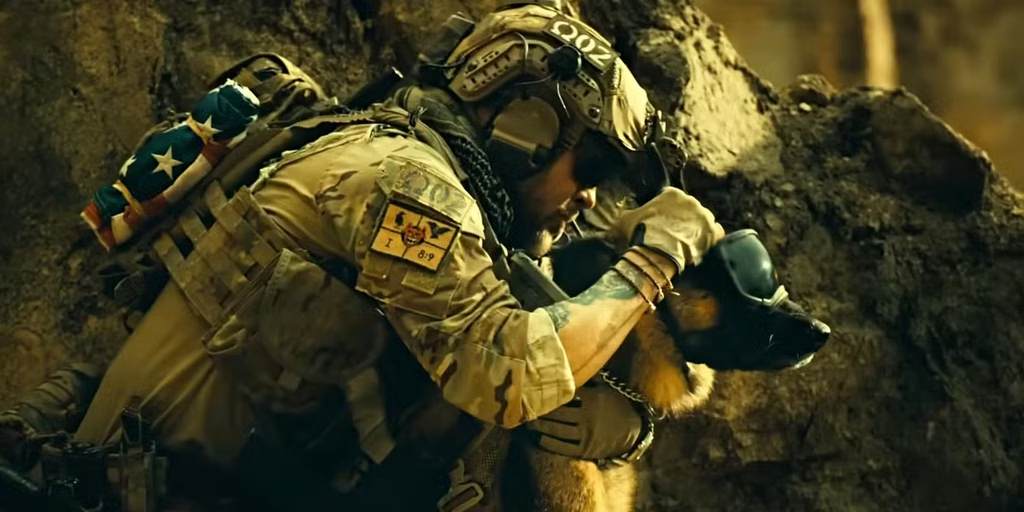
Odin feels like a fully written character in Heart of the Beast because he arrives with a past that still affects him. He has injuries that require care and combat experiences that follow him into sleep. His relationship with Brad Pitt’s James Belmont also has the familiarity of years behind it. By the time their plane crashes in the Alaskan wilderness, this German Shepherd already has a life worth paying attention to.
That early groundwork matters. We care about Odin before the film starts putting him in danger. His survival means something because we have been given a sense of the particular animal doing the surviving.
The more interesting part is how much of that characterisation happens through ordinary contact. James knows him. Odin watches James. Between them sits a whole history of work and companionship that neither needs to explain. For a film with so much physical punishment ahead, that quiet familiarity does a surprising amount of the heavy lifting.
His Past Lives in His Body
Odin’s prosthetic leg is an unusually useful piece of character detail. It tells us that his military service has carried a lasting cost. It also makes his body something we remain aware of as the terrain becomes harder.
A wilderness journey looks different when one of the travellers already needs help moving through it. Every stretch of rough ground brings an extra consideration. Odin has experience and training, but he also has physical needs that continue to matter after his working life has ended.
His titanium teeth add another uncomfortable detail. They belong to the same animal James treats with such affection. The film allows those qualities to exist together, which gives Odin a specificity that the broad label of loyal dog would miss.
There is something affecting about that combination. An animal can be trained to do dangerous work and still need comfort afterwards. Retirement leaves the consequences of the work in place.
Odin’s body carries that history into the frame before anyone has to give us a lengthy account of it. You look at him and understand that James has already had reasons to worry.
The Nightmares Give Him an Experience of His Own
The decision to give Odin disturbed sleep is particularly important. James has memories of combat, and the film extends that burden to the dog who served alongside him.
That gives Odin an emotional life beyond his immediate responses to his handler. Something troubles him even during moments when the present should be safe. He has brought part of the war into the wilderness with him.
There is a painful idea tucked into that choice. James can understand their retirement and choose a remote place to spend it. Odin has to experience safety through what happens around him. Familiar company and repeated care become the things he can actually use.
I find that more persuasive than another demonstration of extraordinary canine bravery. Courage is easy to admire from a distance. Watching an animal struggle to settle asks for a more attentive kind of sympathy.
It also changes the meaning of James’s presence. His familiar voice and touch belong to Odin’s daily sense of security. Their shared past has left them with an unusual knowledge of each other’s distress.
He Gets to Be Good Company
The camping material gives their relationship some welcome breathing room. Before survival becomes the central problem, there is pleasure in these two simply being outdoors together.
The fishing is a lovely example. Odin gets to contribute to dinner. It gives him competence in a setting where the stakes are still pleasantly small, and it lets the partnership have a little humour.
Those moments earn their place. If a film introduces a dog only when something terrible might happen to it, the audience’s affection has very little room to become specific. Here we get time with Odin as a companion whose presence improves an ordinary day.
Even the movement between Odin and the affectionate nickname Odie helps. One name suits the imposing combat dog. The other belongs to someone who has spent enough time with him to have softened the edges.
Anyone who has loved an animal will recognise that slippage. The impressive official name gradually acquires a household version. Affection gets a little silly when nobody else is around.
James’s ease with Odin gives the dog a social world, however small. He has a particular place beside this particular person. That is a substantial amount of character work for a camping trip.
James Treats Him as Someone Worth Listening To
Pitt’s contribution to Odin’s character is easy to underestimate. An animal performance depends partly on the human actor making the exchange feel shared.
James’s attention gives Odin weight. When he watches the dog or responds to him, he makes space for the possibility that something is happening on Odin’s side of the conversation. The audience begins watching for it too.
A glance can suggest uncertainty. Another can feel expectant. The meaning develops through the surrounding action and the familiarity between them. There is pleasure in being allowed to read those exchanges without having every feeling translated into dialogue.
That is where the filmmaking becomes part of the writing. A screenplay can establish a shared history, but the finished character also depends on how long a look lasts and when we return to Odin’s face.
The dogs playing him, led by Uber, provide the physical behaviour. The framing and editing give that behaviour dramatic context. Odin becomes someone we follow across a scene because the film keeps making room for his response.
And yes, a German Shepherd looking intently at Brad Pitt has a considerable head start. The craft lies in making each look belong to the relationship.
Care Makes the Partnership Believable

As the journey becomes harsher, Odin’s needs complicate James’s decisions. James has another body to account for while his own is failing him.
That is an essential part of why the bond works. Love takes up time and uses energy. It influences how far someone can travel and what risks they can accept. The film gives affection practical consequences.
Odin’s established competence matters here too. We have seen enough of his abilities to understand why James trusts him. We have also seen enough vulnerability to understand why that trust comes with concern.
Their dependence on each other can therefore shift. Being capable in one moment leaves plenty of room to need help in the next. That feels right for two veterans attempting a journey that would exhaust them even in better circumstances.
The strongest idea in Odin’s character is that his value survives every change in what he can do. James’s attachment reaches beyond the working partnership that brought them together. He knows the animal who has lived through it with him.
That is why Odin stays with you. The film gives us enough of his habits and hurt to imagine the quieter days around this terrible journey. You want him to reach somewhere warm. You want him to sleep peacefully. You want James close enough that, when Odin wakes and looks for him, the familiar face is there.

Rachel Sikkema is a New Zealand-based writer and creative entrepreneur who explores the intersection of film, culture, and modern relationships. Through her articles, she examines how stories shape the way we connect, love and see ourselves – all for God’s glory. When she’s not writing about film and television, she’s watching Dexter and The White Lotus for the third time.