James Belmont’s most important battle in Heart of the Beast is learning how to live with the war he has already survived. By the time the plane crashes, the Special Forces veteran and his combat dog Odin are carrying injuries that reach well beyond the physical. Their struggle with wartime trauma gives the wilderness ordeal its emotional weight. The accident puts their lives in immediate danger, but their need for each other was established long before it.
That is the reading of David Ayer’s film that interests me most. A man surviving in Alaska gives us a clear reason to keep watching. A man who can look after a wounded dog more easily than he can lower his guard around another person gives us something to think about afterwards.
Brad Pitt’s James knows how to respond to danger. The harder question is what happens when danger has become the condition he understands best.
James Brings the Battlefield With Him
There is a revealing detail in James’s encounter with the stranger played by J.K. Simmons. Faced with an opportunity for ordinary human contact, James remains guarded around his rifle. Sharing a beer eventually becomes possible. A relaxed introduction takes considerably more work.
It is a small social snag with a lot sitting behind it. James can function alone. He has experience and a practical relationship with his surroundings. Put another person in front of him and the encounter becomes something to assess.
The temptation is to admire that reserve automatically. Cinema has spent decades teaching us to enjoy the man who says little and looks prepared for trouble. Give him Brad Pitt’s face and the job gets even easier.
But there is a cost to being permanently ready.
Read through James’s history, his guardedness suggests habits that have followed him out of military service. The same vigilance that once had a purpose now occupies space where ease might have been. Even an uneventful conversation requires a little negotiation.
I like that tension because it complicates the appeal of his solitude. A camping trip with a dog sounds lovely. For James, the distance from other people also raises a less comfortable possibility. Perhaps this is where he feels most capable because so little is being asked of him emotionally.
Odin already knows him. That saves a great deal of explaining.
Odin Needs Care of His Own
The crucial choice in Heart of the Beast is giving Odin his own aftermath. He has a prosthetic leg and suffers distress in his sleep. James comforts him and tends to his injured body, including removing the prosthesis to massage the remaining limb. Those details make their shared military history tangible.
That act of care carries more weight for me than another demonstration of James’s toughness could.
It takes patience to attend to a vulnerable animal. You have to notice discomfort. You have to adjust what you are doing around a body that has limits. Force has very little to offer in that moment.
Here is a side of James that his guarded exchanges with people leave mostly hidden. With Odin, he can be attentive and gentle. Affection has somewhere to go.
There is also something affecting about the practical nature of it. Looking after a prosthetic limb belongs to the routine of their lives. Tomorrow the dog will need attention again. Love acquires a schedule.
Odin’s dependence gives James a daily obligation beyond managing himself. Yet the dog also brings his own history into their companionship. Both have needs. Both require patience. Their bond becomes more interesting once we allow Odin that separate vulnerability.
A dog who exists solely to make a troubled man feel better is an easy emotional device. Odin has already paid for his place beside James.
The Crash Exposes the Limits of Being Capable

The plane goes down after James suffers a heart attack. That detail matters to the film’s idea of strength. His experience can help him respond to the aftermath, while his body introduces a problem that experience alone cannot settle.
There is something brutally unfair about that. James possesses skills that should make him unusually equipped for an emergency. He also has a heart that can fail him.
The film puts those facts in the same body and makes him keep moving.
It would be easy to take the resulting ordeal as a celebration of willpower. James endures pain and continues through dangerous terrain. Survival stories invite that response almost by reflex. We watch someone get up again and feel ourselves willing them forward.
His earlier life gives that endurance a more complicated meaning, though. He has already learned to continue under pressure. The wilderness demands another round from someone whose resources were being spent before the accident.
That is why the pre-crash material deserves attention. Without it, every injury risks becoming another item on an adventure film’s checklist. With it, the physical struggle belongs to a man who arrived carrying an existing burden.
He can be extraordinarily capable and still need help. There is room for both facts in our understanding of him.
Caring for Odin Gives Survival a Direction
James and Odin’s relationship also changes what it means to keep going. When another living creature depends on you, decisions become harder to make in the abstract.
You have to consider whether they can follow. Their exhaustion matters alongside yours. Stopping may offer relief while creating a different danger for the animal beside you.
That makes care an active part of the survival story. It affects movement and attention. It asks something of James when he already has very little left to give.
I find that more persuasive than treating his attachment to Odin as a shortcut to audience tears. Yes, put a hurt dog on screen and plenty of us will immediately become emotionally unreasonable. The film has our number there.
The richer idea is that James already has a relationship worth sustaining before the adventure begins. The crash threatens the small life they have made together. Their routines have value even when those routines look uneventful from the outside.
A quiet day with Odin deserves to count as something James is fighting to recover.
The Life Waiting Beyond the Emergency
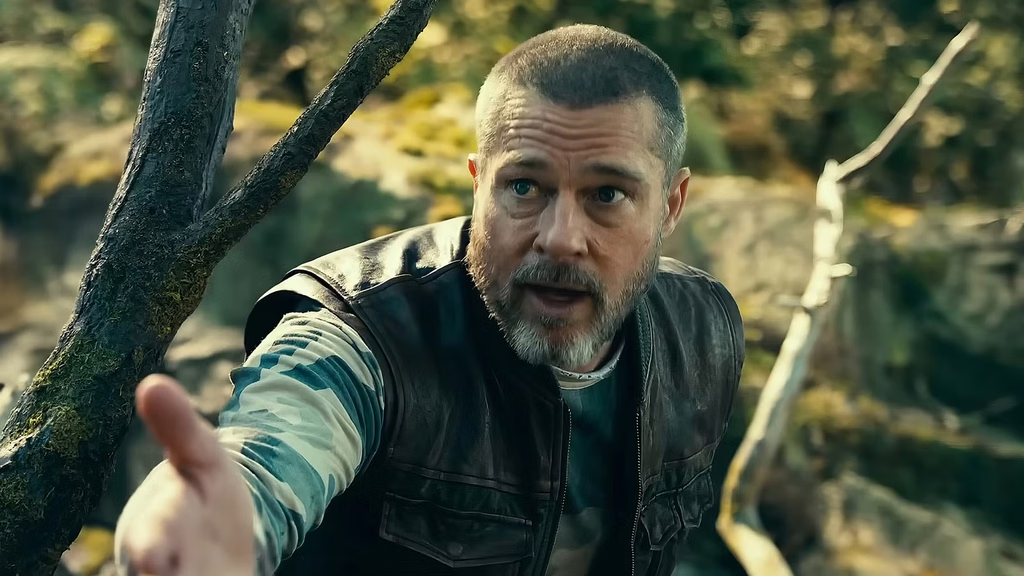
There is a danger in reading this kind of story as though a sufficiently terrible experience can tidy up an earlier one. Surviving the wilderness would be an extraordinary achievement. Recovery from war carries on its own timetable.
The more useful reading of Heart of the Beast keeps its attention on the tenderness James already possesses. His ability to care survives alongside his guardedness. He can be closed off in one encounter and deeply responsive in another.
That feels recognisable. People rarely arrive at recovery as a completely revised version of themselves. Sometimes the first evidence of possibility is much smaller. They notice that someone needs them. They make room for a routine. They accept companionship in the form they can manage.
For James, that companionship has fur and an injured leg.
The plane crash gives Heart of the Beast its urgent question of survival. The scenes around it make me care about the ordinary hours James and Odin might get back. James tending to his dog is already doing something difficult and valuable. He is making a life gentle enough for another wounded creature to inhabit.

Rachel Sikkema is a New Zealand-based writer and creative entrepreneur who explores the intersection of film, culture, and modern relationships. Through her articles, she examines how stories shape the way we connect, love and see ourselves – all for God’s glory. When she’s not writing about film and television, she’s watching Dexter and The White Lotus for the third time.