By Rachel Sikkema
Published October 13, 2026
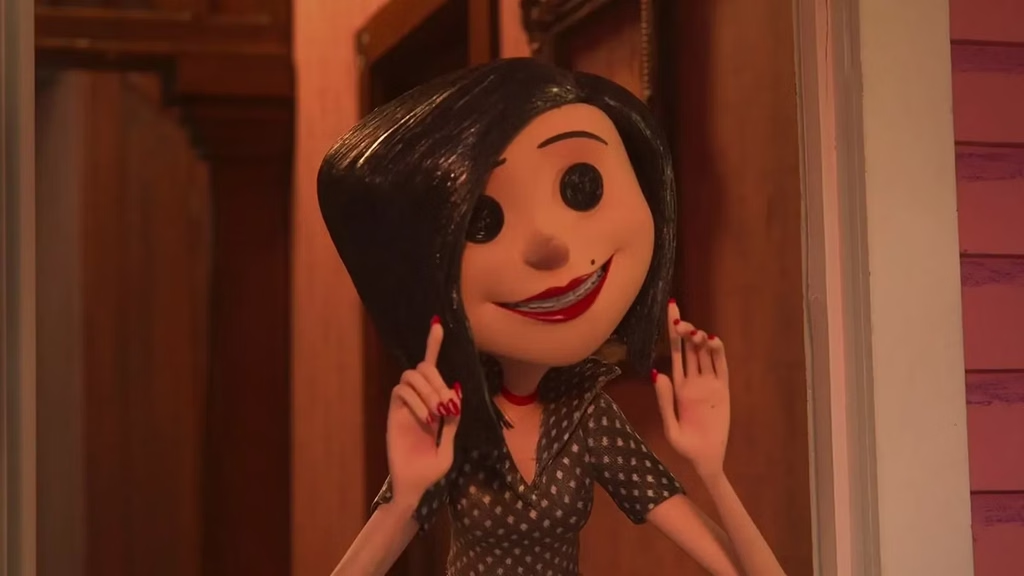
Other Mommy and Coraline make excessive attention frightening because their monsters want a child so completely that they leave no room for her independence. Bela is asked to open her heart. Coraline is offered a world arranged around her wishes. Both invitations turn affection into a demand for access.
The girls’ vulnerability makes sense. Being noticed feels good. Having somebody appear delighted by your existence can be irresistible when the adults around you seem distracted or unhappy.
Then comes the condition.
That is the ugly little transaction these films understand. A creature can learn the language of love while caring very little about the person expected to return it.
The Invitation Comes in a Familiar Voice
In Other Mommy, Jessica Chastain plays both Bela’s mother Ursula and the entity borrowing her appearance. That shared face gives the threat an intimacy it could never earn honestly.
A child already has years of associations attached to her mother’s features. Recognition arrives before judgment. The creature takes advantage of that head start.
Arabella Olivia Clark’s Bela has to separate the familiar shape from the thing using it. Imagine being asked to perform that calculation while the face in front of you keeps smiling.
Coraline makes the imitation more visibly wrong. The Other Mother’s button eyes announce a difference immediately. Everything surrounding them works to make that difference seem acceptable.
There is food worth sitting down for. The house feels attentive. Coraline has entered a place where the adults seem to have time for her.
Those buttons are an extraordinary design choice because the warning sits right in the middle of the welcome. Coraline sees it. We see it. The pleasure of receiving all that attention keeps the invitation alive anyway.
Coraline Gets the Better Sales Pitch
Henry Selick’s film spends enough time making the Other World appealing that Coraline’s attraction to it feels earned.
The garden takes her shape. Dinner becomes an event. Even entertainment seems to have been waiting for her arrival. This is a child’s fantasy of finally becoming the most interesting person in the room.
I think Coraline handles that temptation more persuasively than Other Mommy. Its comforts have texture. You can understand wanting to remain at the table for another minute even while every sensible instinct suggests leaving.
Bela’s situation moves more quickly towards overt menace. The central lure is concentrated in the creature’s familiarity and attention. Chastain’s strained smile makes the effort to appear welcoming horribly visible.
That difference matters. Coraline gets a seductive alternative to ordinary life. Bela faces something that presses itself into an existing family relationship.
The films meet in the expectation that follows. Once a child has accepted attention, the creature behaves as though something is owed.
A Question Can Carry a Threat

“Can I go inside your heart?” sounds like the sort of thing a child might hear in a story about affection.
Other Mommy makes the wording invasive. The creature wants permission to cross a boundary Bela barely has the language to describe. Her heart becomes somewhere another being intends to occupy.
The question also gives the encounter a false appearance of fairness. Asking can sound considerate. Repetition changes the experience for the person being asked.
How many refusals will be accepted? What happens when the answer disappoints the smiling figure? A child should never have to calculate how politely she must reject something frightening.
The Other Mother eventually makes her price much easier to picture. Coraline must allow buttons to be sewn over her eyes if she wants to stay.
It is a wonderfully revolting proposal. The cosy world suddenly requires a physical alteration that would make leaving, seeing and choosing feel horribly compromised.
Both stories put the burden on the child to recognise that an invitation has become a claim. The supposed giver of love is now waiting to collect.
Ordinary Parents Are Easy Competition
Coraline’s real parents work. They get irritated. Their attention wanders towards deadlines when she would prefer it fixed on her.
That everyday friction gives the Other Mother plenty to exploit.
Ursula and Russell’s strained relationship in Other Mommy creates a different kind of uncertainty around Bela. Adult unhappiness occupies space in a home even when a child has only a partial understanding of its cause.
It would be easy to turn either story into a punishment for imperfect parenting. I find that reading much less interesting than the question of what the imitation leaves out.
Real parents have obligations and moods. They sometimes misunderstand their children. A convincing imitation can edit away those inconveniences long enough to seem superior.
Coraline is comparing daily family life with a performance designed specifically to win her over. Of course the performance has better catering.
The disturbing part is how quickly constant availability can resemble proof of deeper love. The creature has made the child its entire project. From inside the attention, that can feel like finally mattering enough.
The Child Still Gets to Say No
The strongest idea connecting these films is the child’s right to keep something of herself.
Bela owes the entity no place inside her because it wants one. Coraline owes the Other Mother no permanent companionship because she enjoyed a meal.
That sounds obvious when written plainly. Put the request in a mother’s voice and surround it with apparent generosity, and the emotional pressure becomes much harder to untangle.
Children are often encouraged to respond warmly to attention. Thank the person. Be polite. Appreciate the effort. Horror can expose the point where those useful social habits become dangerous expectations.
Coraline’s resistance is especially satisfying because she is allowed to have wanted the fantasy. Her earlier enthusiasm never cancels her right to change her mind.
She can enjoy what she was offered and reject what comes next.
Bela’s boundary deserves the same respect. A frightened child’s refusal is enough. She should never need a complete theory of the supernatural to justify keeping something out.
Love Has to Leave Room for a Separate Person

The Other Mother’s carefully arranged world becomes frightening partly because it has so little room for a Coraline she cannot direct.
A child who questions the arrangement disrupts the whole performance. The welcome depends on her remaining the grateful recipient of somebody else’s plans.
Other Mommy pushes that possessiveness into the body. The language of closeness becomes a desire to inhabit. There is something especially nasty about using the heart as the proposed entrance, as though protecting it were an unkind response.
These films make me suspicious of the word “forever” when it arrives too early in a promise. A child is still becoming someone. Any love worth keeping has to survive that person changing.
Coraline wants to explore. Bela needs safety and space to understand what she is experiencing. The monsters’ hunger makes those ordinary needs inconvenient.
That is why being wanted so intensely becomes its own danger. The girls are being offered a version of love that consumes the possibility of growing away from it.
Coraline can leave the table. Bela can keep her heart to herself. A loving mother would have to live with that.

Rachel Sikkema is a New Zealand-based writer and creative entrepreneur who explores the intersection of film, culture, and modern relationships. Through her articles, she examines how stories shape the way we connect, love and see ourselves – all for God’s glory. When she’s not writing about film and television, she’s watching Dexter and The White Lotus for the third time.