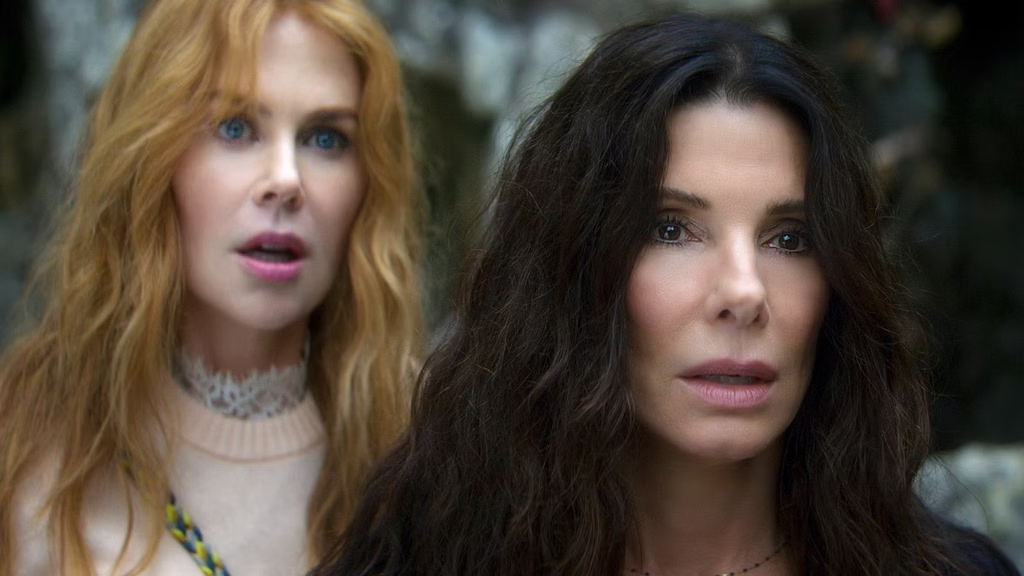
Sally and Gillian Owens becoming the older women in the family is a slightly rude thing for Practical Magic 2 to ask us to contemplate. Somewhere in the collective imagination, Sandra Bullock and Nicole Kidman are still the sisters sneaking around that enormous house while the aunts know perfectly well what they are doing.
Yet that shift gives the sequel its most interesting emotional possibility. The women who once needed somewhere to come home to are becoming responsible for keeping that welcome alive.
There is something tender about that. Also something faintly alarming. Gillian as an elder feels like excellent news for the drinks cupboard and a more complicated development for anyone hoping to enforce bedtime.
Underneath the renewed curse and the family secrets, Practical Magic 2 circles a familiar question from a different age. What do you owe the girls growing up behind you?
Sally Has Inherited More Than Magic
Sally’s response to losing Gary is painfully revealing. She retreats from witchcraft and removes her daughters’ memories of their magical childhood. Kylie and Antonia grow up separated from knowledge that might have helped them understand themselves. When Kylie falls in love with Gideon, the danger Sally hoped to keep outside comes straight through the door.
That decision makes Sally difficult company. It should. A mother’s fear can explain an intrusion of that size while leaving plenty of room to be angry about it.
The interesting part is how thoroughly she now occupies the position she once resisted. In the original film, Sally wanted authority over her own life. The aunts’ involvement in her romantic future gave their affection an uncomfortable edge. They loved her deeply and still believed they could arrange something as personal as her happiness.
Now Sally makes a much more sweeping decision for her own children.
She carries the family habit forward even while trying to remove the family’s magic. That feels horribly plausible. You can reject the things your relatives believe and still inherit the way they make decisions for everyone else.
For me, this is where the sequel earns its return to Sally’s old anxieties. Her fear has acquired parental authority. She can act on it inside somebody else’s childhood.
The film’s family circle tightens around that uncomfortable recognition. Growing older has given Sally more power. Learning how carefully to use it remains unfinished business.
The Girls Grow Beyond Their Mother’s Version of Them
Joey King’s Kylie puts pressure on the whole arrangement simply by wanting a life Sally cannot supervise into safety.
Her desperation over Gideon carries an echo of the older Owens women. Love arrives and suddenly the sensible boundaries look negotiable. The family has considerable experience with that particular problem. Several generations’ worth.
But Kylie has also been denied the context those women possessed. Sally has tried to give her daughter an ordinary life by withholding the information that makes her life extraordinary. Once that information returns, it comes attached to a crisis.
There is a sharp mother-and-daughter conflict inside that setup. Sally wants her protective intentions understood. Kylie needs the freedom to respond to what actually happened to her.
Those needs can coexist awkwardly. A daughter can understand her mother’s grief and still resent the choices made in its name.
I wish the film gave the younger sisters more space together, particularly Maisie Williams’s Antonia. The family’s future would feel richer with more room for their private language and disagreements. A story so invested in inheritance benefits from letting us spend time with the people receiving it.
Even so, Kylie forces the older generation into a necessary adjustment. Sally has to encounter her as someone capable of desire and terrible judgment. Someone who belongs to herself.
That is a demanding sort of magic for a parent to accept.
Gillian Gets to Be Someone You Lean On

Gillian brings another possibility into this generational shift. The sister whose life once required an emergency rescue can grow into a woman other people depend on.
There is a lovely idea there for a character so closely associated with escape. Gillian’s place in the family can expand without sanding down everything that made her Gillian.
Her history gives her a particular usefulness beside Sally. She understands the appeal of doing something reckless because the alternative feels unbearable. A person who has made spectacular mistakes may have something more helpful to offer than another lecture.
That matters in a family where protection so easily becomes control.
Sally and Gillian also carry different memories of the same upbringing. Sisters do that. One remembers the security of the house. The other remembers how badly she wanted to get out of it. Both versions belong in the family story.
Their disagreements can make them better guides, provided the younger women get to hear them. Certainty has already caused enough trouble among the Owens women. A little visible doubt might be a useful inheritance.
And Gillian should always retain the capacity to be a bad influence at exactly the right moment. There are family traditions worth preserving.
The Aunts Leave a Space Nobody Can Simply Fill
Jet’s death and Franny’s eventual sacrifice give the generational change its permanent weight. Franny gives her life to end the curse, and the closing stretch places Sally and Gillian in the position of carrying the family forward after the aunts.
Losing those women changes the meaning of being home.
The aunts helped make the original house feel like a place with its own weather. Their confidence allowed eccentricity to seem ordinary. You could imagine arriving with a dreadful problem and being fed before anyone demanded an explanation.
Sally and Gillian have benefited from that shelter. Now the responsibility reaches them.
I like the emotional awkwardness of that transition. Becoming one of the family’s older women rarely comes with a moment when you suddenly feel qualified. More often, somebody needs you and the person you would have asked has gone.
The sequel’s losses give that familiar experience a supernatural shape. They also leave Sally and Gillian with a task that continues after the immediate danger has passed. They have to decide what kind of home the next generation will find waiting.
There should still be room for noise. For foolishness. For a daughter to admit she has made a mess without first preparing a defence.
Coming Home Means Keeping the Door Open

The full-circle reading works best when it allows Sally and Gillian to remain unfinished people.
Making them flawless replacements for Franny and Jet would flatten the very qualities that make this family worth returning to. Sally will probably still worry too much. Gillian will have opinions about how everyone should loosen up. Their daughters will discover fresh reasons to roll their eyes.
Good. A living family needs room to be irritating.
What can change is the assumption that loving someone gives you the right to decide how much truth they can bear. Sally’s daughters deserve access to their own history. They also deserve the chance to do something unexpected with it.
That gives the Owens women’s return a purpose beyond recognition. The familiar house becomes a place they must actively make welcoming again.
Sally and Gillian once needed the aunts to leave a light on for them. Growing into that responsibility means remembering how it felt to arrive at the door, frightened and embarrassed, hoping somebody would let them in.

Rachel Sikkema is a New Zealand-based writer and creative entrepreneur who explores the intersection of film, culture, and modern relationships. Through her articles, she examines how stories shape the way we connect, love and see ourselves – all for God’s glory. When she’s not writing about film and television, she’s watching Dexter and The White Lotus for the third time.