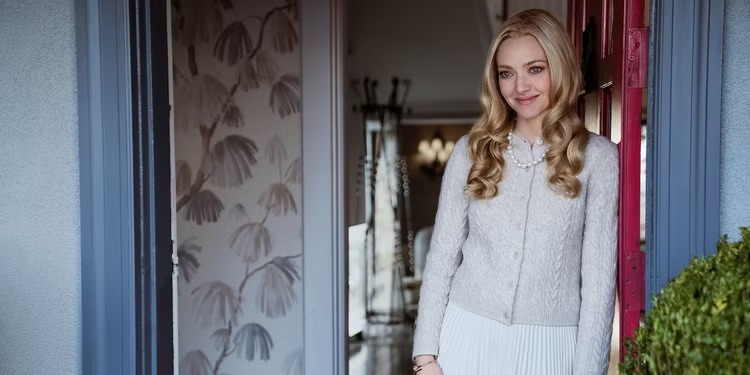
You can feel what The Housemaid is doing almost immediately. It takes a place that’s supposed to mean comfort, privacy, maybe even healing, and it makes that same place feel like a locked box with good lighting. Millie Calloway (Sydney Sweeney) arrives at the Winchesters’ home needing stability, a paycheck, and a clean restart. What she gets is a house that behaves like a living thing: welcoming at the front door, hostile once you’re inside.
The house looks perfect, which is the first problem
The Winchesters’ home sells an idea before it sells a reality. Every room signals money and order, the kind of place where you’re meant to lower your voice without being asked. Nina Winchester (Amanda Seyfried) plays into that surface elegance, at least in the way she presents the house as “a dream job” with “simple rules.”
The Layout Controls Millie Before Anyone Does
A domestic space can feel harmless because it’s familiar: kitchen, stairs, bedrooms, laundry. The Housemaid twists that familiarity into a map of power. Millie’s job places her everywhere and nowhere at once. She can access private rooms, yet she has no privacy of her own.
The biggest signal is her “room,” which the film frames less like a bedroom and more like assigned storage. The attic setup turns the house vertical, like a hierarchy you climb and still lose. The camera keeps reminding you that Millie’s space sits above the family’s life, but not above their control.
The Locked Door Turns “Home” Into Confinement
The most chilling domestic detail in the movie is also the simplest: a door that locks from the outside. Once the film introduces that mechanism, every “cozy” scene gets a second meaning. A bed becomes a place you can be kept. A bedroom becomes a cell that happens to have a quilt.
That’s why the house feels so suffocating even when nothing overtly violent is happening. The threat doesn’t need to shout. The architecture already did the shouting. The possibility of confinement sits in the background like a low hum, and the movie keeps returning to it until you start to anticipate the click of a lock the way you’d anticipate a jump scare.
The Chores Become a Surveillance System
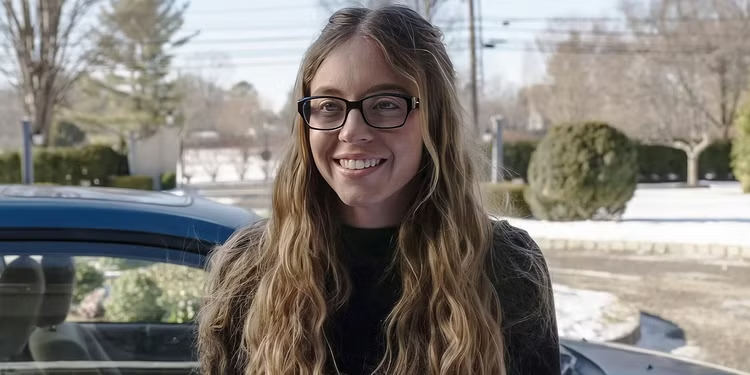
A live-in housemaid’s duties sound mundane on paper: clean, cook, tidy, manage routines. The film makes that routine feel like an all-access pass that comes with a leash. Millie moves through the home constantly, and that movement gives the Winchesters constant chances to watch her, test her, bait her, then punish her for reacting.
Nina’s behavior adds another layer, because the requests and “rules” can shift from scene to scene. Millie tries to do everything right, which becomes its own trap. When the standards move, effort turns into evidence. Every cleaned counter can become “you touched my things.” Every cooked meal can become “you ruined it on purpose.” The house turns petty domestic friction into a kind of courtroom.
The Kitchen and Dining Room Stage a Performance of Control
The movie understands something funny and bleak: the dinner table can feel like a battlefield, even when everyone’s using the good plates. The Winchesters’ kitchen reads as the heart of the home, but the film uses it as a stage where roles get assigned. Millie serves. Nina judges. Andrew Winchester (Brandon Sklenar) observes with the calm of someone who benefits either way.
Because the space is domestic, the control can masquerade as “preference.” Nina doesn’t order Millie around like a boss in an office, she “corrects” her like a woman who’s protecting her home. That social disguise matters. It pressures Millie to accept treatment she’d probably refuse anywhere else, because objecting feels like breaking the house’s unspoken etiquette.
The Upstairs, Downstairs Dynamic Keeps Shifting on Purpose
What makes the trap effective is how often it changes shape. The film plays with class and intimacy in a way that keeps Millie off balance. One minute, she’s “part of the household.” The next, she’s invisible. Those switches happen fast enough to create whiplash, and that emotional whiplash becomes another tool of control.
Enzo (Michele Morrone), the groundskeeper, adds to that sense of shifting boundaries. The property extends the trap beyond the walls, so even “outside” doesn’t feel like escape. The house owns the yard, the driveway, the air around it, and the film makes sure you feel that reach.
The Film Makes Comfort Feel Suspicious

One reason The Housemaid lands is that it refuses to let the audience relax. When the lighting softens or a scene leans tender, the movie encourages you to ask, “What’s the cost of this moment?” The home offers comfort the way a mousetrap offers cheese.
That suspicion hits hardest with Andrew’s charm. He occupies the home with ease, like it was built to fit him. When he shows Millie attention, the movie frames it as warmth and danger at the same time, because affection inside a controlled environment can function like a lockpick that still keeps you trapped.
The Trap Works Because Millie Needs It to Be Real
The cruelest part is that Millie isn’t naïve, she’s cornered. She needs the job. She needs stability. She needs to believe that a beautiful home can be a reset button. The house becomes a trap because it offers exactly what she’s hungry for: routine, shelter, a role that sounds respectable.
That’s also why the film’s tension feels personal. Plenty of thrillers feature a “scary house,” but this one makes the fear practical. It asks what happens when the place that pays your bills also controls your keys, your sleep, your ability to leave without consequences. The domestic space doesn’t merely contain the threat, it supplies the logic that keeps the threat running.
By the time The Housemaid reaches its ugliest turns, the movie has already made its point: a home can trap you without bars, without chains, without anything more dramatic than a door, a staircase, and a set of rules that only apply to one person. It’s a thriller that understands how easily “normal” can become a cage, especially when the cage comes with fresh flowers on the counter.

Rachel Sikkema is a New Zealand-based writer and creative entrepreneur who explores the intersection of film, culture, and modern relationships. Through her articles, she examines how stories shape the way we connect, love and see ourselves – all for God’s glory. When she’s not writing about film and television, she’s watching Dexter and The White Lotus for the third time.