
If you only watch one scene in Netflix’s Run Away, make it the park encounter where Simon Greene finally finds his missing daughter, Paige, and the whole moment curdles in public. It’s messy, loud, and hard to watch in that very specific way that makes you want to look away while also thinking, “Wait, this is the show, right here.”
This scene explains why the series hits so strangely. It tells you what kind of father Simon is, what kind of danger Paige is actually in, and what kind of world this story lives in, a world where everyone’s watching and everyone’s guessing.
The Scene, as the Show Wants You to Remember It
Simon (James Nesbitt) spots Paige (Ellie de Lange) after months of not knowing where she’s been. He doesn’t approach carefully and ease his way in. He rushes straight at her like the last six months have been a held breath and he’s finally allowed to exhale. For one flicker of time, it almost plays like a miracle.
Then it turns.
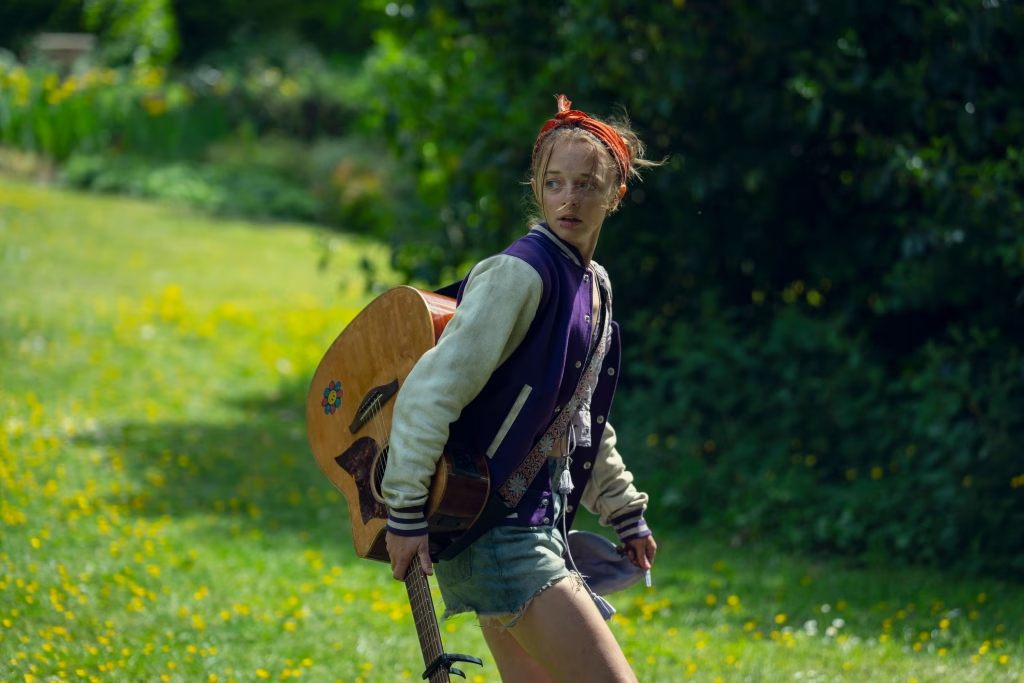
Paige is not the daughter he’s been picturing. She’s altered, guarded, and out of reach even while she’s standing right there. Simon tries to take control of the moment, physically and emotionally, and it sparks a confrontation that quickly becomes a spectacle. People stare. Someone records. The scene gets ripped out of context and turned into a story that belongs to everyone except the people living it.
That’s the trap door Run Away steps on, and it never stops falling.
Why It Feels Like the Thesis Statement
Plenty of thrillers start with a missing girl. Run Away starts with what happens after the missing girl is found and the “happy ending” refuses to cooperate.
The park scene lays down the show’s real tension: Simon loves Paige, but he also needs her to fit back into the version of life he understands. Paige needs help, but she also needs autonomy. The crowd thinks it’s witnessing a crime, or a rescue, or a scandal, depending on their angle and mood. The truth doesn’t get a vote.
It’s also the moment where the series quietly tells you, “This story won’t be solved by finding Paige.” Finding her is only the beginning.
Everyone Becomes a Character the Second the Camera Comes Out

The show loves a twist, but it loves something else more: perception.
In the park, Simon’s panic reads as aggression to strangers. Paige’s resistance reads as guilt, or manipulation, or proof that she’s “chosen this life.” None of that has to be accurate to become powerful. Once the moment is recorded, it can be replayed, edited, captioned, and judged. A father becomes a potential villain. A daughter becomes a symbol. A family becomes content.
That public glare follows Simon for the rest of the season. The police don’t only investigate evidence, they investigate the story people already believe. Detectives Isaac Fagbenle (Alfred Enoch) and Ruby Todd (Amy Gledhill) circle him with that familiar question in their eyes: are you a desperate dad, or are you performing desperation because it’s useful?
If you’ve ever watched a viral clip and felt certain you knew what happened, the series is politely asking you to reconsider.
How That Scene Echoes Through the Later Revelations
Without spoiling every turn of the screw, the park scene teaches you how to read what comes next. When the show introduces bigger plot machinery, the cult shadows, the murder suspicion, the collisions between cases, you can keep asking one question: who is controlling the narrative in this moment?
Simon keeps trying to take control through action. He pushes, he confronts, he demands answers. Ingrid (Minnie Driver) takes a different route. She manages, redirects, smooths over, and when she can’t, she freezes the room with a look that says there is more going on here than you understand.
Paige, meanwhile, is stuck in the worst position. She knows more than she can safely say, and she knows her parents can’t hear certain truths without trying to “fix” them in a way that breaks everything further.
That park scene is the first time you see all three dynamics at once, in bright daylight, with strangers watching.
What the Scene Says About Paige, and Why It Matters
Ellie de Lange plays Paige with a jittery realism that refuses to comfort you. Paige doesn’t come across as a tidy victim, or a rebellious teen, or a saint. She comes across as someone whose nervous system has been living in survival mode.
When Simon reaches for her, you can feel the double bind. If she goes with him, she risks dragging danger home, but if she refuses, she looks ungrateful, suspicious, or lost. If she speaks honestly, she might set off consequences she can’t control.
That’s why the park scene is so important for understanding Paige’s choices later. The show is not asking you to approve of every decision she makes. It’s asking you to see the pressures that shape those decisions, especially when adults keep forcing her into a yes or no answer to questions that are not safe to answer.
What It Says About Simon, and Why You Still Care
It would be easy for Run Away to turn Simon into a blunt instrument, the frantic dad who ruins everything by barging in. James Nesbitt doesn’t let that happen. Simon can be controlling, impulsive, and painfully sure that love gives him the right to steer. He also feels heartbreak in a way that looks physical.
The park scene shows both sides of him in a single breath. You watch him light up at seeing Paige, then panic at the realization that he can’t simply take her back. The show wants you conflicted about him, because parenting under fear creates that exact kind of contradiction. You can do something out of love and still cause harm. You can be right about the danger and wrong about the method.
And once that moment goes public, Simon loses the luxury of being complicated. The internet wants a villain or a hero, and Run Away keeps insisting he’s a person.
The plot will tempt you to nominate flashier moments as the “key scene,” especially once the show starts cashing in its secrets. But the park encounter is the emotional engine. It’s the first time the series says, clearly, that the scariest thing here might be the way people try to possess each other when they’re afraid.

Rachel Sikkema is a New Zealand-based writer and creative entrepreneur who explores the intersection of film, culture, and modern relationships. Through her articles, she examines how stories shape the way we connect, love and see ourselves – all for God’s glory. When she’s not writing about film and television, she’s watching Dexter and The White Lotus for the third time.