There is something slightly cursed about a group holiday. You pack cute outfits, promise yourself you will be laid back, and within forty-eight hours someone is crying in a bathroom. The White Lotus has turned that familiar chaos into a full TV thesis, and season 3 in Thailand pushes the idea even further. Vacations are where people stop pretending to be the person they are at home, and start behaving like the person they actually are.
Instead of treating Thailand as a simple change of scenery, season 3 takes the familiar formula and sharpens it. We still get the glossy resort, the unsettling music and the promise of a body in the first episode. This time, though, the mix of spiritual tourism, family implosion and expat fantasy makes the central question louder than ever. Who do you become when your real life is parked thousands of kilometres away?
Holidays Are the Perfect Pressure Cooker
Every White Lotus season strands a bunch of rich people in a luxury hotel and quietly locks the door. Hawaii, Sicily, and now Thailand give the illusion of freedom, but the structure is closer to a social experiment. Everyone is trapped in the same breakfast buffet, the same pool loungers, the same painfully organised excursions. The more beautiful the setting, the more rotten the behaviour.
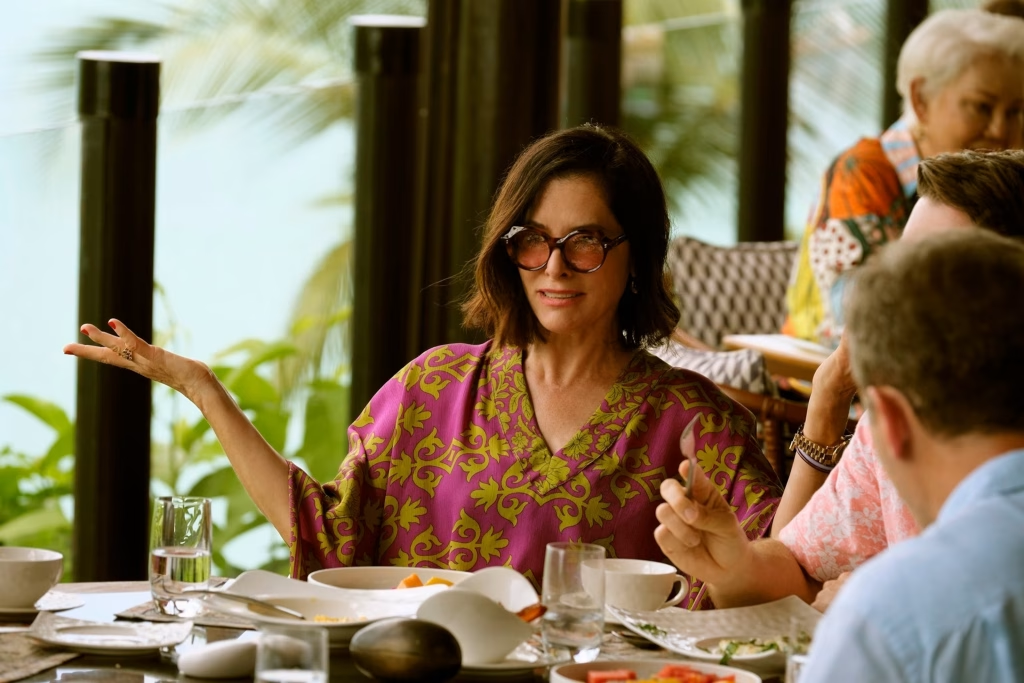
Season 3 doubles down on this with the Ratliff family. Timothy Ratliff, played by Jason Isaacs, arrives in Thailand with his wife Victoria (Parker Posey) and their grown children Saxon, Piper and Lochlan, selling it as a family reset while quietly spiralling over an investigation into his finances. Once they are cut off from the normal distractions of work, school and separate social lives, the family weirdness has nowhere to hide.
Thailand Turns “Finding Yourself” Into a Trap

Thailand is such a loaded destination for Western tourists that the location alone carries a story. Season 3 leans into wellness retreats, full moon parties and talk of enlightenment. Then it quietly asks who benefits when rich visitors turn another country into their spiritual backdrop. The resort itself, modelled on real Thai luxury hotels, looks like a brochure spread. Infinity pools, palms, polite staff, gentle gongs at sunrise. The vibe on screen is that everyone came here to change their life.
Belinda Lindsey, played by Natasha Rothwell, arrives from the Hawaii resort for an exchange program, supposedly to deepen her skills and finally think about her own needs. Of course, once she steps into the Thai property she becomes the quiet emotional sponge again, absorbing the guests’ panic while trying to reclaim a bit of her own story. Her connection with Pornchai, the local wellness expert played by Dom Hetrakul, is one of the few moments that feels genuinely grounded, which makes the surrounding madness look even more desperate.
Characters Who Crack Only When They Travel
One of the pleasures of season 3 is how clearly you can imagine these people at home, and how different they must seem. Carrie Coon’s Laurie, for example, is introduced as the friend who has her life together. On a trip with Kate (Leslie Bibb) and Jaclyn (Michelle Monaghan), the old college roles start to reassert themselves. The hotel becomes a time machine. By the time the cocktails and old resentments have properly blended, their glossy adult lives back home feel more like costumes they forgot to pack.
The Ratliff kids are even more extreme. Patrick Schwarzenegger’s Saxon is all swagger and inappropriate confidence, Piper (Sarah Catherine Hook) wears boredom like armour, and Lochlan (Sam Nivola) stumbles through the trip as the uneasy conscience. Taken out of their usual environment and dropped into a Thai playground full of drugs, sex and moral loopholes, the family dynamic curdles in fast-forward.
The Staff See the “Real” Guests First

Across all three seasons, staff members are the audience inside the story. They know who is rude to the waiters, who tips badly, who switches into baby voice with their partner. In Thailand, that dynamic is even more pointed. Pornchai, Mook, Gaitok and the rest of the Thai staff spend their days smoothing over scenes that would make a normal manager quit before lunch.
Why We Love Watching Other People’s Worst Holidays
There is also a more uncomfortable reason vacation-set shows hit so hard. They are aspirational and accusatory at the same time. Season 3 gives us shots of Thai beaches, immaculate villas and spa treatments that look like an influencer’s dream. It also shows a father trying to poison his family with tropical cocktails, a son being pulled into his parents’ crimes, and tourists treating another culture’s rituals like festival props.
Part of the fun is recognising smaller versions of ourselves. Maybe you are not scheming to murder anyone by the pool. But have you ever felt strangely bold on holiday, said something you would never say at home, or watched a family at the next table unravel over dessert? The White Lotus takes those recognisable moments and follows them all the way to their most extreme outcome.
Season 3 suggests that vacations do not change people. They remove the polite buffers that make everyone bearable. Thailand is gorgeous, scary, seductive and occasionally ridiculous in the show, which feels about right. It is not that the country is dangerous. It is that any trip will eventually reveal who you are when no one is keeping score.

Rachel Sikkema is a New Zealand-based writer and creative entrepreneur who explores the intersection of film, culture, and modern relationships. Through her articles, she examines how stories shape the way we connect, love and see ourselves – all for God’s glory. When she’s not writing about film and television, she’s watching Dexter and The White Lotus for the third time.