By Rachel Sikkema
Published October 31, 2026

The marriages in Wicker become uncomfortable because the Fisherwoman’s happiness makes everyone else’s compromises visible. A woman the village has treated as undesirable finds an affectionate husband who takes pleasure in loving her. Suddenly, the other couples have something to compare themselves with. The embarrassment comes from recognising how much they have accepted, then having that recognition arrive through the person they used to pity.
That is the sharpest way to read the jealousy surrounding Olivia Colman’s Fisherwoman and Alexander Skarsgård’s woven husband. Someone else’s good marriage can make your own feel newly disappointing without anything inside it changing. Yesterday’s tolerable arrangement becomes today’s awkward question.
And Wicker gives that question a particularly cheeky delivery system. Imagine having to reconsider your entire romantic life because a man made of basket material has raised the standard.
The Wrong Woman Gets the Happy Marriage
The Fisherwoman occupies a useful position in her community. She lives on its margins and endures its ridicule. Her loneliness gives the villagers somebody to feel superior to. When a basket maker played by Peter Dinklage creates her husband, their relationship unsettles the village’s assumptions about who gets to be loved. Sundance’s account of the film describes that reversal as the catalyst for the surrounding upheaval.
There is a nasty comfort in believing another person has done worse than you. You can overlook quite a lot at home if your marriage still looks like a prize beside somebody else’s solitude.
The Fisherwoman’s happiness removes that comfort.
She also exposes the weakness in the bargain the other women have been offered. Respectability is supposed to bring rewards. Behave correctly and secure your place. Accept the terms of marriage and enjoy the status that comes with it. Yet the woman they dismiss ends up with something they want.
That makes her good fortune feel almost offensive. She has somehow received the benefit without earning their approval first.
I like the pettiness of that idea. People can be generous about happiness in the abstract. Give it to somebody they have privately ranked beneath themselves and the generosity gets considerably more complicated.
A Better Husband Creates an Awkward Comparison
The Wicker Husband’s tenderness gives the fantasy its sting. His physical construction is extraordinary. The emotional appeal is easy to understand. He wants his wife and makes that affection available to her.
Read through the embarrassment of comparison, his presence becomes a problem for every husband accustomed to getting credit simply for being there.
A low standard can survive for years when everyone agrees to treat it as realistic. A wife learns to soften a request before making it. A husband assumes that familiarity excuses the effort he once made. Disappointment becomes a joke told often enough to sound like affection.
Then another couple comes along and behaves differently.
That is where the film’s premise reaches beyond its fairy-tale setting. The uncomfortable comparison might begin with something very small. Somebody listens when their partner speaks. Somebody notices that the other person is tired. A gesture you had stopped expecting turns out to be ordinary elsewhere.
The first reaction can be irritation. How embarrassing to have explained away an absence for years and then see another person fill it so casually.
The Wicker Husband makes that discovery hard to avoid. His existence gives the village a visible alternative. Everyone now has to decide what to do with the information.
Pleasure Makes the Disappointment Harder to Hide
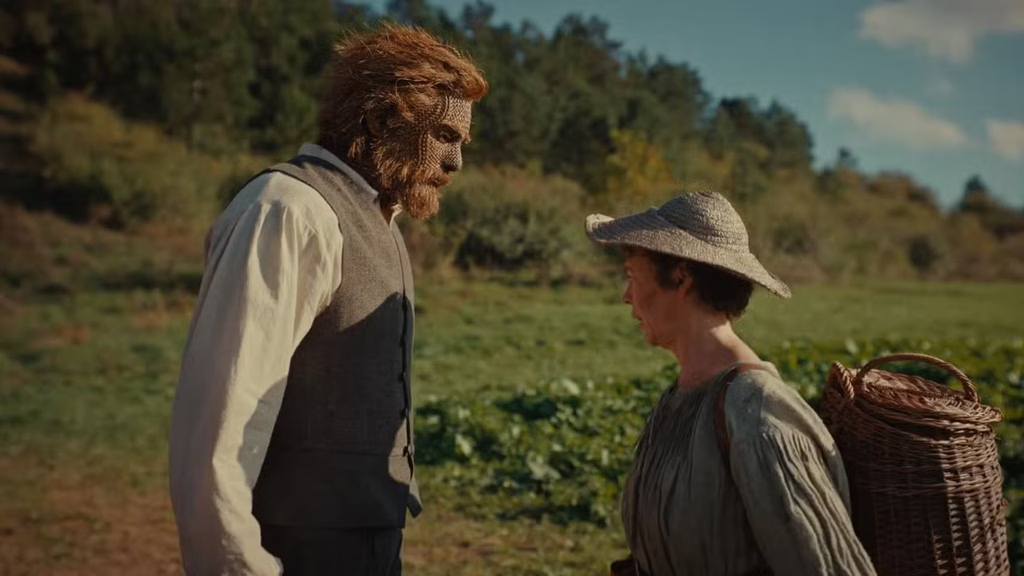
Wicker makes the couple’s sexual happiness conspicuous. Their lovemaking repeatedly breaks their bed, while the surrounding women begin to covet the husband. The bawdy joke is built into the domestic disruption. TheWrap’s review details both the recurring gag and the jealousy that follows.
The broken bed is a wonderfully unsubtle object for this particular story. Furniture has become evidence.
Pleasure is difficult to argue with when it belongs to someone you have decided should be grateful for scraps. The Fisherwoman gets to want her husband. She gets to enjoy being wanted back. Her satisfaction makes the villagers’ judgement of her look rather beside the point.
There is something especially exposing about sexual envy within an established marriage. Admitting it can feel disloyal. It can also mean acknowledging a desire you have spent years making smaller because accommodating it seemed unlikely.
So the feeling finds a more respectable outlet. Concern about another couple’s conduct is easier to voice than disappointment about your own bedroom.
That reading gives the village’s fascination a sour little aftertaste. Their attention keeps returning to the Fisherwoman because she is enjoying something they have trouble asking for.
Envy Can Protect the Life You Already Have
The most uncomfortable part of this dynamic is how readily disappointment turns against the person who reveals it.
You might expect a happy couple to inspire their neighbours. Occasionally that happens. It also requires people to admit that change is needed, which can be a miserable conversation to begin.
Resenting the happy couple offers a quicker release.
Decide their relationship is ridiculous and you can postpone examining your own. Find a flaw in the admired husband and your familiar disappointments become easier to defend. Better still, turn the wife into a fool. Then her happiness can be dismissed as another thing she has misunderstood.
This is where Wicker has room for a harsher reading of its community. The villagers have an investment in the Fisherwoman remaining unhappy. Her old position helped make their own lives feel successful.
Her contentment threatens the stories they tell about themselves.
That helps explain why envy can feel so righteous from the inside. A person may believe they are defending good sense while trying to recover the comfort of an old comparison. They want the world to make sense again. Unfortunately, their preferred version requires somebody else to lose something lovely.
The Years Behind the Embarrassment

Discovering that a marriage could be better also changes how the past looks.
You start remembering the request you withdrew. The conversation you avoided because keeping the peace seemed more sensible. All those occasions when wanting a little more felt childish.
There can be grief in that recognition. You have to wonder how much was inevitable and how much became habit because neither person challenged it. Even a hopeful discovery can arrive carrying years of disappointment.
That is why I find embarrassment a more useful way into Wicker than a simple lesson about jealousy. It leaves room for the wounded pride beneath the cruelty. The villagers’ behaviour remains ugly, but its emotional logic is painfully familiar.
The Fisherwoman has acquired a happiness that makes other people feel exposed. They can see their own longing more clearly around her. Some would rather punish her than let anybody notice.
The film’s fantasy makes the situation funny enough to approach. A woven husband can bear the weight of an outrageous joke. Behind him sits a much smaller domestic humiliation, the moment you realise you have been calling something satisfactory because asking for more felt too risky.
Once the Fisherwoman’s marriage makes that possibility visible, the village has a choice to make. Someone could go home and begin an honest conversation.
Naturally, everyone would prefer to keep discussing the basket.

Rachel Sikkema is a New Zealand-based writer and creative entrepreneur who explores the intersection of film, culture, and modern relationships. Through her articles, she examines how stories shape the way we connect, love and see ourselves – all for God’s glory. When she’s not writing about film and television, she’s watching Dexter and The White Lotus for the third time.