
Alexander Skarsgård walks into Wicker looking like somebody spent six months weaving a thirst trap from reeds. He has sculpted wicker muscles, a magnificent tangle of fibrous hair and the grave expression of a man who takes household repairs very seriously.
The joke works immediately. A lonely Fisherwoman played by Olivia Colman commissions a husband from the local Basketmaker, and the finished product resembles a six-foot-four artisanal fantasy. He is attentive, poetic and apparently terrific in bed. Somewhere in the village, several flesh-and-blood husbands begin to feel nervous.
Yet directors Eleanor Wilson and Alex Huston Fischer have built far more than an elaborate punchline around Skarsgård’s woven torso. Adapted from Ursula Wills-Jones’ short story The Wicker Husband, their film uses its absurd romance to ask who gets to define a proper life. The answer has teeth.
The basket is handsome. The social order around him is dangerously ugly.
The Village Has Already Woven Everyone Into Place
The nameless characters in Wicker are identified through their occupations and relationships. Colman is the Fisherwoman. Peter Dinklage is the Basketmaker. Elizabeth Debicki plays the Tailor’s Wife.
That choice gives the village the air of an old story told beside a fire, but it also reveals how this society sees people. Work defines the men. Marriage defines many of the women.
Even the wedding ritual makes the arrangement brutally clear. A husband places a metal collar around his bride’s neck. The village presents the gesture as tradition, which is usually how cruelty keeps itself tidy. Everybody smiles, the ceremony continues and another woman receives her approved identity.
The Fisherwoman lives outside that machinery. She catches fish, supports herself and returns to a cottage beyond the village. Her neighbours ridicule her smell and appearance. They call her failure by treating unmarried life as a public defect.
Her independence offers little protection from the constant pressure. A person can know that a rule is ridiculous and still bleed when everyone uses it against her.
Colman plays that wound beautifully. Her Fisherwoman carries herself with the defensive sharpness of someone who has heard every insult before. She has contempt to spare. Beneath it sits a need she would rather keep private.
Her Strange Marriage Exposes the Ordinary Ones
Ordering a husband sounds like surrender to the village’s obsession with marriage. The Fisherwoman instead bends the institution into a shape that suits her.
She chooses the maker. She describes what she wants. Her husband enters the world without a family name, property claim or inherited authority over her. He has been created for companionship rather than command.
That detail turns a silly premise into a small act of rebellion.
The Wicker Husband listens when she speaks. He respects her work. He gives affection freely and treats her pleasure as something worth his attention. His decency throws the behaviour of the village men into harsh relief.
Skarsgård’s body gets the trailer-ready laugh, but his character’s kindness supplies the real provocation. The women begin looking at their own husbands differently. A comparison has entered the village and the local men fare badly.
That is how Wicker finds its sharpest joke. The supposedly unnatural husband behaves with greater humanity than the natural ones. He may be woven from branches, yet he understands care, effort and reciprocity. The human men have skin and blood. Many of them appear to have misplaced the rest.
Female Desire Becomes a Public Emergency
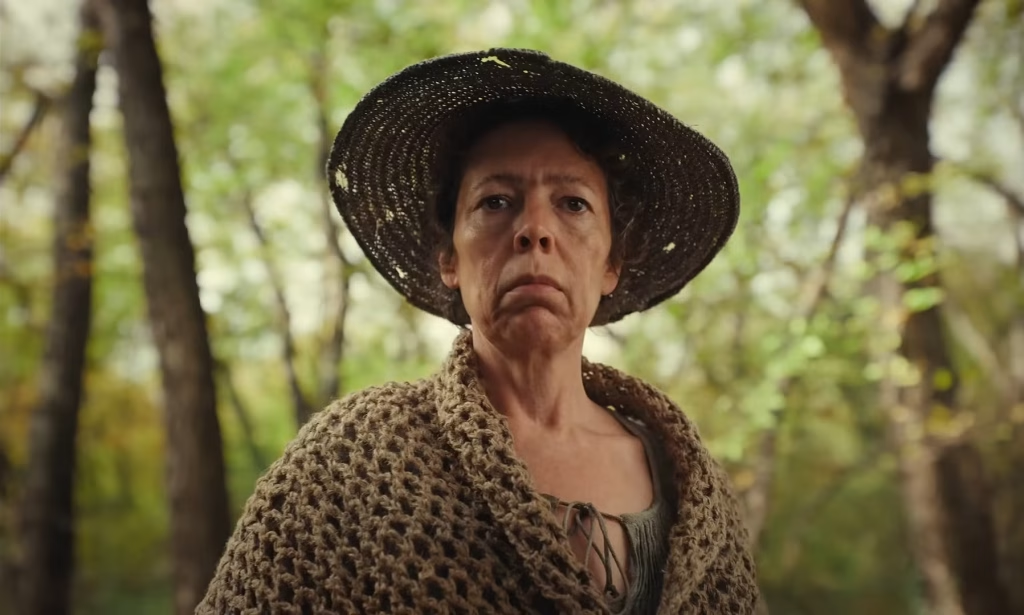
The Fisherwoman’s happiness spreads through the village as gossip. Her neighbours want details. They are fascinated by the Wicker Husband’s body and unsettled by the satisfaction he gives her.
Female desire has always made tidy communities nervous. Desire creates preferences, and preferences lead to comparisons. Once a woman imagines a better life, the existing arrangement starts to look less inevitable.
The Fisherwoman commits a particular social offence by enjoying herself without seeking permission. Her marriage gives her no new desire to become respectable. She plans to keep working. She retains her bluntness. Love expands her life instead of sanding her down for public approval.
This is where Elizabeth Debicki’s Tailor’s Wife becomes especially interesting. She has achieved status within the village’s rules. Her position gives her influence, but that influence depends on the rules remaining intact.
The Fisherwoman’s unconventional marriage threatens more than local manners. It shows that another arrangement can exist. Worse, it looks pleasurable.
Jealousy and moral outrage soon begin feeding each other. They usually do. Calling another woman wicked sounds nobler than admitting that her freedom has made your own compromises harder to ignore.
The Wicker Body Makes the Satire Physical
The film could have rendered its fantasy husband digitally. Instead, Skarsgård performs inside an intricate practical creation designed with Weta Workshop. His woven face can furrow. His body casts real shadows. Colman can touch him and recoil from him and lean into him.
That physical presence keeps the romance grounded in texture. The Wicker Husband looks rough against human skin. He has weight. Every embrace contains the faint possibility of splinters.
It also gives the film an unexpectedly sensual visual language. Wicker is full of gaps. It suggests a body while allowing darkness and light to pass through it. The design makes Skarsgård both solid and exposed, a huge masculine figure whose construction remains visible at every moment.
Traditional movie masculinity loves the fantasy of the finished man. Here the labour shows. Somebody had to make this husband strand by strand.
Peter Dinklage’s Basketmaker therefore occupies a slyly important place in the story. He creates the impossible through craft. His work rearranges a community because he takes one mocked woman’s request seriously.
The magic comes through skilled hands rather than royal blood or divine intervention. That feels right for a film about people trapped inside roles they inherited. A new possibility has to be made.
Olivia Colman Protects the Film From Whimsy Overload
A premise this adorable could easily float away on its own cleverness. Colman keeps mud on its boots.
She never plays the Fisherwoman as a cute eccentric waiting for romance to reveal her softer side. The character remains prickly and bodily. She smells of fish because she catches them. Her solitude has given her habits. Affection reaches her slowly because ridicule has trained her to expect a trap.
Colman can make a glance carry longing, suspicion and annoyance without turning the moment into an acting exhibition. She understands how hope can embarrass a person who has survived by pretending to need very little.
Her scenes with Skarsgård need that emotional friction. He plays the Wicker Husband with startling sweetness, while she reacts as a woman confronted by a fantasy that has actually shown up at her door. Getting what you asked for can be alarming. Especially when it is enormous and highly combustible.
Their pairing gives the film its odd pulse. Skarsgård offers complete sincerity from beneath a woven brow. Colman keeps searching that face for the catch.
The laughs remain, but tenderness gradually takes up more room.
A Fairy Tale About Being Seen Too Clearly

Fairy tales often hand their heroines beauty, marriage or wealth as rewards. Wicker gives its heroine a husband who sees her before she has changed anything.
That distinction matters. The Fisherwoman receives love while still carrying the qualities her neighbours despise. Her work, smell and temper come with her. The romance validates the person standing outside the village gate rather than inviting her back inside after a makeover.
Being loved so directly brings another risk. A partner becomes a witness. He sees the defences along with the need beneath them. The Fisherwoman has spent years deciding that rejection proves the villagers foolish. Her Wicker Husband asks her to believe acceptance might also be real.
That is scarier than the basket sex.
The film’s eccentricity gives this vulnerability somewhere safe to hide. Audiences can laugh at the woven abs and enjoy the double meanings. Meanwhile, a sincere story about middle-aged loneliness slips through the reeds.
The Punchline Points Back at Us
Of course the handsome basket dominates the conversation around Wicker. Look at him. Cinema has survived more foolish obsessions.
Still, the Wicker Husband works because he exposes the human absurdities surrounding him. A village accepts collars at weddings yet considers a loving woven man offensive. Husbands offer their wives indifference and call themselves natural. Women defend customs that diminish them because those customs have granted them a fragile rank.
Against all that, a basket with good manners starts to look wonderfully reasonable.
Wicker understands that social rules often appear strongest when everyone has agreed to stop examining them. The Fisherwoman breaks that agreement simply by wanting more and finding it in a form nobody can absorb into the old order.
Her husband may be the strangest figure in the village. He is also the clearest.
The film invites us to laugh at a woman falling for an impossibly handsome bundle of wicker. Then it quietly asks why her neighbours’ version of marriage ever seemed less ridiculous.

Rachel Sikkema is a New Zealand-based writer and creative entrepreneur who explores the intersection of film, culture, and modern relationships. Through her articles, she examines how stories shape the way we connect, love and see ourselves – all for God’s glory. When she’s not writing about film and television, she’s watching Dexter and The White Lotus for the third time.