
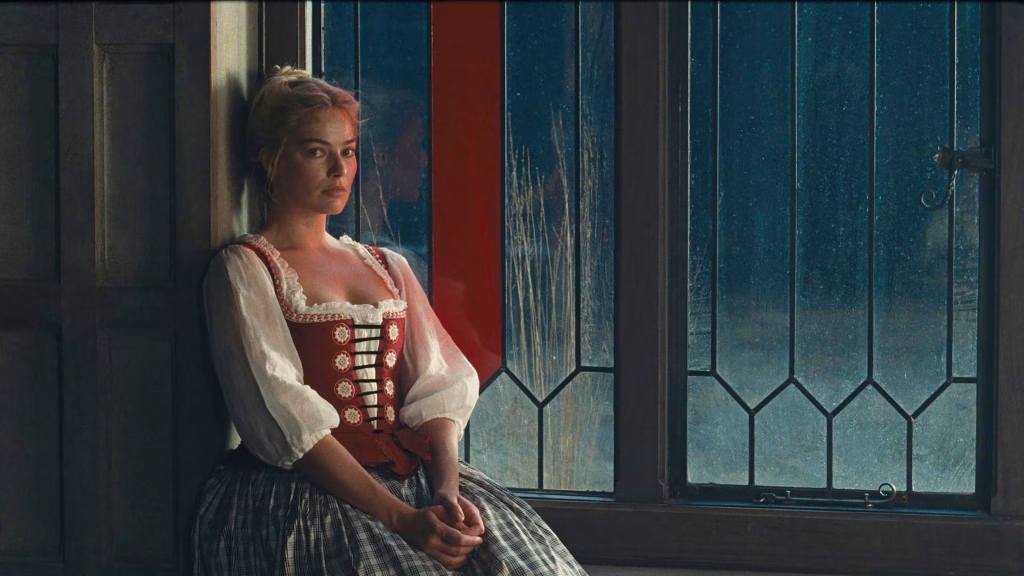
Catherine Earnshaw is the kind of heroine people want to “solve” in one sentence. She loved Heathcliff, she married Edgar, she ruined everything, roll credits. But Wuthering Heights (2026) makes it harder to keep that tidy little verdict, especially with Margot Robbie leaning into Cathy’s volatility and Jacob Elordi playing Heathcliff like a storm cloud that learned how to walk.
Because here’s the uncomfortable truth: Catherine isn’t choosing between love and no love. She’s choosing between a life she can survive in public and a life she can survive inside her own skin. And if you’ve ever made a decision that looked sensible on paper but felt awful in your chest, you probably get her more than you’d like.
Catherine Grows up Learning What the World Rewards
Catherine isn’t raised in a soft place. Wuthering Heights is not a house that teaches you “follow your heart.” It teaches you endurance. It teaches you how quickly things can collapse when money runs out, when adults are reckless, when reputation turns sour. Even when Catherine acts impulsive, she’s still absorbing the message that stability is scarce and expensive.
That matters when Edgar Linton enters the picture. Edgar represents comfort you can touch. A warm room. Clean linen. Polite conversation where nobody throws their pain across the table like a weapon. He isn’t only a romantic option. He’s a doorway out of the constant emotional weather at the Heights.
People call that “choosing status” like it’s a designer handbag. In Catherine’s world, status is shelter. It’s protection. It’s the difference between being a respected lady and being the household’s cautionary tale.
Her Bond With Heathcliff Is Real, but It Scares Her Too
Catherine and Heathcliff don’t fall in love like most screen couples. They fuse. They’re so entwined that even the idea of separating feels like pulling a thread through skin. That kind of connection is intoxicating. It’s also terrifying.
Heathcliff isn’t just a person Catherine loves. He’s the part of her that refuses to behave. He’s her hunger, her fury, her refusal to be small. When she’s with him, she feels more alive, but she also feels more exposed. What does a future look like when your love is that intense? Can you build a peaceful life on top of it?
Edgar Offers Safety, and Catherine Understands the Price of Safety
Shazad Latif’s Edgar Linton is crucial here because the story often treats him like a trophy instead of a human being. Edgar is not a villain. He’s a man who can offer Catherine a socially acceptable life and genuinely wants her. That is not nothing.
Edgar’s love is calmer. It’s gentler. It comes with rules, but also with comfort. He offers Catherine a version of adulthood that doesn’t feel like constant combat. And Catherine, for all her wildness, craves that too.
This is where people get stuck, because they want Catherine’s choice to be romantic. It isn’t. It’s strategic. Catherine chooses Edgar because she can see what he represents in the eyes of the world.
And yes, there’s vanity in Catherine. She likes admiration. She likes being wanted. But the deeper driver is fear.
She Thinks She Can Keep Both, and That Belief Destroys Her
If Catherine simply chose Edgar and moved on emotionally, the story would still be sad, but it would be cleaner. What makes Wuthering Heights hurt is that she tries to split herself in two.
She wants Heathcliff as her inner truth and Edgar as her outer life. She wants passion without consequence, status without surrender. It’s a very human fantasy. It’s also a fantasy.
Wuthering Heights is a story that punishes compartmentalising. It keeps showing that the things we try to lock away come back louder. Catherine’s feelings for Heathcliff don’t shrink because she marries Edgar. If anything, they get more desperate, because now they’re forbidden, and forbidden feelings always have a flair for theatre.
Her tragedy is not only that she chooses status. It’s that she believes status will make the rest of her feelings manageable. It doesn’t. It makes them harder to live with.
Catherine’s “Status Choice” Is Also About Identity
There’s another layer that gets missed when people frame Catherine as shallow. Catherine is trying to decide who she is allowed to be.
With Heathcliff, she feels like her raw self. With Edgar, she can become a version of herself the world will respect. That isn’t only about wealth. It’s about social power, belonging, legitimacy. Catherine wants to walk into a room and be treated like she matters. She wants to be protected by the label of “wife” and “lady.” She wants the kind of identity that comes with built-in credibility.
Is it fair that she needs a man’s surname and a richer house to get that? No. But she did not invent the rules. She’s reacting to them.
This is why it’s too simple to say she chooses status over love. She’s choosing a role. A shield. A version of herself that has a chance of being safe in public. She’s choosing the identity that comes with fewer punishments.
Heathcliff Becomes the Consequence Catherine Couldn’t Predict

The story’s genius is that Catherine’s attempt at safety triggers the very chaos she was trying to escape. She picks the respectable path, and the past refuses to stay past. Heathcliff becomes the living reminder that you can’t choose comfort without consequences when your heart is still somewhere else.
And Catherine, being Catherine, can’t stop reaching for him emotionally even when it threatens everything she’s built. She wants him near and she wants him contained. She wants him to remain hers while also being erased from her public life. That contradiction is impossible, and it turns her into her own pressure cooker.
Why Catherine Still Feels Uncomfortably Modern
People like to pretend this is a dusty old gothic problem. It isn’t. Catherine’s dilemma shows up in modern clothes all the time.
Choosing the partner who is stable over the partner who feels like destiny. Grasping onto the life that looks good to family over the life that feels true. Choosing the option that protects you financially, socially, professionally, even if it costs you something private. Who hasn’t watched someone make a “smart” choice and then slowly realise they have to live inside it?
Catherine is messy. She’s dramatic. She can be cruel without meaning to be. She can be selfish while still being in genuine pain. That’s why she’s fascinating. She isn’t a morality lesson. She’s a person who wants too much and lives in a world that allows her too little.

Rachel Sikkema is a New Zealand-based writer and creative entrepreneur who explores the intersection of film, culture, and modern relationships. Through her articles, she examines how stories shape the way we connect, love and see ourselves – all for God’s glory. When she’s not writing about film and television, she’s watching Dexter and The White Lotus for the third time.