AJ Gilbride arrives in Barbarian like he has wandered in from a completely different movie, which is exactly why he works.
One minute, Tess is trapped in a nightmare of tunnels, locked doors, and rotten male history. Then the film cuts to Justin Long in a convertible on a sunny California road, singing along like the world still belongs to him. The shift is so rude it almost feels like the movie is trolling us. Then AJ takes a phone call, learns his career is collapsing because of an accusation of sexual assault, and immediately starts performing the saddest little solo show of male panic.
Long plays AJ with a very specific kind of slipperiness. He is frightened, sure. He is embarrassed. He is desperate to know how bad things look. But remorse keeps arriving in his face a half-second after self-interest. You can almost see him reaching for the correct feeling, then checking whether that feeling might help him.
That is why AJ is one of modern horror’s sharpest monsters in human clothing. He is the bad apology guy. The man who has learned the sounds of accountability without letting the meaning touch him.
AJ Understands Tone Better Than Truth
The funniest and most horrifying thing about AJ is how quickly he starts managing optics.
His first instinct after the accusation breaks is damage control. He calls people. He argues. He panics about money. He wants to know what can be saved. His tone keeps shifting depending on who is listening, which tells us more than any confession could. AJ has the emotional range of a man workshopping a public statement in real time.
Justin Long is brilliant casting because he brings years of audience goodwill with him. He has a boyish, twitchy charm that can make irritation look harmless for a few seconds. AJ benefits from that familiar softness. He smiles like someone who expects the room to meet him halfway. He speaks with the wounded disbelief of a man who has spent a lifetime being granted extra chances.
That charm curdles fast.
AJ’s apology style feels painfully recognizable. He wants the relief of being forgiven before doing the work of understanding what he did. He wants to be seen as a decent person who made a messy mistake. He wants the language of growth, confusion, and regret to carry him over the pit. The actual harm remains weirdly blurry to him, which is the tell.
He can describe his crisis. He has a much harder time describing another person’s pain.
His Self-Pity Has Perfect Comic Timing
Barbarian turns AJ into a joke without making him harmless.
That is a tricky balance. The movie knows he is ridiculous. His vanity is ridiculous. His career anxiety is ridiculous. His inability to stop centering himself is so precise that it almost feels pulled from a celebrity interview conducted during a PR emergency. But the comedy has teeth because AJ’s ridiculousness does damage.
Long leans into the pathetic physicality of the character. AJ sweats, whines, flinches, and bargains with reality. He has the energy of a man trying to outrun the version of himself everyone else can suddenly see. Even when he is alone, he seems to be performing for an imaginary jury.
Then he gets to Detroit and finds the hidden rooms beneath his rental property.
A normal person would react to a secret basement like a moral emergency. AJ gets scared, then starts measuring. That scene is evil in a way that makes you laugh before the laugh gets stuck. He looks at a nightmare and sees possible square footage. The house has revealed a buried crime, and AJ’s brain immediately drags it into real estate math.
That is the character in one perfect gag. Fear, greed, denial, and opportunity all pass across his face like bad weather.
The Apology Keeps Changing Shape

AJ’s problem goes deeper than cowardice. He can sound sorry when sorry becomes useful.
That is where Barbarian gets mean in the best way. The film traps AJ in a horror story that keeps offering him chances to become better. He can help Tess. He can listen. He can sacrifice something. He can place another human being above his own panic for longer than a few seconds.
Each time, his better self appears like a loading screen that never finishes.
He does have flashes of guilt. That matters. AJ would be less interesting if he were a blank cartoon villain. There are moments when he seems shaken by his own behavior. He talks to himself. He tries to name what happened with the woman who accused him. He circles the possibility that he forced himself on someone while still trying to soften the edges around the admission.
That circling is the point. AJ approaches accountability like a man touching a hot stove. He gets close enough to feel the burn, then jerks away and starts explaining context.
The movie understands how bad apologies often work. They come dressed as self-examination, but the real goal is rescue. The bad apology guy wants the emotional reward of remorse. He wants someone to say the right words back to him. He wants the scene to end with his humanity restored.
AJ keeps looking for that ending, even inside a death trap.
Tess Exposes His Moral Smallness
Tess makes AJ look worse simply by being herself.
Georgina Campbell plays Tess with a kind of exhausted decency. She has every reason to save herself and leave AJ behind, yet she keeps responding to danger with concern for other people. Her choices come from instinct, empathy, and a weary sense that someone has to do the right thing. She is careful, frightened, and still humane.
Put AJ beside her and the contrast gets brutal.
He wants to think of himself as a good guy because he occasionally feels bad. Tess shows the difference between feeling bad and doing good. She acts while afraid. AJ acts when the moral cost has been lowered enough for him. Even his better moments carry the sour tang of self-preservation.
Their dynamic works because Tess has no interest in becoming his confessor. She is busy surviving. AJ, meanwhile, keeps dragging his inner courtroom into every crisis. He needs judgment, absolution, proof, punishment, relief. He needs everyone else to help him figure out whether he can still bear the idea of himself.
Horror is very good at stripping people down. AJ gets stripped down and finds a mirror.
He hates the view.
Justin Long Makes Him Painfully Familiar
A lesser version of AJ would be too easy. Some smug villain with a perfect haircut and no shame. Long plays something more uncomfortable. AJ has shame, but it has curdled into performance. He has fear, but it keeps feeding selfishness. He has the vocabulary of remorse, but his instincts remain rotten.
That combination feels current in a way that gives the movie an extra sting.
We have all seen the bad apology guy. The celebrity statement. The notes-app confession. The interview where passive language does gymnastics. The friend who admits just enough to sound brave and vague enough to dodge the worst part. The man who says he has been doing a lot of listening while somehow still making the room listen to him.
AJ belongs to that species. He would absolutely describe himself as a work in progress after ruining someone’s life. He would talk about therapy in a podcast voice. He would claim the experience taught him humility while checking whether the comments were turning around.
Long never overplays that. He lets AJ stay plausible. That is the nasty part. AJ can be charming for three seconds at a time. He can sound wounded. He can look like a guy who might finally get it. Then the pressure rises, and the old wiring sparks back on.
The Real Horror Is How Ordinary He Is
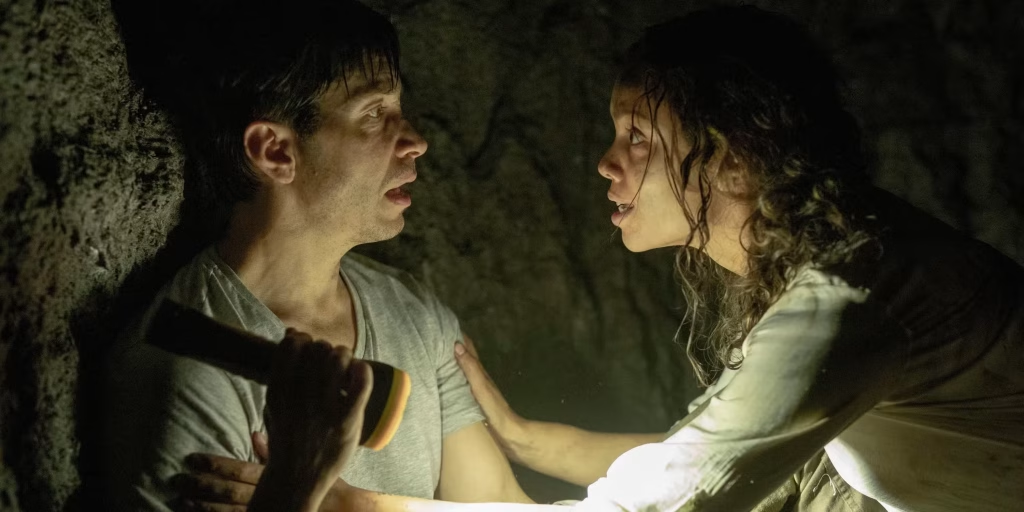
Barbarian has one of the great modern horror creatures, but AJ is the kind of monster the film wants us to recognize outside the basement.
He is ordinary in his selfishness. Ordinary in his excuses. Ordinary in the way he treats accountability as a threat to his comfort rather than a responsibility to another person. The movie puts him in extreme circumstances, but his flaws feel pulled from everyday life. That is why he sticks.
AJ’s final choices land with such nasty satisfaction because the film has spent so long showing us his pattern. He can talk himself into almost anything when survival is on the line. He can turn guilt into a monologue, fear into justification, and another person’s body into a stepping stone.
The brilliance of Barbarian is that it gives us different kinds of male danger without flattening them into one shape. Frank is the old horror buried beneath the house. Keith is the uneasy question mark of politeness and risk. AJ is the modern man of the apology era, fluent in the language of growth and still loyal to himself above all.
That makes him funny. It makes him pathetic. It also makes him terrifying.
The monster in the tunnels may chase you. AJ will explain why he had to push you in front of it, then ask whether you can see how hard this has been for him.

Rachel Sikkema is a New Zealand-based writer and creative entrepreneur who explores the intersection of film, culture, and modern relationships. Through her articles, she examines how stories shape the way we connect, love and see ourselves – all for God’s glory. When she’s not writing about film and television, she’s watching Dexter and The White Lotus for the third time.