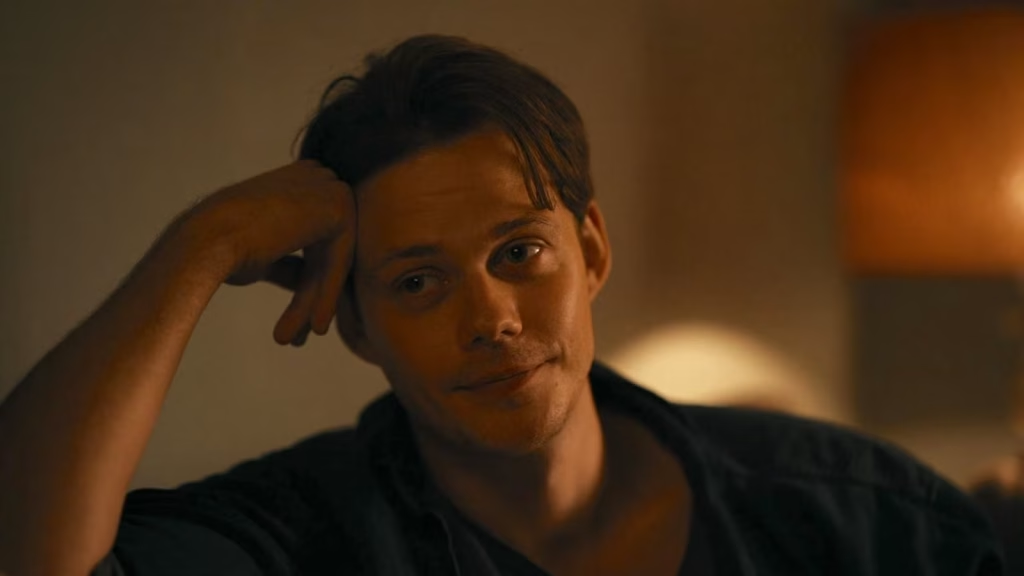
The scariest thing in Barbarian starts before anyone finds the basement.
It starts with Tess Marshall, played by Georgina Campbell, standing in the rain outside a house that should be hers for the night. The lockbox has no key. The neighborhood feels abandoned. Her phone is dying. A stranger is already inside. Every normal alarm in her body is working, but the world around her keeps nudging her toward the front door anyway.
That is the genius of Zach Cregger’s horror movie. The monster gets the poster image. The basement gets the screams. Bill Skarsgard’s Keith gets the suspicious first act that makes everyone lean forward and squint. But the real trap has already been built. It has a listing photo, a code, a check-in time, and a customer service system that offers no actual help when the fantasy breaks.
Barbarian is terrifying because it understands something very plain about modern life. So much danger now arrives with a confirmation email.
The Rental Is Already a Haunted House
The house on Barbary Street looks wrong from the second Tess arrives, but it also looks like a place she paid for. That matters.
If she had wandered into a random house in the middle of the night, the choice would be easy. Leave. Run. Call someone. Sleep in the car. But Barbarian gives her the most annoying kind of horror situation, which is the one where fear has to argue with logistics.
She has an interview in the morning. She has already booked the room. Hotels are scarce because of a convention. The rain is punishing. Keith seems strange, then considerate, then strange again, then maybe just awkward. Every step deeper into the house comes with a tiny practical excuse.
That is what makes the opening so nerve-shredding. Tess does not ignore danger because she is foolish. She keeps trying to behave like a reasonable person in a system that has stopped being reasonable.
The rental industry depends on this little act of faith. You trust that the photos are current. You trust that the host exists. You trust that the lock works. You trust that the address is safe enough because the app allowed it to be listed. Barbarian takes that trust and lets it rot in the walls.
Detroit Becomes More Than a Backdrop
The movie’s use of Detroit has an ugly charge because the neighborhood around the house says so much before anyone explains anything.
Tess arrives at night, so the street first reads like a warning. Empty lots. Broken homes. No casual signs of community. The house itself looks weirdly maintained compared with everything around it, like someone polished one tooth in a ruined mouth. It has the eerie quality of a business opportunity sitting in the middle of abandonment.
That contrast does a lot of work. The house can function as a rental because the people making money from it have separated the property from its surroundings. On a listing page, you can crop out the block. You can brighten the front room. You can describe convenience, charm, and value. You can sell the idea of shelter without caring about the life around it.
The movie keeps pushing that tension. Tess sees the neighborhood and feels what any person would feel. The market sees the house and sees an asset.
That gap is where the horror lives.
Barbarian has plenty to say about gendered fear, male entitlement, and the way women are trained to manage other people’s comfort. Still, the house gives those ideas a physical shape. It is not only where terrible men did terrible things. It is also where terrible things became hidden under paperwork, neglect, resale value, and the polite blankness of ownership.
Aj Sees a Crime Scene as Square Footage
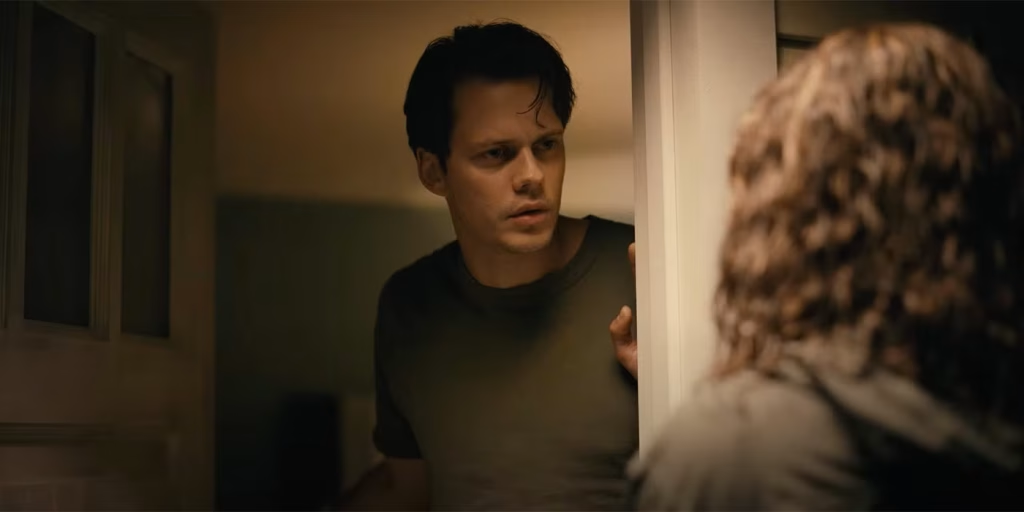
Then Justin Long arrives, and Barbarian becomes nastier and funnier at the same time.
AJ Gilbride is a perfect little parasite of a character. He is introduced as an actor facing a sexual assault allegation, and his panic has the texture of a man who keeps mistaking consequences for bad luck. He is sweaty, self-pitying, and somehow always able to locate the angle that makes him feel cheated.
When AJ finds the hidden rooms beneath the house, his reaction is one of the movie’s sharpest jokes. Tess sees terror. AJ sees extra space.
That moment is almost too good. He starts measuring the basement because additional square footage could increase the value of the property. A secret underground prison becomes a real estate advantage in his mind. The moral universe has collapsed, and he is doing math.
Justin Long plays it with a horrible breeziness. AJ has enough fear to know the place is dangerous, but his greed keeps poking its head up like a bad habit. He cannot stop converting reality into personal benefit. Even when the house is screaming its history at him, he hears opportunity.
That is why AJ fits the movie so well. He is not some separate comic detour. He is the human version of the rental listing. He can repackage anything. He can smooth over anything. He can make even the worst discovery part of a financial calculation.
The Basement Is What the Market Refuses to See
The underground space in Barbarian feels like a nightmare because it keeps expanding.
There is the first hidden room, already bad enough. Then the tunnel. Then the deeper chambers. Then the evidence of what Frank did for decades. The geography becomes obscene, as if the house has been growing a second body beneath the one everyone agreed to look at.
That layout turns the property into a metaphor without making it feel like homework. The clean surface exists because nobody looked hard enough underneath. Or because they looked, saw enough to know better, and decided distance made the problem someone else’s.
Real estate loves surfaces. Paint. Staging. Photos. New fixtures. Phrases like up-and-coming. A house can be marketed through what it appears to be, while the buried history stays buried. Barbarian makes that idea literal and gross. The basement is the cost of every convenient refusal to inspect too closely.
The monster known as the Mother is tragic inside that structure. She is frightening, yes, and the film never softens the immediate danger she poses. But she is also a product of the house’s hidden crimes. She is what happens when violence gets sealed away for so long that the world above forgets to ask what it created.
The movie’s pity for her makes the real villainy feel wider. Frank is the source of the evil. The house is the container. The market is the force that lets the container change hands without confession.
Tess Keeps Reading Danger Correctly
One of the smartest things about Barbarian is that Tess has good instincts.
She worries about Keith. She checks the room. She takes photos of his ID. She hesitates before going downstairs. She tries to leave. Again and again, she senses the shape of the danger before the movie confirms it. The tension comes from watching a woman read the room correctly while every practical circumstance pressures her to keep compromising.
Campbell gives Tess a grounded, watchful quality. She has a soft face, but her eyes are always working. You can feel her doing the social math that women are often forced to do. How rude can I be and stay safe. How cautious can I be without making this worse. How much fear am I allowed to show before the man in the room becomes offended by it.
The rental makes that negotiation crueler. Tess has paid for safety, so leaving feels like surrendering something that should belong to her. The house turns basic shelter into a debate.
That is the nasty little realism inside the movie’s wildest horror beats. People stay in bad situations all the time because the alternative costs money, time, pride, energy, or a chance they cannot afford to lose. The trap rarely needs chains when inconvenience can do half the work.
The Horror Is Ownership Without Responsibility

Frank owns the movie’s most obvious evil. AJ brings another kind, smaller and slicker. But Barbarian keeps circling a broader sickness, which is ownership without care.
The house has been a crime scene, a hiding place, an investment, and a rental. Each version allows someone to benefit while avoiding the full truth of what the place contains. That is why the real estate angle hits harder than a simple haunted house setup. The property keeps surviving its victims. It keeps being useful. It keeps generating value.
There is something deeply bleak about that.
Horror houses usually remember. They creak, bleed, whisper, or slam doors. The Barbary Street house does something more modern. It gets listed. It becomes content. It waits for the next person with a suitcase and a reason to stay.
That is why Barbarian lingers. The movie has shocks, weird laughs, and one of the most effective tonal swerves in recent horror, but its deepest fear is painfully ordinary. A house can be dangerous because someone made it dangerous. Then someone else can buy it, ignore it, monetize it, and invite strangers inside.
The monster in the basement is horrifying. The business model above her is worse.

Rachel Sikkema is a New Zealand-based writer and creative entrepreneur who explores the intersection of film, culture, and modern relationships. Through her articles, she examines how stories shape the way we connect, love and see ourselves – all for God’s glory. When she’s not writing about film and television, she’s watching Dexter and The White Lotus for the third time.