
The ending of Wuthering Heights (2026) is the kind that makes you sit through the credits and quietly reassess your taste in “romance.” It’s bleak, intimate, and oddly clarifying. Emerald Fennell’s take is less interested in smoothing the story into something swoony and more interested in showing what obsession looks like when it’s given a fancy name and left to rot in a big house on the moors.
If you’re confused by the final scene, you’re not alone. The movie wants you to feel the emotional whiplash. It ends on grief, then snaps back to childhood tenderness, and it does that for a reason. It’s basically telling you: this was always the same story, just in different bodies.
What Happens at the End of Wuthering Heights and Why It Hurts So Much
In this version, Catherine “Cathy” Earnshaw (Margot Robbie) dies from sepsis after a miscarriage. The film doesn’t treat it like a poetic fading-away. It’s physical, messy, and brutal in a way that makes the whole room go quiet.
Heathcliff (Jacob Elordi) doesn’t get the classic bedside moment. He learns what’s happening too late, storms in after the fact, and finds her already gone. Then comes the image the movie wants burned into your brain: Heathcliff holding Cathy’s body, wrecked, pleading with her to haunt him. Not comfort him. Not forgive him. Haunt him.
Right after that, the film cuts to a flashback of them as children, when Cathy comforts him after he’s been beaten and he makes that fierce, childish promise that he’ll never leave her. It’s tender for about half a second. Then you realise the movie has just shown you the seed of everything that comes next.
Why the Movie Ends Early Compared With the Book
If you know the novel, you might be waiting for the second generation, the long revenge, the slow unspooling of consequences. This film stops before all that. It ends at Cathy’s death.
That choice isn’t random. It narrows the whole story into a single emotional thesis: Cathy and Heathcliff are not a love story that gets redeemed by time. They are a love story that becomes its own closed loop. Ending at her death makes their bond feel like an event horizon. Once you cross it, you don’t come back out as the same person.
It also changes what the ending “means.” The book eventually offers a strange kind of settling. This film refuses the settling.
What Heathcliff Begging to Be Haunted Really Says About Him
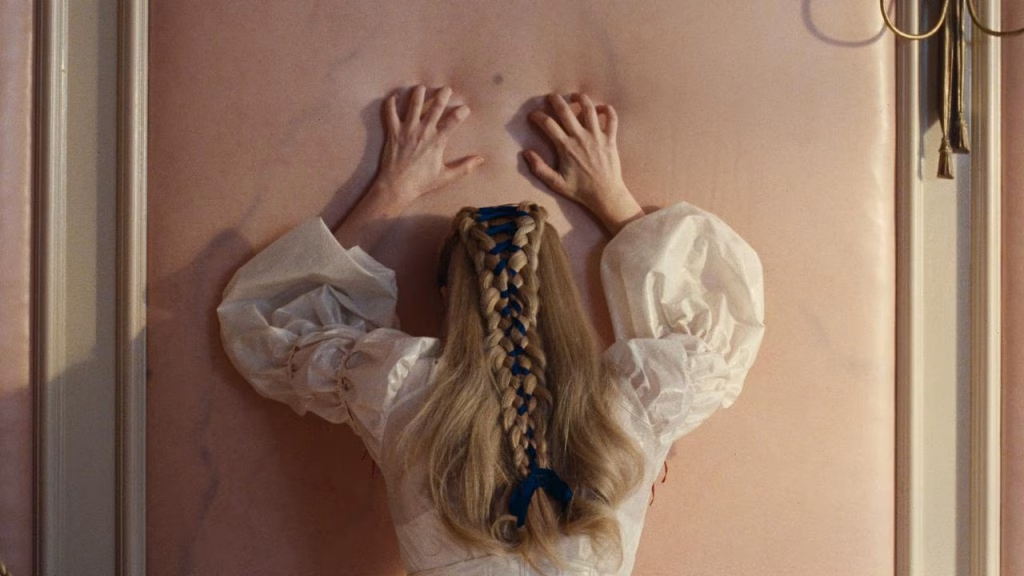
On paper, “haunt me” sounds romantic in a gothic way. In the context of this film, it’s closer to a confession.
Heathcliff is not asking Cathy to be at peace. He’s asking her to stay bound to him, even if the only version left is spiritual torment. That matters because it reveals how his love works.
There’s also something almost desperate and childish about it. Heathcliff has spent the whole film trying to turn pain into power. He wants control, payback, proof that he was worth choosing. When Cathy dies, death becomes the one thing he can’t negotiate with. So he reaches for the next-best illusion of control: if her ghost stays with him, then he’s still the centre of her world.
It’s tragic, but it’s also selfish. And that’s the point. The ending isn’t giving you “true love.” It’s showing you what happens when obsession gets mistaken for a spiritual bond.
Why That Childhood Flashback Is Not a Sweet Goodbye
The flashback is the sneakiest part of the ending because it can play like nostalgia. Look, they were pure once, they were kids. Look, this started as comfort.
But the movie is doing something sharper than that. It’s showing you how early the wiring got crossed.
Cathy and Heathcliff’s closeness begins in a world where love is tangled up with humiliation, class, and violence. When the film flashes back to the promise of “never leaving,” it’s not blessing it. It’s underlining it as the first chain.
That’s why the cut back to childhood lands like a punch instead of a hug. It says: this was never going to end cleanly, because it began in a place where “belonging” already meant “being owned.”
What Cathy’s Death Represents in This Adaptation
Cathy’s death is not framed as fate. It’s framed as fallout.
This Cathy isn’t simply “too passionate for the world.” She’s someone who tries to split herself in half and live as both versions. She wants Heathcliff’s intensity and Edgar Linton’s safety at the same time. In a normal melodrama, that contradiction fuels drama. In this film, it destroys her.
Making her death tied to miscarriage and sepsis pushes the story out of the realm of romantic metaphor and into consequence. The body becomes the battleground. All the repression, spiralling, and self-punishment that people around her write off as “Cathy being Cathy” turns into a literal emergency.
It also flips the usual audience instinct to romanticise her suffering. The film basically dares you to call this beautiful. It’s forcing you to see the cost of treating anguish like personality.
What the Ending Is Saying About Love, and Why It’s Meant to Sting
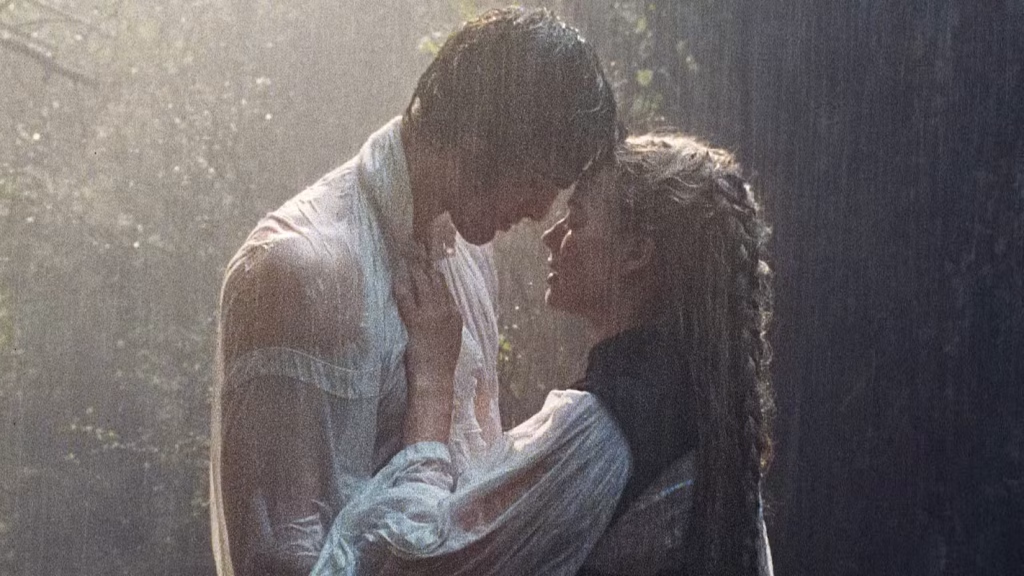
Here’s the hard read the film is asking you to accept: Cathy and Heathcliff are not framed as lovers who were kept apart by society and therefore remain pure. They are framed as two people who found the exact wrong kind of recognition in each other and then treated it as destiny.
The final scene is not “they’ll be together in the afterlife.” It’s “this bond will never become healthy, so it can only survive as a haunting.”
And the childhood flashback seals it. The film is not letting you leave with closure. It’s letting you leave with origin. This was always the shape of it, right from the first comfort that turned into possession.
The final scene means they don’t transcend their damage. They preserve it. And if that feels like a gut-punch, honestly, good. The story has never been a lullaby.

Rachel Sikkema is a New Zealand-based writer and creative entrepreneur who explores the intersection of film, culture, and modern relationships. Through her articles, she examines how stories shape the way we connect, love and see ourselves – all for God’s glory. When she’s not writing about film and television, she’s watching Dexter and The White Lotus for the third time.