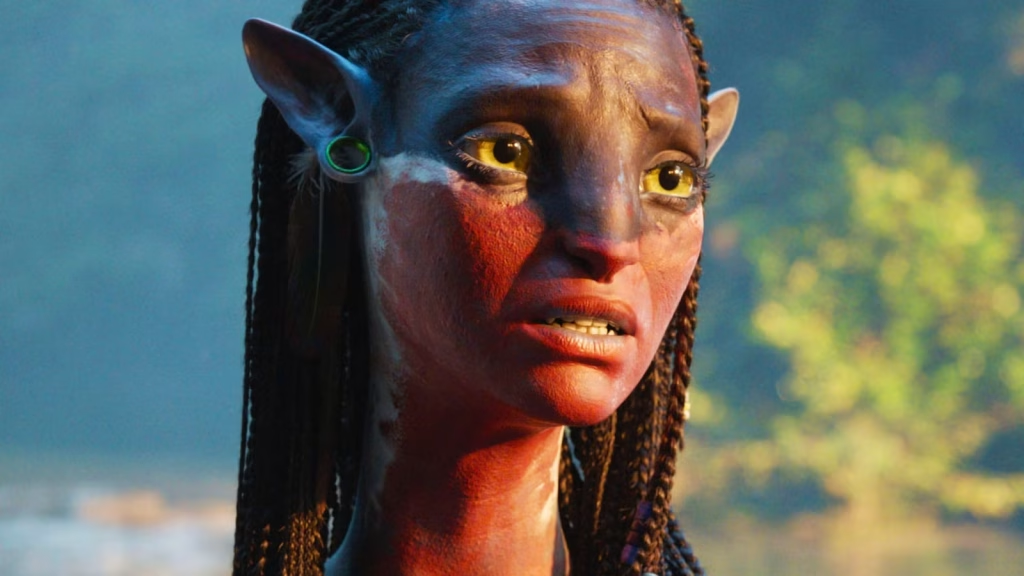
By the time Avatar: Fire and Ash rolls its first quiet beats, you can feel what it wants to do differently. It still gives you the Pandora-sized spectacle, the kind that makes you sit up straighter and stop checking your phone. But the emotional engine is smaller, meaner, and more intimate. This is a movie about what happens after the heroic moment, when the shouting fades and the body keeps score.
For Neytiri (Zoe Saldaña), that “after” is the point. Neteyam’s death does not become a tasteful motivator that politely clears the stage for the next action sequence. It stays. It clings. It changes her. The film treats her grief like a living thing that shares the house with the Sullys, eats at their table, and waits in the corner when the kids are trying to sleep.
Grief Turns Neytiri Into a Different Kind of Warrior
Neytiri has always been a fighter, but her violence used to feel purposeful. Even in the first Avatar, she’s ferocious with a clear center: protect the clan, protect the land, protect the bond. In Fire and Ash, the center wobbles. The pain has nowhere to go, so it starts looking for exits. Saldaña has talked about how rage can rise when grief has no place to land, and the film builds that idea into Neytiri’s posture and choices.
What’s striking is how the movie lets her be wrong without making her small. It doesn’t flatten her into a “vengeful mom” cliché. It shows the daily grind of loss turning into a worldview: suspicion first, mercy later, if at all.
Jake’s Coping Style Pours Gasoline on the Fire
Jake Sully (Sam Worthington) mourns in a way that feels painfully familiar: he tries to problem-solve the feeling. He goes tactical. He goes back to soldiering because it’s the one place where he understands the rules.
That coping style might keep the family alive in the short term, but emotionally it is a disaster. Jake’s “protect at all costs” instinct starts to look like an excuse to avoid sitting with the loss. Neytiri reads that avoidance as betrayal. Why wouldn’t she? If grief is an ocean, Jake builds a raft. Neytiri dives in and refuses to come up for air.
The Kids Learn What the Adults Repeat
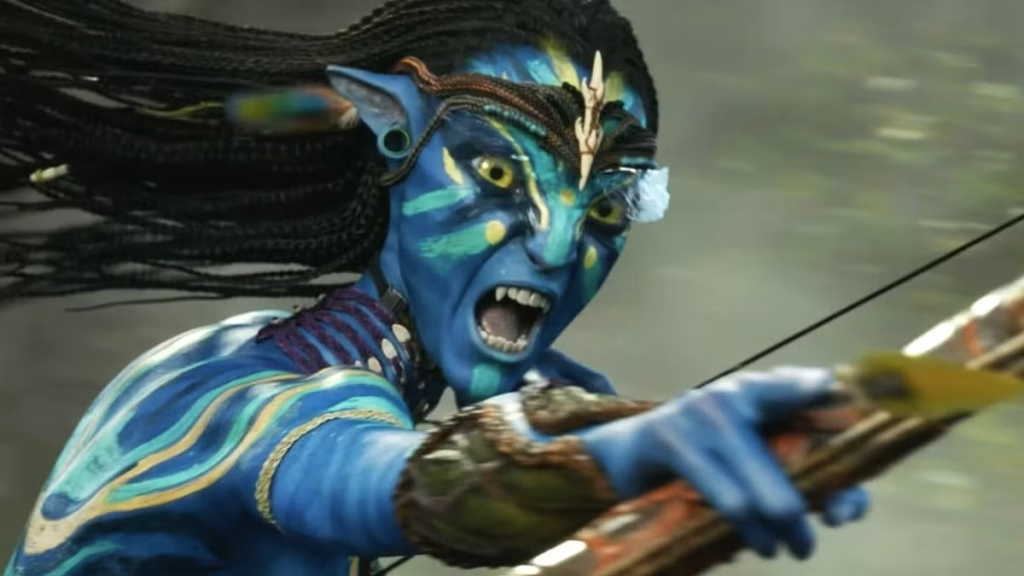
Here’s where inheritance comes in, and it’s the movie’s sharpest move. The Sully kids are not passive observers to their parents’ suffering. They absorb it, mirror it, and sometimes weaponize it.
Lo’ak, already wired for impulsive bravery, starts taking bigger emotional risks because the family’s baseline has shifted. Kiri (Sigourney Weaver) feels like a spiritual antenna, and the more unstable the household gets, the more her connection to Eywa carries the weight of everyone’s desperation.
Varang and the Ash People Show What “Hurt People” Can Build
The Mangkwan, led by Varang (Oona Chaplin), arrive like a narrative dare: what if the Na’vi are not automatically united by spirituality and harmony? What if some of them believe Pandora abandoned them?
The film frames their violence as coherent, which is more unsettling than making them cartoon monsters. They have trauma, history, and a survival logic that has curdled into something brutal. Chaplin’s own description of the clan leans into unresolved trauma and disaster as the spark for their lost faith, and that idea matters because it makes the Mangkwan feel like a distorted mirror, not an outside infection.
The Spider Dilemma Exposes What Grief Is Willing to Justify
One of the film’s most brutal ideas is also its most human: grief doesn’t only make you sad. It can make you righteous.
When the story pivots into the moral panic around Spider, the question is not “who is good?” The question is “what will you convince yourself is necessary?” A key sequence pushes Jake and Neytiri toward a decision that would have felt unthinkable a movie ago, and the horror is how quickly strategic thinking tries to dress itself up as virtue.
Fire and Ash Are Emotional States, Not Only Spectacle
The title is doing more than promising volcanoes and bigger battles. Fire is the adrenaline of trauma. It’s the feeling that makes you act before you think, because thinking hurts. Ash is what’s left after the acting, when you finally look down and see what you burned.
That’s why the movie’s most effective moments aren’t only the giant set pieces. They’re the quiet scenes where you can sense characters recalibrating their morality. They’re the glances between Jake and Neytiri that say, “We’re still here,” followed immediately by, “But are we still us?”
Zoe SaldañA’s Performance Makes Rage Feel Inherited, Not Performed
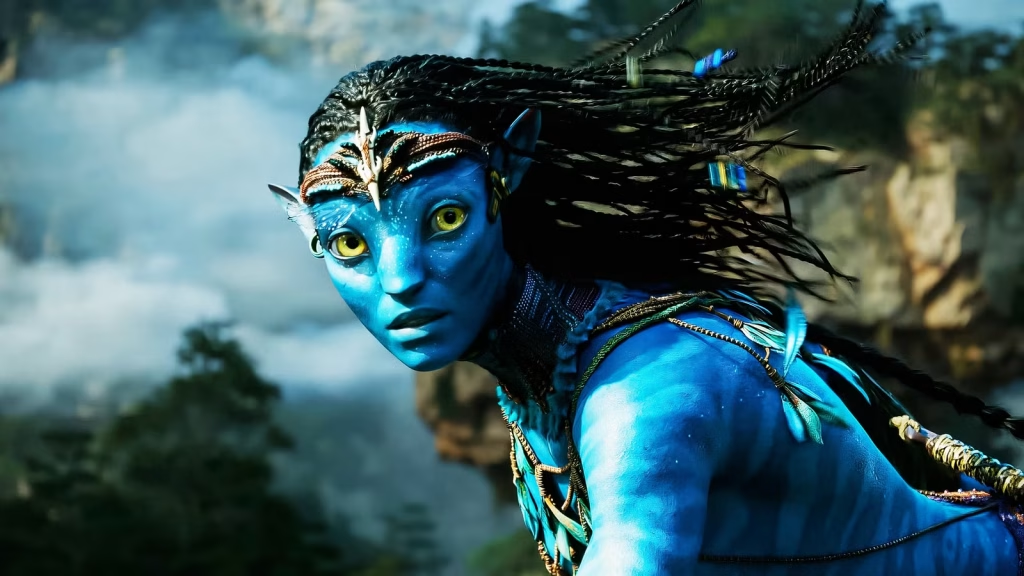
Performance capture can sometimes create a weird emotional distance, but Saldaña bulldozes that problem. Her Neytiri is all sharp angles and contained tremors, like she’s trying to hold herself together through force of will. You can see the grief in how she moves before she even speaks.
What sells the “inheritance” theme is that Neytiri’s rage isn’t presented as a switch. It’s presented as erosion. One boundary disappears, then another. When she finally crosses a line, it feels like the endpoint of a thousand small moments, not a sudden twist.
The Point Is Not Whether Neytiri Is Right, but What Her Kids Will Copy
The most haunting question Fire and Ash leaves behind is not about the next battle. It’s about the next generation. When a family survives through rage, what do the kids learn to reach for when life hurts again?
Neytiri’s grief is real. Her anger makes sense. The danger is that it’s contagious, and families are the easiest place for contagion to spread. Fire and Ash understands that inheritance isn’t only bloodline or tradition. Sometimes it’s the emotional habit you hand your children without noticing, until one day you see it in their face and think, oh no. That’s mine.

Rachel Sikkema is a New Zealand-based writer and creative entrepreneur who explores the intersection of film, culture, and modern relationships. Through her articles, she examines how stories shape the way we connect, love and see ourselves – all for God’s glory. When she’s not writing about film and television, she’s watching Dexter and The White Lotus for the third time.