
Olivia Colman stands in a gloomy seaside village and asks Peter Dinklage to make her a husband. He agrees, heads to his workshop and weaves Alexander Skarsgård out of wicker.
That premise alone should secure Wicker a place among the strangest films of 2026. Then the trailer reveals that Colman’s Fisherwoman and her handcrafted partner have an enthusiastic sex life. Beds break. Neighbors listen through walls. Wicker nipples enter the cultural conversation.
Somewhere beneath all that rustling sits what appears to be a sincere love story.
Written and directed by Eleanor Wilson and Alex Huston Fischer, Wicker arrives as an adult fairy tale about marriage, desire and social conformity. It has already played at Sundance, but its theatrical release will give wider audiences their first opportunity to meet a romantic hero with a woven chest and the emotional availability of several ordinary men combined.
At last, cinema is asking the important question. What if the perfect husband could be ordered from a basketmaker?
The Premise Sounds Like a Joke Someone Refused to Abandon
Many strange movies become less strange once their basic concept has been explained. Wicker keeps getting weirder.
Colman plays an unmarried Fisherwoman who lives on the outskirts of a conservative village. She smells of her trade, speaks her mind and endures constant ridicule from neighbors who view her single status as a public defect.
Fed up with their cruelty, she commissions the local Basketmaker to create a husband. Peter Dinklage treats the request with the grave concentration of a master craftsman facing his most ambitious order.
The result is Alexander Skarsgård covered from head to toe in wicker.
The film could easily coast on that reveal. A towering movie star walks onscreen dressed like expensive patio furniture and everybody laughs. Yet the Wicker Husband appears to possess a soulful nature, impeccable manners and deep devotion to his new wife.
Soon the villagers have a different problem. Her strange marriage looks happier than theirs.
That is a wonderful engine for a comedy. The artificial man embarrasses the community simply by being a considerate husband. Every repaired roof and tender glance becomes an insult to the flesh-and-blood men around him.
It Has the Texture of Folk Horror and the Appetite of a Sex Comedy
The setting initially suggests that something terrible will happen near a bonfire.
There are rough cottages, muddy lanes and villagers dressed in clothing from no clearly defined historical period. Ritual and gossip seem to govern daily life. Anyone familiar with British folk horror may feel a small jolt of dread at the title alone.
Then Skarsgård arrives looking less like a sacrificial structure and more like a romance novel cover assembled from garden supplies.
Wicker appears to enjoy the collision. Its world has the dirt and superstition of folk horror, while its story moves with the rude energy of a bawdy village comedy. The marriage threatens the social order through pleasure rather than terror.
The Fisherwoman finally gets what she wants and enjoys it loudly. Her neighbors lie awake listening. Their outrage seems tangled with fascination, which feels about right. Moral panic often becomes especially intense when jealousy joins the meeting.
A film that can move from social satire to an earnest wicker embrace has already earned my curiosity. Add vigorous lovemaking and a recurring broken bed, and resistance becomes pointless.
Olivia Colman Makes the Madness Feel Perfectly Reasonable
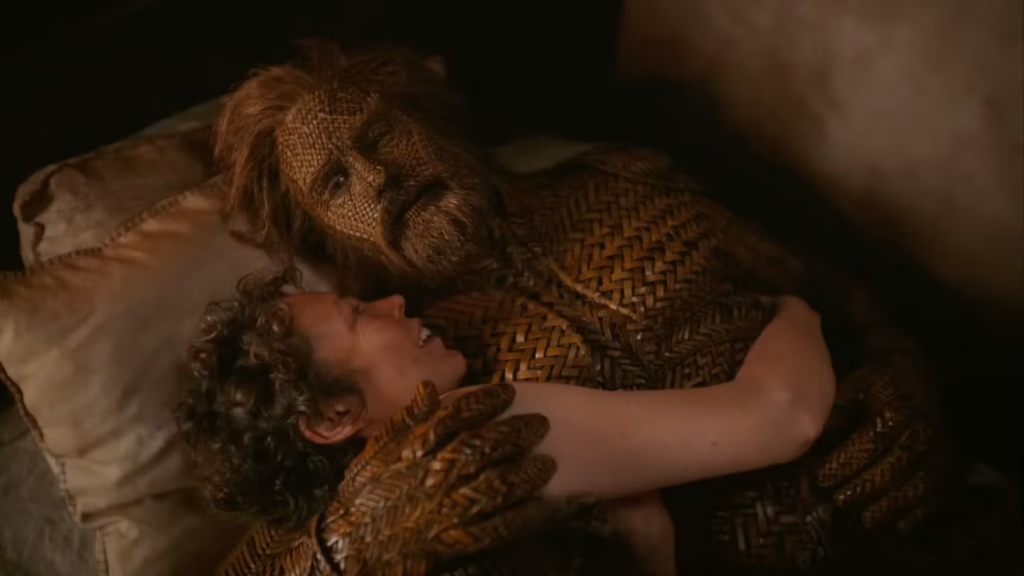
Casting Olivia Colman as the woman who orders a custom husband may be the smartest decision in the entire production.
Colman can make a character prickly without draining her warmth. She has a gift for placing embarrassment and defiance in the same expression. The Fisherwoman needs both. She has spent years being treated as a joke, yet the story gives her desires the force of a fairy-tale wish.
Watch the way she looks at the finished husband. Her face moves through disbelief, suspicion and reluctant interest. She seems fully aware that accepting a wicker man into her home represents a rather dramatic escalation. She also knows the village has offered her nothing better.
Her presence protects the film’s emotional center. Colman brings ordinary human need into a story crowded with woven anatomy and enchanted craftsmanship.
She also understands how to play desire without making it tasteful for somebody else’s comfort. The Fisherwoman appears hungry for affection and furious about the years she has gone without it. Her romance carries the giddy force of a woman discovering that happiness can be taken rather than politely requested.
Colman makes that discovery funny. She may also make it moving enough to hurt.
Alexander Skarsgård Becomes the Gentlest Possible Monster
Skarsgård’s Wicker Husband is a genuine practical creation. The elaborate suit gives him a braided face, thick wooden muscles and fibers that catch the light like coarse hair.
The effect sits somewhere between storybook prince and agricultural deity.
Skarsgård could play the character as a broad physical gag. Instead, the glimpses released so far suggest a performance built around quiet sincerity. He moves carefully and speaks with the solemn directness of a being who has never learned to hide behind irony.
That sweetness creates the attraction.
Movie monsters often appeal because they offer a dangerous fantasy. The Wicker Husband seems to offer safety. He admires his wife, supports her work and appears free from the shame her neighbors keep trying to place on her.
His body looks uncanny. His behavior makes everyone else look poorly made.
There is also something delicious about casting an actor famous for menace as a morally upright handmade spouse. Skarsgård has played predators, tyrants and deeply damaged men. Here he towers over Olivia Colman with the energy of a devoted househusband who happens to require occasional maintenance.
No wonder the village starts unraveling.
The Romance Threatens People Who Were Comfortable With Her Misery
The Fisherwoman’s neighbors tolerate her while she occupies the role they assigned her. She can remain the smelly unmarried woman outside town. Her unhappiness confirms their rules.
A loving husband changes the arrangement.
The couple’s happiness forces the village to confront an unpleasant possibility. The woman they mocked may have secured a kinder marriage than the respectable people laughing at her. Her oddity has become freedom.
Elizabeth Debicki appears as the Tailor’s Wife, a poised figure whose interest in the Wicker Husband carries more heat than simple disapproval. She represents the sort of woman who has succeeded within the village hierarchy. The Fisherwoman’s unconventional happiness threatens to make that success look hollow.
Here the film’s strangest element becomes its sharpest tool. A conventional rival would create ordinary romantic jealousy. A man made of wicker exposes how artificial the village’s own ideals have always been.
Everyone follows the proper customs and performs the correct marriages. Then a basket walks into town and starts treating his wife well.
Chaos feels inevitable.
The Practical Costume Changes the Whole Flavor
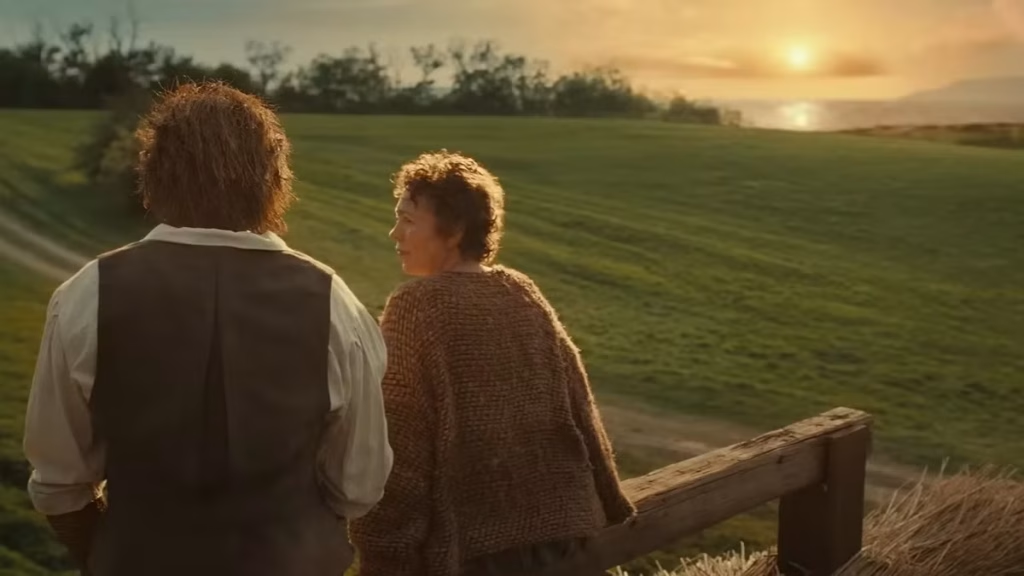
The Wicker Husband was created by Wētā Workshop through an elaborate practical suit built around Skarsgård’s body and expressions. That physicality gives the film an appealing handmade quality.
You can see the individual strips across his chest. His beard resembles bundles of dried grass. The face holds Skarsgård’s recognizable shape while remaining unmistakably woven.
He occupies rooms rather than floating inside them as a digital addition. Colman can touch his textured face. He can lift her, embrace her and collapse onto furniture with convincing weight.
For a romance this tactile, that matters.
The material also creates questions the film seems delighted to provoke. Does wicker feel warm? Does it pinch? How much structural reinforcement does a marital bed require?
The trailer has already encouraged viewers to contemplate logistics that polite society rarely discusses. A lesser marketing campaign might have tried to preserve mystery. Wicker places the body front and center, woven nipples included.
Good. If you create Alexander Skarsgård from basket material, modesty feels wasteful.
It May Be a Fairy Tale for People Exhausted by Normal Romance
Modern romantic movies often struggle to make ordinary courtship feel surprising. Dating apps, misunderstandings and charmingly chaotic weddings have been worked nearly smooth.
Wicker arrives with a woman who skips dating altogether and commissions a man from a tradesperson.
The setup feels outrageous, but the emotional wish underneath it is familiar. The Fisherwoman wants a partner who chooses her without hesitation. She wants affection free from the village’s judgment. She wants somebody who views her roughness as part of the package rather than a flaw requiring renovation.
The Wicker Husband offers that fantasy in literal form. He has been designed for her.
That creates room for uncomfortable questions alongside the jokes. Can a perfect partner possess desires of his own? Does unconditional devotion leave space for equality? What happens when private happiness becomes a public challenge?
A good fairy tale makes impossible events feel emotionally precise. Wicker appears prepared to do that while making several jokes about wood.
Strange May Be Exactly What Romance Needs
Wicker has an enviable collection of contradictions.
It looks earthy and artificial. Its central relationship is ridiculous and sincere. The story belongs to a familiar fairy-tale tradition, yet its treatment of female desire feels unusually direct. Even the romantic lead combines the body of Alexander Skarsgård with the structural principles of a picnic basket.
Trying to smooth those contradictions would ruin the pleasure.
The film’s early appeal comes from its willingness to follow one peculiar idea further than good sense might recommend. It builds a whole village around the joke, fills that village with frustrated people and allows the woven man to become an object of genuine longing.
Plenty of romances promise a dream partner. Wicker hires Peter Dinklage to manufacture one.
Whether the marriage remains idyllic will have to wait for the full film. The trailer already makes one thing clear. Cinema has finally produced a leading man who is handsome, sensitive and biodegradable.
Romance movies may never recover.

Rachel Sikkema is a New Zealand-based writer and creative entrepreneur who explores the intersection of film, culture, and modern relationships. Through her articles, she examines how stories shape the way we connect, love and see ourselves – all for God’s glory. When she’s not writing about film and television, she’s watching Dexter and The White Lotus for the third time.