Bear has made an enchanted woman obsessively devoted to him, people are dying, and his life has become a supernatural disaster. Then somebody reacts with the emotional urgency of a man whose takeaway order arrived slightly cold.
That strange comic register runs through Obsession. Curry Barker lets characters respond to horror with confusion, selfishness, and terrible timing. The laughs come easily because the people feel recognisable. They bicker, hesitate, say the wrong thing, and keep trying to preserve normal social behaviour while normality collapses around them.
Then the violence arrives.
The shift feels vicious precisely because Barker has made the room comfortable enough for laughter. Every joke loosens the audience before the film pulls the floor away.
Bear Is Funny Because He Keeps Choosing Badly
Michael Johnston plays Bear with the nervous physical energy of someone trying to escape a conversation without appearing rude. His shoulders tense. His words stall. His face cycles through half a dozen excuses before he manages to say anything useful.
That makes him funny long before the supernatural chaos begins.
Bear treats confessing his feelings to Nikki as a life-threatening challenge. He practises with Ian, studies every possible outcome, and panics when Nikki gives him a direct opening. His fear has grown so large that a cursed wishing object feels like a reasonable alternative to honesty.
The absurdity lands because Bear takes himself completely seriously.
Once the wish transforms Nikki, the same quality becomes far less charming. Bear continues looking for an emotionally convenient exit. He wants the frightening version of Nikki gone, but he also wants to avoid admitting what he did. His attempts to manage the situation resemble a man hiding a broken lamp during a house party.
Except the lamp can walk backward through a dark room and murder people.
The comedy reveals Bear’s character before the violence judges it. His awkward evasions feel cute when the stakes involve embarrassment. They become infuriating when Nikki’s body and mind are being consumed.
Freaky Nikki Is Allowed to Be Ridiculous
Inde Navarrette gives one of those horror performances that could collapse with a slightly different line reading. Her cursed Nikki is clingy, theatrical, childlike, sexually aggressive, and deeply miserable. She can look hilarious for half a second before her expression twists into something painful.
That half second matters.
Wish Nikki behaves like somebody performing romance from a corrupted instruction manual. She hangs on Bear with exaggerated sweetness. Her voice slips into a syrupy tone. She offers pet names and declarations with such frantic intensity that Bear can barely process the attention he once craved.
Some of it plays like a savage relationship comedy. Bear wanted affection and receives an unbearable quantity of it. Every fantasy becomes irritating once it refuses to leave the house.
Navarrette understands the danger of pushing Nikki too far into camp. Tiny signs of distress keep breaking through. A smile strains at the corners. A playful sound suddenly carries rage. Her body seems driven by an emotional command that hurts more each time she obeys it.
The laughter catches in your throat because Nikki appears trapped inside the joke.
Ian Gives the Movie a Dangerously Normal Pulse
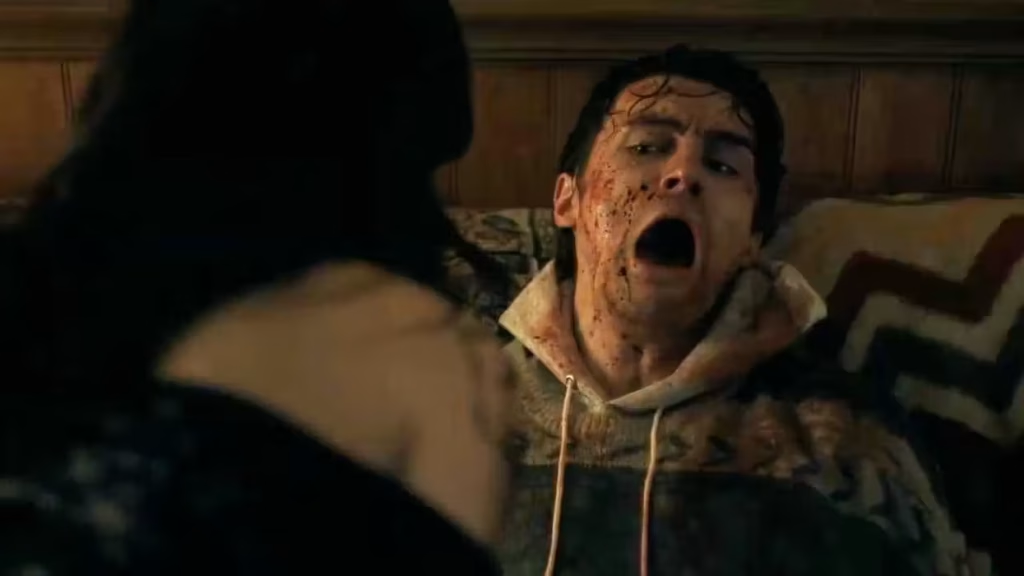
Cooper Tomlinson’s Ian brings the casual energy of a friend who has heard Bear complain about the same crush for months. He teases him, pushes him to act, and responds to Bear’s romantic paralysis with weary amusement.
Ian makes the group feel lived in. He also gives the film someone who can puncture Bear’s melodrama.
Without that friendly irritation, Bear’s longing might become too solemn. Ian sees the situation at its ordinary scale. His mate likes a woman and needs to say so. Simple. Bear keeps inflating the problem until supernatural intervention appears easier than a vulnerable conversation.
Their banter creates an easy social rhythm. You can picture these people wasting an evening together, repeating old stories and mildly annoying one another. The horror later violates that familiarity.
Violence against a stock supporting character creates a plot point. Violence against the friend who has been rolling his eyes at Bear creates grief.
The jokes do the work of making Ian human before the film places him in danger.
The Gore Arrives With Appalling Confidence
Barker refuses to soften the attacks once the film crosses that line. The violence has weight, repetition, and an ugly physical presence. It often continues beyond the moment when another movie would cut away.
That excess changes the flavour of every earlier laugh.
A comic horror film can use gore as punctuation. A head explodes and the audience laughs at the outrageousness. Obsession pushes further. Its brutality becomes exhausting. The room may still contain absurd behaviour, yet the bodies refuse to function like punchlines.
The film’s infamous head-smashing sequence captures this perfectly. The action reaches a level of repetition that becomes surreal, but the sound and force keep dragging it back toward pain. Any nervous laughter starts to feel incriminating.
Barker seems fascinated by that reaction. He lets the audience enjoy the ridiculous premise, then forces us to sit with the material result. A magical wish sounds like a playful horror device. A ruined human body removes the playfulness rather quickly.
Funny setup. Horrible invoice.
Laughter Makes Us Briefly Side With Bear
The film’s humour also performs a sly moral trick. Bear receives many of the funniest reactions, so viewers naturally settle into his point of view. Johnston has excellent comic timing. His panic can feel boyish and sympathetic even when his decisions become indefensible.
We laugh with him and begin treating Nikki as the problem.
That alignment mirrors Bear’s own thinking. He experiences cursed Nikki as an unbearable girlfriend rather than a person whose autonomy he erased. Her behaviour frightens him, embarrasses him, and disrupts his friendships. He keeps focusing on the inconvenience of the outcome.
Comedy makes that selfish perspective easy to inhabit.
Then the violence clarifies who carries the real damage. Nikki’s body commits the acts, but Bear wrote the emotional command. He wished for a love so total that every other human attachment became competition.
Each brutal consequence exposes the control hiding inside his romantic fantasy.
The audience has to reconsider its laughter. Bear’s predicament was funny because he got more than he wanted. Nikki’s predicament was horrifying from the first second because she lost the ability to want anything else.
Social Awkwardness Survives the Apocalypse

One of Barker’s sharpest instincts is allowing mundane behaviour to persist inside extreme situations. Characters remain petty, confused, and worried about how they appear. They struggle to name the obvious because naming it would require an honest conversation.
That feels painfully modern.
Bear can accept a supernatural object more easily than rejection. His friends can recognise that something is wrong while still getting tangled in social boundaries. Nikki performs romance even as the performance destroys her.
Nobody develops sudden heroic eloquence.
This awkwardness generates laughs, but it also delays every useful response. People waste precious time trying to preserve politeness or protect their pride. By the time somebody speaks plainly, the curse has already gained ground.
The humour becomes another mechanism of dread. We laugh because we recognise the hesitation. Then we watch it cost somebody dearly.
The Final Joke Has No Safe Punchline
The ending gives Bear and Nikki the warped romantic unity he thought he wanted. Through a second wish, Bear experiences the same consuming devotion that has controlled Nikki. He approaches her with tenderness, and for one brief moment they resemble a couple reaching emotional understanding.
The scene carries the visual language of romance. Their expressions soften. The chaos around them fades. A kiss seals their shared feeling.
Both have been stripped of choice.
There is something almost funny about the precision of the curse. Bear finally understands Nikki because he has become equally enchanted. The relationship achieves perfect balance at the exact moment it becomes completely empty.
Then Bear dies and Nikki wakes to the aftermath.
The film leaves her surrounded by consequences she never chose. All the nervous laughter, exaggerated affection, awkward excuses, and selfish reactions have led to a silence with real weight.
That is why the comedy works so well. It gives Obsession warmth before the blood drains out of it. It makes the characters pleasant company before they become victims. It encourages us to laugh at Bear’s terrible wish before showing exactly who pays for it.
The jokes never release the tension. They wind it tighter.

Rachel Sikkema is a New Zealand-based writer and creative entrepreneur who explores the intersection of film, culture, and modern relationships. Through her articles, she examines how stories shape the way we connect, love and see ourselves – all for God’s glory. When she’s not writing about film and television, she’s watching Dexter and The White Lotus for the third time.