
Bear looks harmless when we first meet him in Obsession. Michael Johnston gives him nervous eyes, damp bangs and the posture of a man apologising for taking up space. He rehearses a confession to Nikki with Ian because speaking honestly to her feels impossible. Even his nickname sounds soft.
Curry Barker knows exactly how useful that softness can be.
Bear fits a familiar romantic type. He is the quiet friend who has loved a woman for years. He remembers small details about her and searches for the right gift. Everyone can see his feelings except the woman at the centre of them, or so he assumes. A hundred romantic comedies have trained us to root for this man.
Then he picks up the One Wish Willow.
From that moment onward, Obsession begins stripping away the protective story Bear has built around himself. He calls his behaviour love. The film shows us possession.
Shyness Gives Bear Excellent Cover
Bear’s fear of rejection appears sympathetic because Michael Johnston plays it without swagger. He never acts like the loud creep at the end of the bar. He avoids confrontation and speaks with the nervous sincerity of someone who expects the world to bruise him.
That vulnerability becomes camouflage.
Bear has plenty of opportunities to tell Nikki how he feels. Ian urges him to do it. Nikki spends time alone with him and shares personal thoughts about her writing. Their closeness offers him a chance to speak without spectacle. He could stumble through the confession and let her decide what comes next.
Instead, Bear treats uncertainty like an injustice.
He wants Nikki’s answer before he asks the question. More than that, he wants the answer to be yes. The One Wish Willow attracts him because it removes the only part of romance he cannot control, which is the other person.
His shyness makes the decision feel smaller than it is. He snaps a novelty stick in a private moment. There is no evil speech or thunder cracking overhead. Still, the wish is an act of extraordinary entitlement. Bear reaches into Nikki’s mind and rewrites her around his desire.
A villain can whisper.
He Never Wishes for Courage
Bear’s wording gives him away.
He could wish for the confidence to tell Nikki the truth. He could ask for one honest conversation or a chance to understand her feelings. Even a selfish wish for charm would leave some room for Nikki to respond as herself.
Bear wishes for Nikki Freeman to love him more than anyone in the entire world.
Her full name matters. He targets a specific person. The scale of the love matters too. He asks to outrank her family, friends and every attachment she has formed without him. His fantasy contains no boundaries because he views romantic love as a competition he deserves to win.
The wish never asks what Nikki wants. It turns her into the answer to Bear’s loneliness.
Barker could have made the magic corrupt an innocent request through a clever technicality. That would place Bear beside the unlucky fools of traditional wish stories. The One Wish Willow barely needs to twist his words. It follows them to their natural conclusion.
Nikki loves Bear above everyone and everything. The result is horrifying because the request was horrifying.
Bear Enjoys the Wish Before He Fears It

This is the detail that closes the case against him.
When Nikki’s behaviour changes, Bear understands that something feels wrong. Her affection arrives too quickly. Her personality shifts around him with an unnatural smoothness. She offers exactly the kind of attention he has imagined receiving, but the woman delivering it seems slightly displaced inside her own body.
Bear notices. Then he dates her anyway.
The early stretch of their relationship carries a queasy sweetness. He enjoys the kisses and the relief of finally being chosen. He accepts a version of Nikki whose consent has been manufactured by his wish because that version gives him what he wants.
Inde Navarrette plays these scenes with a bright intensity that keeps slipping beyond ordinary infatuation. Her smile holds for a fraction too long. Her gaze fixes on Bear as if the rest of the room has lost its physical substance. She behaves less like a girlfriend than a creature studying the role.
Bear keeps going.
He has already seen enough to question her freedom. The fantasy feels good, so he delays the question. That choice transforms him from a reckless fool into an active participant.
Nikki Becomes Bear’s Idea of Love
Wish Nikki frightens Bear because she reflects him back at himself.
She watches him. She studies his preferences and bends herself toward them. Her entire emotional world revolves around whether he wants her. Other people become threats because Bear asked to matter more than anyone else.
Even her more bizarre behaviour follows the warped emotional rules he created. Love means total attention. Love means proving devotion through sacrifice. Love means removing every rival object of affection until two people remain inside a sealed room.
That is Bear’s fantasy with the lighting changed.
Before the wish, he has spent years organising his private life around Nikki. He knows her habits and rehearses conversations she has never agreed to join. He imagines a relationship so intensely that the imagined version begins to feel owed to him.
Wish Nikki performs the same fixation in a louder register. She stalks, clings and lashes out. Bear recoils because obsession looks uglier when a woman directs it at him.
The monster feels alien, yet Bear provided the blueprint.
Real Nikki Remains Trapped Underneath
The most brutal moments in Obsession belong to the real Nikki trying to surface.
Navarrette changes her face and voice so quickly that the effect feels like watching someone pound against the inside of glass. For a few seconds, Nikki can see what Bear has done to her. She experiences her body moving through a life she never selected. Then the compulsive affection drags her under again.
Her plea for Bear to kill her destroys any remaining romantic interpretation of the curse. Nikki would rather die than continue living as his perfect girlfriend.
Bear faces the truth there. The woman he claims to love is suffering inside the relationship he wanted. She has no meaningful consent and no control over the violence moving through her hands.
His response comes too slowly.
He searches for loopholes and outside solutions while Nikki’s situation grows worse. Every delay places another person in danger. Bear wants to save her, but he also struggles to surrender the fantasy that started the nightmare. His remorse keeps competing with self-preservation.
That hesitation has a body count.
Good Intentions Offer Very Little Comfort
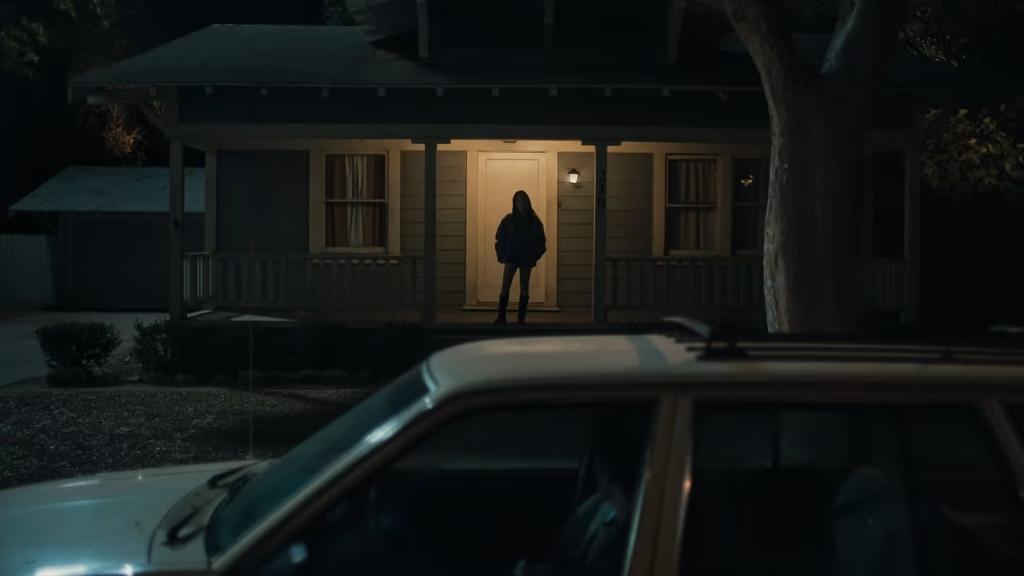
Bear never expects the stick to work. That fact explains his decision without cleansing it.
People reveal themselves through the fantasies they entertain when consequences seem impossible. Bear believes he can make an ethically ugly wish because the object appears fake. In his mind, no one will ever know. Nikki’s autonomy becomes something he can violate privately for the emotional release of saying the words aloud.
Then the universe listens.
His intention also changes once the wish takes effect. At first, he accepts its benefits. Later, fear motivates him as much as concern for Nikki. He wants his old life back. He wants the violence to stop. He wants relief from the thing sleeping beside him.
Nikki never receives that luxury. Bear chose the wish. She wakes inside it.
The difference between malice and selfishness matters in a courtroom. Horror has always been less polite. A person can cause monstrous harm while believing himself gentle. Sometimes gentleness makes the harm easier because nobody notices the danger until the door has closed.
His Sacrifice Cannot Restore What He Stole
Bear’s final decision carries real moral weight. He eventually understands that ending the curse requires a price he cannot shift onto another person. For once, he accepts the consequence himself.
That choice stops the horror. Redemption demands more.
Bear cannot return Nikki’s friends or erase the violence committed through her body. He cannot give back the time she spent conscious beneath the forced obsession. Her future now contains bodies, money and a supernatural explanation that no sensible investigator will accept.
He dies knowing why. Nikki survives without any useful answer.
His sacrifice also arrives after every easier form of responsibility has failed. He could have confessed his feelings before the wish. He could have rejected the magically altered relationship the moment Nikki changed. He could have acted sooner when the cost became visible.
Death becomes necessary because Bear refuses smaller acts of courage until none remain.
The Monster Was There From the First Wish
Nikki provides the film’s most frightening images. Her bloody grin will appear on posters and thumbnails because Navarrette turns a human face into something gloriously wrong. She becomes the monster viewers remember.
Bear makes her that way.
He takes a confident young woman with friendships, ambitions and a private emotional life and reduces her to one command. Love Bear more than anyone. Every terrible action grows from that command.
Calling Bear a hopeless romantic gives him the story he tells about himself. It turns his violation into a mistake made by a sweet man who cared too deeply. Obsession has a sharper understanding of him.
Bear cares about being loved. Nikki happens to be the person he selects to provide it.
That distinction sits beneath every scream in the film. The One Wish Willow never creates Bear’s entitlement. It gives that entitlement power. Nikki becomes visibly monstrous because Bear’s desire has finally found a body other than his own.
He wanted love without risk, consent or uncertainty. He got exactly what he asked for.

Rachel Sikkema is a New Zealand-based writer and creative entrepreneur who explores the intersection of film, culture, and modern relationships. Through her articles, she examines how stories shape the way we connect, love and see ourselves – all for God’s glory. When she’s not writing about film and television, she’s watching Dexter and The White Lotus for the third time.