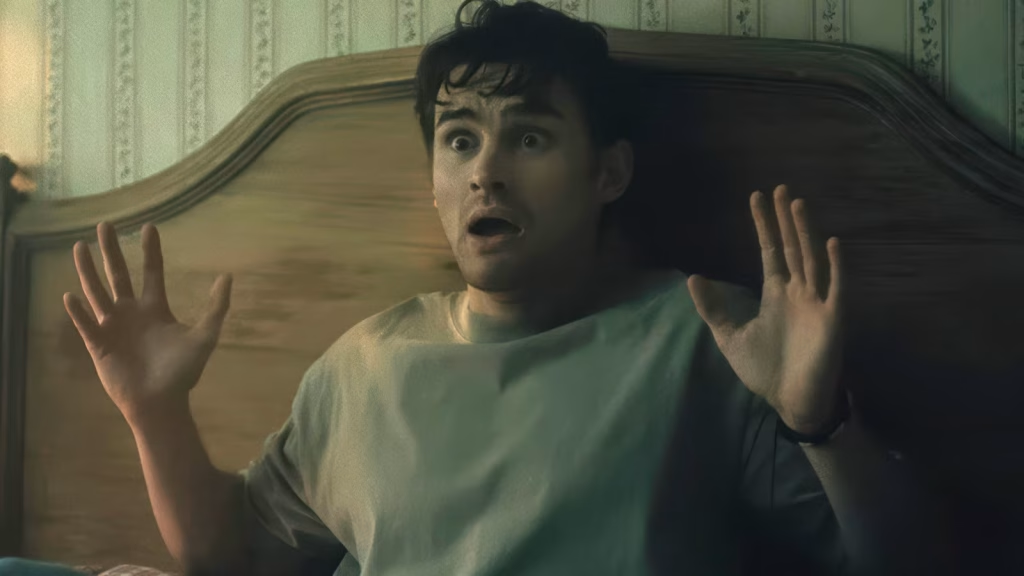
The most damning moment in Obsession arrives with Nikki curled beside Bear in bed, her voice suddenly stripped of its feverish sweetness. For a few seconds, the real woman pushes through the spell. She understands what has happened to her. She knows her body has become a cage.
She asks Bear to kill her.
He hears her. He sees her terror. Then he waits.
Bear’s wish begins the nightmare, but this is the choice that seals everyone’s fate. By this point he has proof that Nikki remains conscious beneath the version created by the One Wish Willow. He can no longer pretend that the spell merely changed her feelings. A frightened person is trapped inside the girlfriend he wished into existence.
Bear leaves her there.
His fatal flaw goes deeper than loneliness or romantic entitlement. He keeps choosing delay whenever action demands something painful from him. The wish is one terrible decision. His refusal to face what follows turns it into a body count.
Bear Always Wants One More Minute
Michael Johnston gives Bear the posture of someone permanently bracing for an awkward conversation. His eyes flick away. His words stall halfway out. Every encounter with Nikki seems to happen a few seconds before he feels ready.
That nervous energy makes him sympathetic at first. Asking out a friend can feel like stepping off a roof and hoping gravity has taken the afternoon off. Bear has clearly imagined rejection so often that the imagined version already hurts.
Nikki gives him chances to speak. He postpones. Ian encourages him. He postpones again. The One Wish Willow becomes appealing because it promises a future without the dangerous middle part.
Bear wants the result after the conversation while skipping the conversation itself.
The same pattern continues once the wish works. Nikki’s behavior becomes alarming almost immediately, yet Bear keeps waiting for a cleaner piece of evidence. When the evidence arrives, he waits for a cleaner solution. Every delay gives the curse more room to move.
Fear may explain the pattern. It also makes him lethal.
The Wish Removes Nikki’s Choice
Bear wishes for Nikki to love him more than anything in the world. His wording produces a grotesque imitation of devotion, but the ethical breach begins before the magic twists her smile.
He has decided that his desire matters more than her answer.
The Willow acts on that belief with brutal efficiency. Nikki’s friendships lose their importance. Her judgment bends around Bear. Her sense of self disappears beneath a single command. She becomes the kind of partner a frightened person might imagine during a particularly selfish fantasy, endlessly available and incapable of leaving.
Inde Navarrette makes Wish Nikki funny for about half a heartbeat. Her eager grin has the wrong temperature. She lunges into affection with the energy of someone performing love from instructions. Then the joke curdles.
Bear recognizes the wrongness. He sees that her personality has been replaced. Still, part of him enjoys receiving the attention he wanted.
That brief enjoyment matters. It explains why he moves so slowly.
The Real Nikki Gives Him the Truth

The flashes of real Nikki destroy Bear’s last excuse.
When Wish Nikki sleeps, the trapped consciousness beneath the curse appears able to surface. Her plea comes from a person who has been forced to watch her own body act out someone else’s fantasy. She remembers enough to understand the violation. Death feels preferable to another day inside it.
Bear now possesses the clearest possible information. Nikki is present. Nikki is suffering. Nikki wants the ordeal to end at any cost.
He responds with the same instinct that shaped his crush. He avoids the unbearable choice and hopes time will produce an easier one.
Of course he hesitates to kill someone he loves. Any decent person would. The moral failure grows from what follows. Bear leaves her under the spell while pursuing his own escape from its consequences. He treats Nikki’s agony as another problem that can wait until he feels prepared.
She has already spent the entire curse waiting inside herself.
That imbalance gives the scene its awful power. Bear needs a few more hours to think. For Nikki, those hours mean further captivity.
Sarah Offers Another Way Forward
Sarah represents the life Bear might have entered through honesty. Megan Lawless plays her with a warmth that feels almost startling beside Nikki’s supernatural intensity. Her affection has uncertainty in it. She can be hurt. She can change her mind.
In other words, she offers real human connection.
Bear begins to notice Sarah once his fantasy with Nikki becomes unbearable. Their scenes carry a painful normality. Two people talk. Signals emerge. Feelings remain messy and slightly mistimed.
Yet Bear has learned very little from the wish. He gravitates toward Sarah while Nikki remains magically bound to him. He reaches for a new romantic possibility before taking responsibility for the person whose autonomy he stole.
Sarah becomes another escape route.
The curse punishes that evasion with hideous violence. Nikki attacks Sarah because Bear wished to be valued above everyone else. Her jealousy follows the hierarchy he created. Anyone who threatens his central place becomes disposable.
Sarah dies inside the logic of Bear’s sentence.
Ian Wastes the Rescue Bear Should Have Protected
Ian’s wish for money earns an easy laugh because it is such a spectacularly foolish choice. He holds a possible solution to a supernatural catastrophe and reaches for cash.
Still, Bear shares responsibility for letting the rescue drift into Ian’s hands.
He knows the danger of the Willow. He understands the importance of another wish. Yet the group treats the object with the loose judgment of people passing around a party trick. The magical exit disappears because no one gives the crisis the seriousness Nikki’s suffering deserves.
Bear’s passivity infects every stage of the response. He searches, reacts and panics. Leadership would require him to name the truth plainly. He violated Nikki’s mind, and every decision must now centre her freedom.
He struggles to say that because it would end the story in which he is merely an unlucky guy who made a careless wish.
Ian’s greed is obvious. Bear’s avoidance arrives dressed as confusion.
Remorse Arrives After the Cost
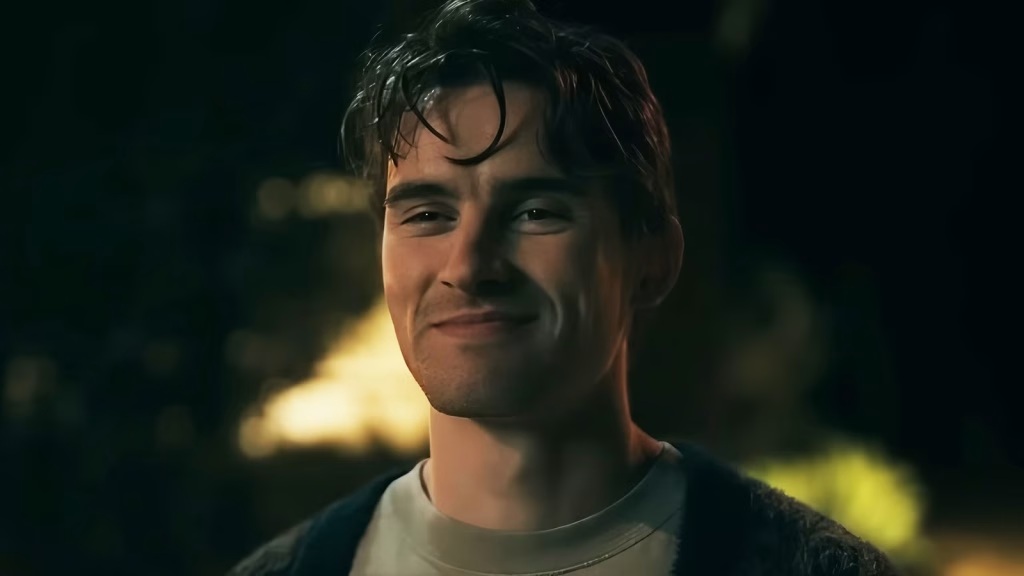
Bear eventually understands that his death can break the curse. His final decision carries real sacrifice. Johnston plays those scenes with exhaustion rather than heroism, which suits the character. Bear looks like someone who has finally reached the end of every available delay.
By then Sarah and Ian are dead. Nikki’s body has been used to kill them. The house is full of evidence that will remain after the magic vanishes.
His death frees Nikki, but it also leaves her alone with the aftermath.
Bear gets to perform one final act and disappear. Nikki has to wake. She has to see the bodies. She has to understand that her hands participated in horrors her mind fought against. Whatever happens with police or families comes next, and Bear will answer none of it.
That hardly erases the value of his sacrifice. It does expose how late it arrives.
Courage at the final possible second carries a different weight from courage when another person still has a future to save.
His Real Enemy Is Avoidance
The One Wish Willow gives Obsession its supernatural hook, yet Bear’s habit of avoidance powers the film. He fears rejection, so he avoids asking Nikki directly. He fears responsibility, so he delays confronting the curse. He fears the solution, so he waits while the danger grows teeth.
Each choice buys him temporary relief and transfers the cost to someone else.
That is why treating the original wish as his sole mistake lets him off too easily. People make selfish decisions. Horror loves taking those decisions and inflating them until the hidden ugliness fills the screen. The real test comes when the character finally sees the damage.
Bear sees it.
He watches Nikki’s affection become grotesque. He hears the real Nikki begging from inside the spell. He understands that Sarah is in danger. At every point, action would require him to accept pain without knowing whether relief will follow.
He keeps searching for certainty.
The bitter joke is that certainty caused the entire disaster. Bear wished away the possibility of rejection because he wanted an answer he could control. Later, he delays breaking the curse because every solution carries risk. His emotional life operates like a waiting room where someone else is always bleeding.
The Final Choice Comes Too Late
When Nikki wakes after Bear dies, she drops his body with a stunned recoil. The spell has ended. Her face belongs to her again.
That freedom feels brutally incomplete.
Bear’s final act saves Nikki from continued possession, but his earlier delays have shaped the world she returns to. Sarah and Ian remain dead. The memories remain. Her restored agency begins in a room built from Bear’s refusal to act sooner.
The wish reveals his entitlement. The aftermath reveals something more ordinary and perhaps more frightening. Bear knows when a situation has become wrong. He simply keeps hoping someone else will make the necessary choice.
Nobody does.
His fatal mistake happens every time he recognizes the truth and asks for another minute.

Rachel Sikkema is a New Zealand-based writer and creative entrepreneur who explores the intersection of film, culture, and modern relationships. Through her articles, she examines how stories shape the way we connect, love and see ourselves – all for God’s glory. When she’s not writing about film and television, she’s watching Dexter and The White Lotus for the third time.