There is a very particular kind of sci-fi movie that leaves people walking out of the theater a little quieter than they came in.
Contact had that feeling. Robert Zemeckis took Carl Sagan’s big, searching novel and turned it into something rare for a studio movie in 1997. A blockbuster with a pulse, a brain, and a deep ache for the unknown. Jodie Foster’s Ellie Arroway listened to the sky like it might answer her back, and the film had the patience to make that longing feel heroic.
Project Hail Mary has a different flavor. It has more problem-solving, more survival mechanics, more Andy Weir cleverness baked into every crisis. Ryan Gosling’s Ryland Grace has a warmer, stranger road to travel than Ellie does, especially once Rocky enters the picture. Yet the comparison feels natural for a reason.
Both stories understand that space can make humans look tiny without making human feeling seem small.
The Rare Studio Sci-Fi Movie With Sincerity
Modern sci-fi often gets trapped between two modes. Giant franchise mythology or grim prestige mood.
Project Hail Mary walks into the room carrying neither of those exact energies. It has a huge premise, yes. The sun is dimming, Earth is in danger, and one man wakes up far from home with the fate of humanity hanging over him. That sounds like a trailer voice waiting to happen.
The thing that makes it work is how earnest it is.
Like Contact, this story believes curiosity matters. It believes intelligence can be cinematic. It believes awe can sit right next to grief and still feel clean. There is something almost old-fashioned about that now, in a good way. The film has spectacle, but its most important moments come from watching someone think, listen, test, fail, and try again.
That sounds simple until you remember how many movies treat science like seasoning. A few equations on glass. A control room full of anxious faces. Someone says “quantum” and everyone moves on.
Project Hail Mary makes the process the drama. That gives it a kinship with Contact, where the act of listening becomes spiritual. Ellie hears a signal and the whole movie shifts around the possibility that the universe has noticed us.
Grace finds something too. Someone, really. That changes the temperature of the story.
Ellie Arroway and Ryland Grace Look Up for Different Reasons
Ellie Arroway is built out of hunger. She wants proof, connection, some answer big enough to survive all the loss she carries around. Jodie Foster plays her with this sharp, exposed intensity, like every argument about belief and evidence is also a personal wound getting poked.
Ryland Grace has a different energy. He has Andy Weir protagonist wiring, which means panic tends to get processed through practical tasks. He calculates, tests and talks himself through absurd danger. Gosling is a clever fit because he can play fear without making it noble. He can look overwhelmed, irritated, brilliant, and deeply human in the same scene.
The bridge between them is loneliness.
Ellie is lonely on Earth, even when surrounded by institutions, politicians, scientists, cameras, and skeptics. Grace is lonely in the most literal possible way, awake on a ship light-years from home with memory holes where his life should be. Both characters end up facing the same emotional question through different machinery.
What happens when the universe answers, and the answer asks something from you?
That is where Project Hail Mary may speak to a younger audience the way Contact spoke to people in the late 90s. The wonder is still there, but the shape has changed. The longing for contact becomes the need for cooperation.
Rocky Is the Secret Weapon
Rocky gives Project Hail Mary its best shot at becoming beloved instead of merely admired.
A lot of smart sci-fi earns respect. Fewer stories earn affection. Rocky is affection with a rocky shell, musical language, engineering genius, and a personality that sneaks up on you. He is the kind of character people talk about with the slightly protective tone usually reserved for favorite pets, old friends, and fictional beings who have no business becoming that emotionally important.
The danger in adapting Rocky has always been obvious. Too cute and he becomes merchandise first, character second, too alien and the friendship loses warmth, too verbal and the magic of translation gets flattened. Too mysterious and the audience has trouble bonding with him.
When Rocky works, he makes the entire movie breathe differently.
His relationship with Grace turns science into intimacy. They learn each other through tools, tones, mistakes, experiments, and fixes. That feels wonderfully specific. Their friendship grows through labor, which may be the most Andy Weir thing imaginable. One of them needs to survive in an environment that would kill the other. Their bodies are wrong for each other’s worlds, yet their minds keep finding a path.
Contact gave audiences an encounter shaped by faith, grief, and cosmic scale. Project Hail Mary offers one shaped by mutual competence. That sounds less poetic on paper. On screen, it can be devastating.
Lord and Miller Understand Velocity
Phil Lord and Christopher Miller are interesting choices for this material because their best work understands speed without losing emotion.
That matters for Andy Weir. His stories can turn into pages of process, and fans love that because the process has flavor. The joy comes from watching a problem become a plan, then watching the plan collapse in some fresh horrible way. The engine is explanation, but the fuel is personality.
A film has to move. It has to make the audience feel the math without trapping them inside a lecture. Lord and Miller have spent years making dense material feel nimble, from The LEGO Movie to their work around Spider-Verse. They understand how to layer jokes, visual information, emotional beats, and momentum until a scene feels busy in the best sense.
That could help Project Hail Mary land with viewers who might usually avoid hard-ish sci-fi. The movie can make intelligence fun. It can make problem-solving feel like action. It can let Grace and Rocky argue their way toward tenderness while the universe keeps throwing fresh disasters at them.
Contact had Zemeckis’ clean classical sweep. Project Hail Mary has the chance to bring a more restless, modern rhythm to the same old human hunger for meaning.
The World May Be Ready for Optimistic Science Fiction Again
One reason Contact lasted is that it took wonder seriously.
The film came out in a moment when big-screen sci-fi could still afford to be patient with the idea of discovery. Its politics and media satire were sharp, but the movie kept returning to Ellie’s face. The listening. The waiting. The need to know.
We live in a noisier era now. More cynical in some ways, more exhausted in others. Space stories often arrive loaded with doom, corporate decay, militarized futures, or sleek despair. Plenty of those stories are good. Some are great. Still, there is a real appetite for sci-fi that looks at the abyss and finds something besides punishment.
Project Hail Mary fits that appetite.
The story has terror baked into it. Earth is facing catastrophe. Grace is carrying fear, guilt, confusion, and pressure. The stakes are massive. Yet the emotional pull comes from hope as a discipline. Hope through work and trust. Hope through the maddening process of trying one more idea because the alternative is unbearable.
That kind of optimism has teeth. It asks for effort.
This is where the Contact comparison feels strongest. Both movies care about evidence, but they also care about the emotional cost of seeking it. Both believe humans are messy and political and scared, while still capable of reaching for something better. Neither needs a superhero to save the day. A scientist will do.
The Comparison Sets a High Bar

Calling anything “this generation’s Contact” risks sounding like a pull quote trying on a lab coat.
Contact has earned its place because it still feels adult, strange, and sincere decades later. It has scenes that lodge in the mind. Ellie on the beach. The machine. The congressional hearing. That final sense that an experience can be true even when proof slips through your fingers.
Project Hail Mary has a different assignment. It has to sell a dying sun, a memory-fractured astronaut, a wild act of interstellar problem-solving, and one of the most unusual alien friendships in popular sci-fi. It has to make audiences care about astrophage, ship systems, language barriers, and a creature named Rocky without turning the whole thing into homework.
That is a big ask.
But big asks are the point. The reason Project Hail Mary has a chance to matter is the same reason it could have fallen apart. It believes viewers can handle wonder and detail at the same time. It trusts that a mainstream audience might care about the exact mechanics of survival if those mechanics reveal character.
A lot of movies chase scale. This one has a shot at earning it.
A Signal Worth Hearing
The real legacy of Contact comes from the way it made cosmic curiosity feel personal. It gave us a heroine who wanted the universe to be bigger than human arrogance, and it let her yearning stay complicated.
Project Hail Mary could become a companion piece for a different age. Less about proving we are alone or accompanied. More about discovering that survival may depend on how well we learn to understand minds unlike our own.
That is a very current fear and a very old dream.
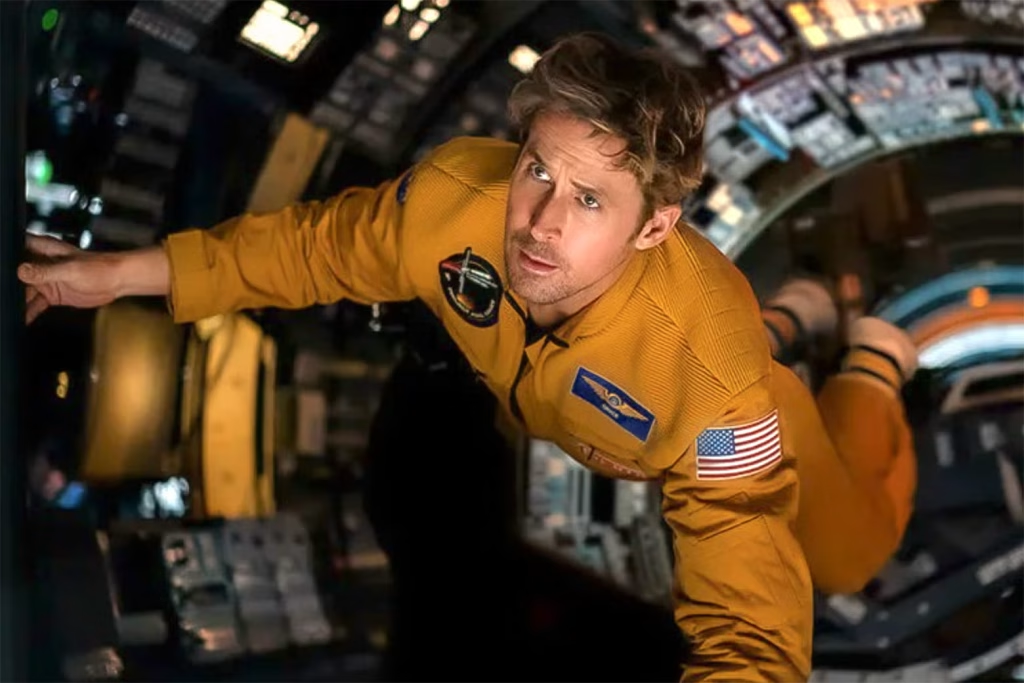
If the movie works, people will remember the spectacle. They will remember Gosling floating through catastrophe, the vastness of space, the pressure of Earth waiting for an answer. But they may remember Rocky most of all. The voice. The body. The odd little rhythms of a friendship built across impossible distance.
That is how a sci-fi film lasts. Through one image, one feeling, one impossible connection that people keep carrying around after the lights come up.
Contact listened to the stars and heard a signal.
Project Hail Mary may answer with a duet.

Rachel Sikkema is a New Zealand-based writer and creative entrepreneur who explores the intersection of film, culture, and modern relationships. Through her articles, she examines how stories shape the way we connect, love and see ourselves – all for God’s glory. When she’s not writing about film and television, she’s watching Dexter and The White Lotus for the third time.