By Rachel Sikkema
Published November 6, 2026

Chris dies at the end of Wild Horse Nine because Lee honours their agreement to kill him when his terminal illness becomes too much. Chris gives the signal by saying “Arkansas.” Lee has already turned against their boss, MJ, so the final killing fulfils a personal promise between the two friends. Chris chooses the moment, and Lee is left carrying the grief.
That distinction matters because Martin McDonagh spends the film making Lee’s intentions look slippery. His friend wants help dying. His employer wants a dangerous liability silenced. Both requests lead towards the same awful act, leaving the reason behind it to determine how we understand the ending.
My reading is that Chris achieves a small measure of redemption through the people he helps before his death. His responsibility for the lives he has damaged remains enormous. The uncomfortable part is how easily we can feel for him anyway.
Why Lee Turns Against Mj
MJ, played by Steve Buscemi, treats Chris as an operational problem. A dying CIA agent with secrets and an urge to record his memories has become inconvenient. Years of service count for very little once the organisation starts worrying about what he might say.
Lee’s position becomes intolerable when MJ threatens his wife. When the opportunity comes, Lee kills his boss. He then goes to Chris for their final conversation. Before dying, Chris gives him footage connected to the Kennedy assassination as leverage to protect his wife. That exchange makes their loyalty to each other explicit.
There is something viciously fitting about the threat against Lee’s family. A man who has helped exercise power over other people suddenly experiences that power at home. His employer can reach into his marriage with the same casual entitlement it brings to everything else.
Lee finally draws a line when the danger becomes personal. You can understand the decision and still notice how late that line arrives.
That is where the ending gets interesting. Killing MJ gives Lee a moment of resistance. It also exposes how much he was prepared to tolerate before the machinery turned towards someone he loved.
What Arkansas Means in the Final Scene

“Arkansas” is the agreed signal that Chris is ready for Lee to end his life. They choose an unlikely word so that the request will be unmistakable. Chris’s religious anxiety also shapes the arrangement. He believes having Lee kill him offers a way around his fear of committing suicide. His failing memory makes their earlier agreement another source of confusion and suspicion.
The reasoning is painfully characteristic of Chris. Even approaching death, he is looking for a workable arrangement. Someone else can perform the act. A carefully chosen word can settle the timing. Perhaps the spiritual consequences can be negotiated too.
It is a grim little piece of bargaining from a man whose professional life has depended on finding justifications.
Yet the final use of the word carries real vulnerability. Chris has spent so much time talking that a single word suddenly has to do the hardest work. It ends the possibility of another digression. Lee has to hear his friend clearly and live with what follows.
For me, that is the cruelty of the scene. Their agreement gives Chris some control over his final moments while leaving Lee with an experience he will have to remember for the rest of his life.
Why Monica Matters to Chris’s Last Decision
Monica gives Chris someone whose future he can still affect. During their conversations, she challenges his habit of lying. Later, his protection helps her escape when Alicia reveals her allegiance to the military. Chris shoots the soldiers threatening Monica, and Monica runs Alicia over as she gets away.
Her survival gives his late change of heart a concrete result. Someone leaves that confrontation with a chance to keep living.
There is a danger in treating Monica solely as the person who helps an ageing killer feel better about himself. Her country and her safety are at stake. She has far more immediate concerns than whether Chris reaches a satisfying emotional conclusion.
That makes her escape one of the ending’s most important events. Chris’s regret finally produces something useful for another person.
The scale is painfully small beside his career. Saving one woman still matters to that woman. The film leaves us with the difficulty of holding that fact alongside everything else we know about him.
I find that much more persuasive than a sweeping claim that he has paid for his sins. A dying man can make a better choice. The people harmed by his earlier choices still have to live with them.
What the Kennedy Footage Changes
The footage Chris passes to Lee has a practical purpose within the story. It gives his surviving friend something valuable enough to use in negotiations over his wife’s safety. The ending leaves that protection dependent on what Lee can do with it.
It also brings Chris’s secrets into his last attempt to care for someone. Information that made him dangerous to his employers becomes something he can give away.
There is a bitter implication here. Even at this intimate moment, safety depends on bargaining power. The men understand a world in which knowing something damaging can be more useful than deserving protection.
The Kennedy material belongs to the film’s fictional conspiracy plot. Its dramatic function is to give weight to the threat surrounding Chris and to make his final gift consequential.
What stays with me is the modest size of his ambition by then. He has spent a career participating in events that shape countries. At the end, he is trying to leave his friend a chance.
Does Chris Earn Redemption
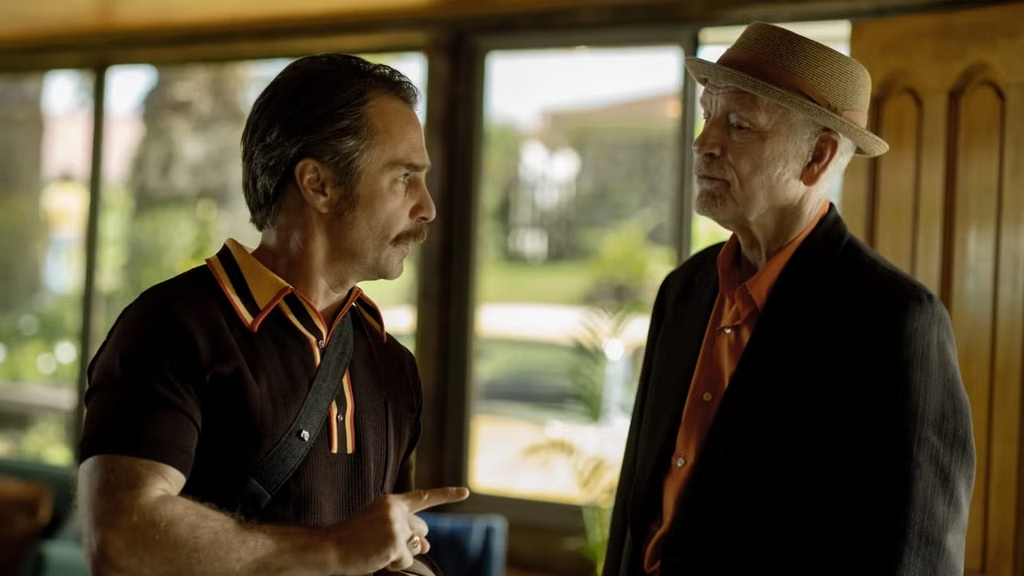
I would call it a final act of responsibility with an enormous debt still attached.
Chris helps Monica. He gives Lee something that may protect his family. Those choices deserve to register. So does the fact that his death allows him to leave before the full consequences of the political violence around him unfold.
The setting makes a completely comforting farewell difficult. These men have been working in Chile before the 1973 coup. Their personal crisis occupies the foreground while the danger facing countless other people remains beyond it.
That imbalance is the sting in Wild Horse Nine. We receive the dying man’s fear at close range. His victims receive far less space. Feeling grief for Chris should make us conscious of how strongly proximity shapes our sympathy.
Lee’s sorrow is real. Chris’s tenderness is real too. Neither feeling can settle the larger moral account.
The ending hurts because friendship survives inside men who have done terrible things. Chris gets someone beside him at the end. The question that lingers is how many people his work helped deprive of that same comfort.

Rachel Sikkema is a New Zealand-based writer and creative entrepreneur who explores the intersection of film, culture, and modern relationships. Through her articles, she examines how stories shape the way we connect, love and see ourselves – all for God’s glory. When she’s not writing about film and television, she’s watching Dexter and The White Lotus for the third time.