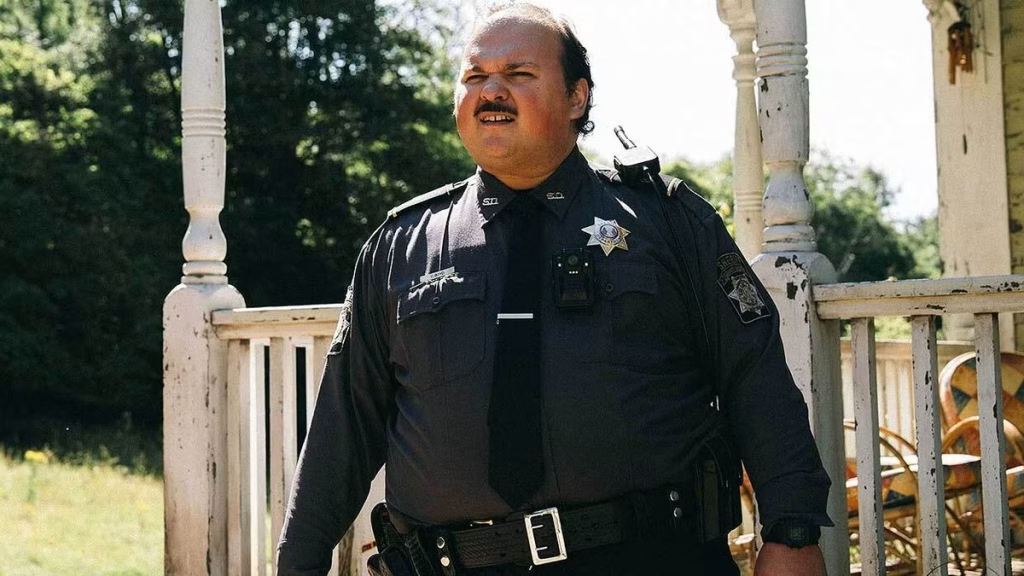
Yorgos Lanthimos has never exactly been a subtle filmmaker, and that is part of the fun. Bugonia takes a premise that already sounds like a dare, with two conspiracy-obsessed men kidnapping a powerful CEO because they think she is an alien, and turns it into something nastier, stranger, and more revealing than a simple sci-fi joke.
The film stars Emma Stone as Michelle Fuller, Jesse Plemons as Teddy, and Aidan Delbis as Don, with Will Tracy adapting the story from the South Korean cult film Save the Green Planet! for a contemporary American setting. On paper, it sounds absurd. On screen, that absurdity becomes a pretty sharp weapon.
What makes Bugonia interesting is that its satire is never aimed at only one target. Yes, it pokes at conspiracy culture. Yes, it goes after corporate power. But it also takes aim at the emotional rot underneath both. This is a movie about people who feel alienated from the world and then build entire belief systems to explain that pain. Teddy thinks he has cracked the code. Michelle thinks she is above everyone else. The joke, and the sting, is that both of them are trapped in their own private mythology.
It Turns Paranoia Into Social Commentary
The easiest way to read Bugonia is as a satire of modern paranoia. Teddy is the kind of man who has spent too much time doing his own research and not nearly enough time being challenged by reality. He blames elites, corporations, environmental collapse, and personal suffering on a giant hidden scheme, and in Michelle he finds the perfect face for it.
That setup sounds exaggerated, but the film clearly knows it is playing with a recognisable modern impulse. When life feels rigged, people start looking for secret authors of their misery.
That is where the satire gets clever. The movie never treats Teddy like he is simply a punchline. Plemons gives him a sincerity that makes him disturbing rather than cartoonish. He is wrong, dangerous, and unhinged, but he is also the product of a culture that has given people plenty of reasons to distrust institutions.
The film understands that paranoia thrives where trust has already collapsed. So instead of making fun of one weird guy in a basement, Bugonia suggests a bigger social sickness. Teddy is not an outlier. He is an extreme version of a mood that already exists.
Michelle Is More Than a Villain

Emma Stone’s Michelle Fuller is the other half of the film’s satirical engine. She is not written as a warm, wronged heroine who just happens to get kidnapped by lunatics.
She is icy, controlled, deeply corporate, and so emotionally sealed off that the film almost invites the audience to see why Teddy would project something inhuman onto her. That does not make him right, obviously. It makes her an unnervingly good symbol.
This is one of the film’s smartest moves. Bugonia is not really interested in asking whether Michelle is literally an alien. It is more interested in how corporate power can feel alien. Michelle represents a kind of executive logic that treats human beings, bodies, labor, and even disaster as management problems.
She moves through the world with a chilly confidence that feels almost post-human. The satire lands because the movie knows that modern capitalism already produces people who seem detached from ordinary morality. In that sense, the “alien CEO” idea is ridiculous and weirdly believable at the same time.
The Bees Matter More Than They Seem
The bee imagery is not just decorative weirdness, though Lanthimos does enjoy a memorable image. In Bugonia, bees carry a lot of symbolic weight. Teddy’s fixation on them links environmental fear, social disorder, and his own mental unraveling.
That is why the satire feels bigger than a simple anti-corporate jab. The movie is also asking what kind of society creates both Michelle and Teddy. One hoards control through polished authority. The other tries to seize it through fantasy and violence.
Neither offers anything like repair. They are opposing styles of the same sickness. That is a very Lanthimos idea, honestly. The systems are broken, the people are broken, and whatever passes for normal was probably not that healthy to begin with. Cheerful thought, I know.
Why the Satire Lingers

One reason Bugonia sticks in the mind is that it refuses easy moral comfort. The film toys with audience sympathy in a way that feels deliberately aggravating. Michelle is frighteningly cold, but Teddy’s cruelty is impossible to romanticize.
Don may be the closest thing the film has to vulnerability, yet even he is pulled into the machinery of manipulation. The result is satire with very little relief built into it. Nobody gets to stand outside the mess and feel superior for long.
That is probably why the satire feels hidden even when the film is being loud. It is not hidden because the movie is subtle. It is hidden because the real point sits underneath the surface provocation.
Bugonia works best as a satire of modern disconnection dressed up as a paranoid sci-fi nightmare. It is funny until it is ugly, exaggerated until it suddenly feels familiar. That is the trick.

Rachel Sikkema is a New Zealand-based writer and creative entrepreneur who explores the intersection of film, culture, and modern relationships. Through her articles, she examines how stories shape the way we connect, love and see ourselves – all for God’s glory. When she’s not writing about film and television, she’s watching Dexter and The White Lotus for the third time.