The ending of The Wolf of Wall Street has a funny little cruelty to it.
After all the yelling, drugs, speeches, money tossing, FBI pressure, and Leonardo DiCaprio crawling across the floor like his bones have resigned, Martin Scorsese does something almost quiet. He takes Jordan Belfort out of the circus and puts him in front of a plain room full of people.
Jordan asks them to sell him a pen.
That is where the movie leaves us. No grand speech about justice. No sweeping punishment montage. No scene where Jordan suddenly becomes a better man. He has been arrested, convicted, and sent to prison. He has lost Stratton Oakmont, his marriage, and the fantasy that he could outrun every consequence forever.
But he still has the one thing that built the whole mess.
He can still sell.
Jordan Pays for His Crimes but Keeps His Gift
By the final stretch, Jordan’s world has started to close in around him. The FBI has been circling for a while, and Kyle Chandler’s Agent Denham has the calm patience of a man who knows the party will eventually run out of cocaine and excuses.
Jordan gets a chance to cooperate. He wears a wire. He goes back to the office. He sits with Donnie Azoff, played by Jonah Hill, and for a moment it looks like maybe Jordan will finally do the sensible thing.
Naturally, he makes it harder.
He slips Donnie a note warning him. It is such a small gesture, but it says almost everything about Jordan. He wants the deal from the FBI. He wants to protect his old friend. He wants to save himself. He wants to keep looking loyal. He wants every version of the story to flatter him.
That is Jordan’s curse, if we want to be generous. He cannot stop managing the room. Even when he is cornered, he tries to direct the scene.
The FBI catches the note. Donnie hands it over. Jordan’s last little trick collapses.
That could have been the big moral ending. The corrupt man outsmarted at last. The smug king dragged off the throne. But Scorsese keeps going because the more interesting question comes after the arrest.
What happens when a guy like Jordan loses everything except the personality that made people follow him?
Prison Changes Less Than You Expect
Jordan goes to prison, but the movie treats it with a dry little shrug.
He plays tennis. He narrates that life in prison is easier when you are rich. The scene almost feels rude because it refuses to give the audience a satisfying image of suffering. Jordan has fallen, sure. He has also landed on cushions.
That is part of why the ending works. Scorsese understands that the world rarely hands out punishment in the neat shape audiences want. Jordan hurts people, breaks the law, ruins lives, and still finds a version of comfort. His money and status soften the blow.
The movie does not linger on guilt because Jordan does not seem built for it. He has moments of fear and anger. He has moments where the walls come close enough for him to notice. But guilt requires sitting still with other people’s pain, and Jordan’s whole life is arranged around avoiding stillness.
He survives prison the way he survives everything. He turns the page and looks for the next room.
That is the part that feels real in a nasty way. Prison punishes him, but it does not empty him out. He comes out with his voice intact.
The Pen Test Comes Back for a Reason

The final seminar scene brings back the famous pen test.
Earlier in the movie, Jordan uses it as a sales lesson. The point is simple. A great salesman creates need. Do not just describe the pen. Make the person need to write something down, then offer the pen as the answer.
It is a slick little trick, and it fits Jordan perfectly. He does not sell objects. He sells urgency. He sells hunger. He sells the feeling that your life is smaller than it should be and that he knows the shortcut.
So when he asks the seminar crowd to sell him a pen, the callback has teeth.
Jordan has gone from selling bad stocks to selling himself. His criminal past has become part of the package. His downfall has become a story people will pay to hear. He is no longer running Stratton Oakmont, but he has found a cleaner stage for the same old talent.
He used to teach brokers how to manipulate strangers over the phone. Now he teaches ordinary people how to think like him.
That is grimly funny. Very Scorsese. The circus got shut down, and the ringmaster opened a workshop.
The Final Crowd Is the Real Gut Punch
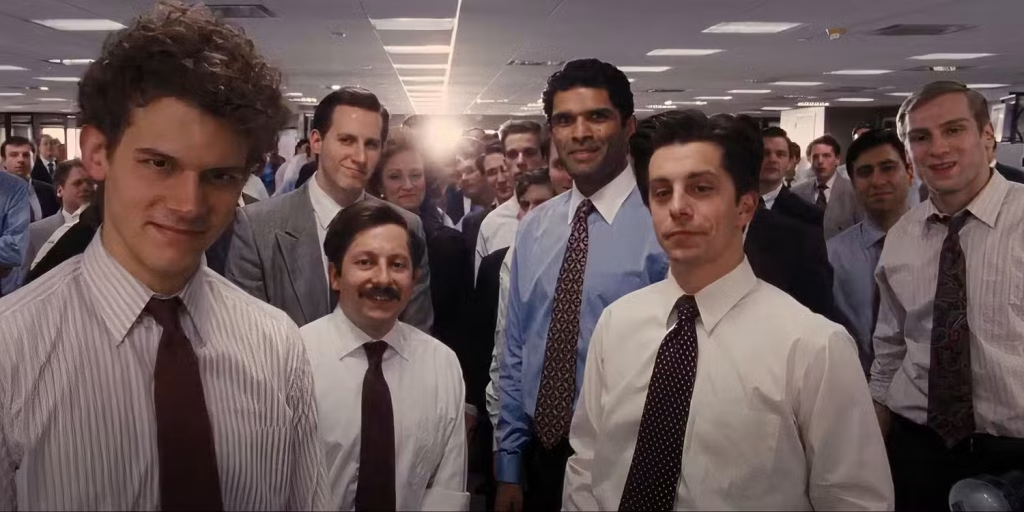
The last shot matters because Scorsese pulls our attention away from Jordan and toward the crowd.
Look at their faces. They are waiting. They are curious. Some look nervous, some blank, some hungry for whatever secret he is about to hand them. The room has none of Stratton Oakmont’s madness, but the same desire is there in a quieter form.
That is the sting.
Jordan’s empire falls apart, but the appetite that created him remains. People still want the pitch. They still want the confidence. They still want permission to believe that money can turn them into someone bigger and untouchable.
The movie has spent hours showing us the ugliness behind that dream. The scams, the humiliation, the addiction, the casual cruelty, the way Jordan treats people like props in his own private commercial. Then, after all that, Scorsese shows us a new audience leaning toward him.
They know enough to be interested. They may even know the scandal. His disgrace adds flavor. That is the gross little sparkle of the ending.
Jordan is famous because he did terrible things loudly.
The Ending Says the Scam Outlives the Office
Stratton Oakmont is gone, but the scam has changed costumes.
That is the plain-English answer. The ending means Jordan lost his official empire, yet the larger fantasy survived. He can no longer run the same stock operation, so he sells the mindset. He sells access to the attitude. He sells the idea that his worst traits were actually skills.
This is why the ending avoids a clean sense of justice. A cleaner movie might have ended with Jordan in handcuffs while the music swells. Scorsese goes colder. He shows that punishment can happen while the culture that rewards people like Jordan keeps humming along.
Jordan is one man. The hunger around him is much bigger.
That hunger runs through the whole film. His employees want fast money. His clients want impossible returns. His friends want status and access. His audience wants the thrill of watching him break rules. Even we, sitting outside the movie, get pulled into the rhythm. The film is funny and awful at the same time, which is exactly why it gets under the skin.
The final seminar turns that discomfort back on us a little. We have watched Jordan perform for three hours. Now another room watches him too.
Jordan Never Becomes a Changed Man

Jordan changes locations, clothes, and job titles. His basic operating system stays intact.
That is why the ending has such a bitter aftertaste. He does not appear broken. He does not seem haunted. He has been inconvenienced, exposed, punished, and humbled in public, but the essential Jordan remains.
He can still hold a room.
DiCaprio plays the final version of Jordan with less frenzy than before. The wild animal energy has been tucked away. He looks calmer, almost polished. That makes him more unsettling in a different way. The chaos has been repackaged into a professional product.
The same man who once whipped a brokerage office into a chanting frenzy now stands before people who want a lesson. The volume has changed. The pitch has survived.
That is the movie’s cruelest joke. Jordan’s punishment becomes part of his resume.
What the Ending Really Means
The ending of The Wolf of Wall Street means Jordan Belfort falls, but the world still wants what he sells.
He loses his company. He loses his marriage. He loses his freedom for a while. But he keeps his talent for making greed sound like ambition and manipulation sound like confidence. Once he gets out of prison, he uses that talent in a new form.
The pen scene brings everything full circle. At the start, Jordan teaches people how to sell desire. At the end, he has become the desire. The crowd does not just want the pen trick. They want his nerve. His certainty. His way of walking through the world as if shame is something that happens to other people.
Scorsese leaves us with that room because it is more disturbing than another scene of Jordan partying. The quiet audience tells the story. The next buyers are already seated.
So the ending is not saying Jordan wins exactly. He pays a price. His old life breaks apart.
It says something worse.
The pitch goes on.

Rachel Sikkema is a New Zealand-based writer and creative entrepreneur who explores the intersection of film, culture, and modern relationships. Through her articles, she examines how stories shape the way we connect, love and see ourselves – all for God’s glory. When she’s not writing about film and television, she’s watching Dexter and The White Lotus for the third time.