By Rachel Sikkema
Published October 24, 2026

Survival feels like letting go in Whalefall because Jay Gardiner enters the ocean with a job to do for his dead father, then has to make his own life the priority. He came to recover remains. Once he is swallowed by a sperm whale, finding a way back becomes urgent enough to push that original purpose aside. Emotionally, though, abandoning a search can feel like abandoning the person.
That is the cruel pressure inside the film’s premise. Jay, played by Austin Abrams, has to fight for a future while carrying the weight of unfinished business with someone who has no future left.
Wanting to live should be the easiest decision in the world. Grief has a way of making even sensible decisions feel disloyal.
I find that more affecting than the idea that surviving something terrible must automatically bring peace. Jay deserves another breath whether or not he has settled his feelings about his father. He should be allowed to reach the surface with things still unresolved.
Looking for Someone Gives You Something to Do
A search has instructions, or at least the possibility of them.
You can choose an area. You can prepare equipment. There are practical questions to answer before entering the water, and practical questions offer a certain relief when the emotional ones keep going nowhere.
What are you supposed to do with everything you still wanted to say to a parent? How long should you remain angry? Does remembering something kind mean you have been unfair about something else?
Finding remains sounds almost manageable beside that.
Jay’s dive gives his grief a physical task. He can put on the wetsuit and carry the tank. The effort is visible. Whatever else he feels about his father, he is doing something.
There is comfort in having a task after a death. People often need the arrangements, the sorting and the phone calls. Work fills hours that would otherwise have to be lived through without much structure.
But a task can acquire promises it has no power to keep. Find this person. Complete this act. Perhaps then the relationship will finally make sense.
That is a lot to ask of anything recovered from the sea.
Leaving Can Feel Worse Than Staying
From a safe distance, the priorities seem obvious. Jay is alive. His father is dead. Jay needs to get out.
Being the person inside that decision is harder.
A search can become a measure of devotion. The longer you continue, the more you seem to prove that the person mattered. Stopping requires you to accept a limit, and limits can feel shamefully small when set against someone’s death.
You can imagine the accusations a grieving mind might invent. You should have tried harder. You gave up because you were frightened. You always found a reason to leave.
The film’s setup makes room for that kind of emotional pressure without requiring every thought to be spoken. Jay has gone somewhere dangerous to find his father. Now danger demands that he think about himself.
I would resist treating that shift as a moral failure. A living person has needs that become inconvenient to grief. Hunger returns. Exhaustion makes decisions for you. Eventually there is something you want that belongs entirely to your own life.
Those ordinary developments can bring guilt. Whalefall gives the conflict a monstrous scale and an oxygen supply.
The Body Refuses to Wait for an Answer

The scuba regulator is a useful anchor for all this.
Whatever Jay is remembering, he still needs air. The tank gives his predicament a brutal simplicity. His body has requirements, and it will keep making them while his thoughts move through a relationship too complicated to resolve on a deadline.
That is where the survival machinery and the emotional story fit together most naturally for me.
Grief can make the past feel more pressing than the present. An old conversation demands another hearing. A different response suddenly seems possible, though the opportunity to give it has gone.
Then the body interrupts.
Jay has to attend to equipment and surroundings. He has to find something he can do now. The urgency of those actions pulls him towards a life that continues beyond the memory he is stuck with.
There is something almost merciful about that demand, despite the horror surrounding it. He has a reason to stop examining the past for a moment. He can concentrate on the next physical problem without first deciding what kind of son he has been.
The air matters before the verdict.
His Father Can Come With Him in Another Form
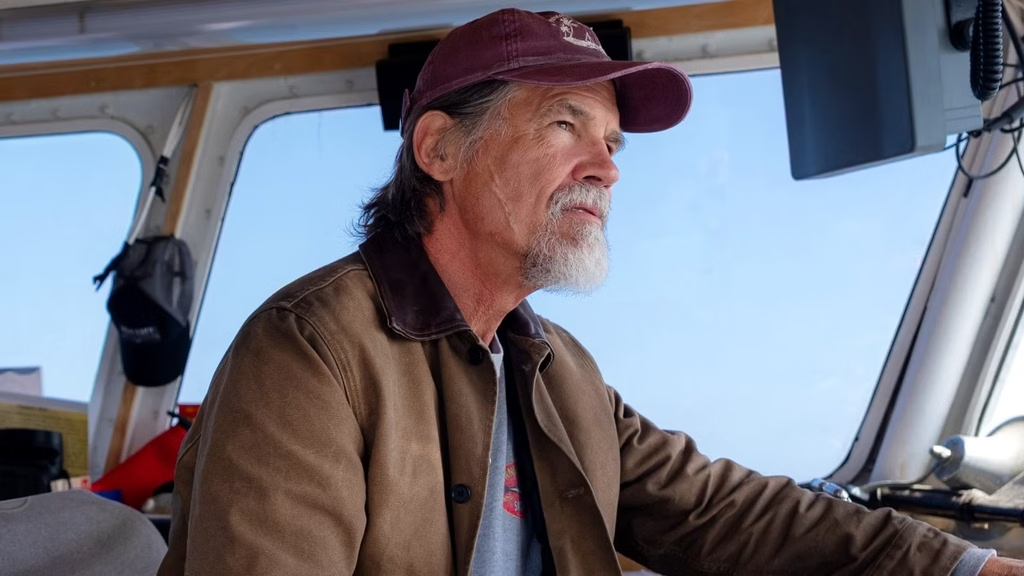
Josh Brolin’s father character remains important through the knowledge Jay carries. Lessons acquired earlier may help him think through the emergency.
That gives the story an emotionally useful complication. Moving towards survival can also mean drawing on something his father gave him.
A relationship can persist in practical knowledge long after the conversations end. You know how to handle a tool. You remember a warning. Your hand performs a familiar movement before you have thought about where you learned it.
Sometimes that is how a dead parent returns to an ordinary day.
For Jay, the remembered knowledge has immediate stakes. His father’s influence becomes something available to use, even while the original search has become impossible to prioritise.
I like the possibility that he could discover a different way of carrying the relationship. Recovering something from the ocean has one meaning. Taking a lesson into the rest of his life has another.
He can leave the water with more of his father than he expected, even if the dive fails to give him the particular thing he came for.
Getting Out Should Leave Him Some Work to Do
Survival stories often make an enormous demand of the survivor. Escape the danger, understand your pain and emerge ready to live properly.
It is a demanding afternoon.
The emotional version of Whalefall that interests me leaves Jay more room than that. Being desperate to survive might clarify how much he wants to live. It could still leave him unsure how to feel about his father the following morning.
He may remain angry. A memory that helped him in the whale could hurt when he has time to consider it. Relief might arrive before any useful understanding does.
That seems fair.
A close encounter with death gives someone another chance at life. The chance can include unfinished arguments and days when they feel worse than expected. We should be careful about insisting that the experience has earned them a lesson neat enough to explain.
Jay has already had to work hard enough for the next breath.
He Came Looking for One Person and Has to Bring Himself Back
The search places Jay in relation to his father from the beginning. He is the son trying to find him, carrying whatever responsibility that role has come to mean.
The survival predicament forces another fact into view. Jay is also someone whose absence would matter.
If he disappears, other people inherit a search. They are left with questions and an empty place where he should be. The film’s premise contains that terrible possibility, the son becoming another person who needs to be found.
Choosing to live can therefore mean recognising that his life belongs to more than the unfinished relationship behind him. There are people and experiences ahead that he has yet to reach.
He needs time for them.
What moves me about Whalefall is the thought that Jay can turn towards that future while still feeling the pull of his father. Letting go may be uneven. It may begin as something as small and necessary as deciding to use the air he has left to save himself.
He came into the water hoping to bring his father back. His own return deserves to count for something.

Rachel Sikkema is a New Zealand-based writer and creative entrepreneur who explores the intersection of film, culture, and modern relationships. Through her articles, she examines how stories shape the way we connect, love and see ourselves – all for God’s glory. When she’s not writing about film and television, she’s watching Dexter and The White Lotus for the third time.