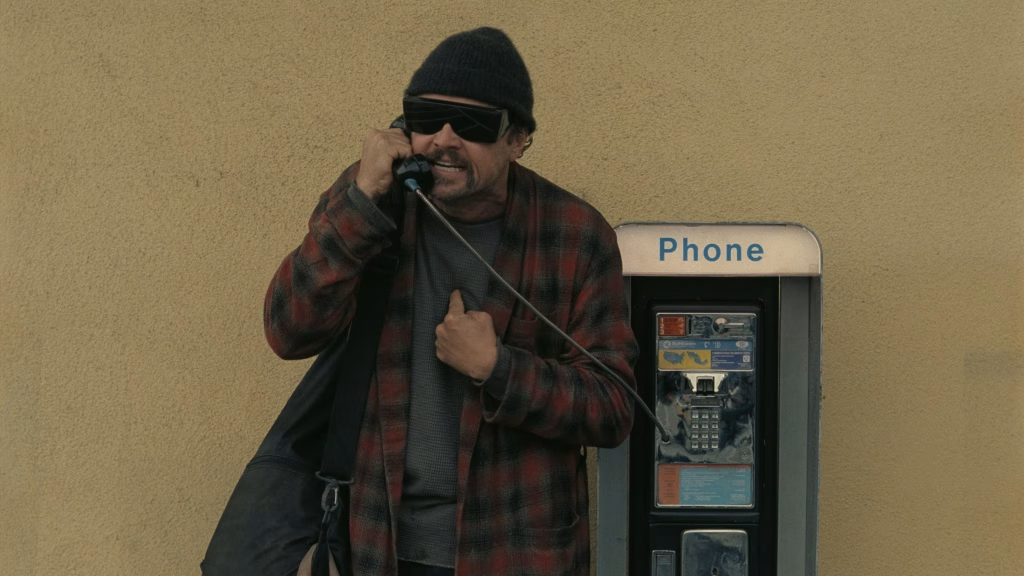
Paul Thomas Anderson sells One Battle After Another as a black comedy action thriller with car chases, shootouts and a father charging across the desert to save his daughter. That description is accurate, but it also hides the thing that actually keeps needling you after the credits: the way paranoia quietly rots every bond in sight. The film is packed with villains, but the most persistent enemy is the creeping belief that nobody, and nothing, can be trusted.
For Pat “Ghetto Pat” Calhoun (Leonardo DiCaprio), his daughter Willa (Chase Infiniti), and the people orbiting them, that erosion of trust is not just background mood. It is the engine that drives every bad decision, every betrayal, every desperate chase along that VistaVision highway.
How the Revolution Poisons Its Own
The movie opens in high gear. Pat and Perfidia Beverly Hills (Teyana Taylor) are part of the radical French 75, storming an immigration detention center at the border and humiliating Colonel Steven J. Lockjaw (Sean Penn), the officer in charge. The sequence plays like a victory lap: the group frees detainees, Perfidia declares war into the camera, everyone looks fearless and righteous.
Underneath all that swagger sits a seed of rot. Perfidia starts sleeping with Lockjaw as leverage, thinking she can control the man who embodies everything she says she wants to destroy. When she eventually trades information on her comrades for a deal, that compromise tears the French 75 apart. Members are hunted, shot on sight, or scattered into hiding.
Life on the Run and the Paranoia Trap
Sixteen years later, the story shifts to Baktan Cross, a Californian sanctuary city where Pat now goes by Bob Ferguson and Charlene goes by Willa. Their new lives are supposed to be safe. In reality, Bob is a permanent resident of worst-case-scenario land. He smokes, frets, booby-traps the house, tests passwords, and sees Lockjaw’s shadow behind every siren.
On paper, Bob is right. Lockjaw is still out there, now a colonel, still obsessed with erasing loose ends. There really are raids, militias, and secret societies hunting people like them. Bob is not hallucinating the threat. But the film keeps asking what this constant hypervigilance does to the person living with it, and to the teenager stuck in the same house.
Lockjaw and the Politics of Fear
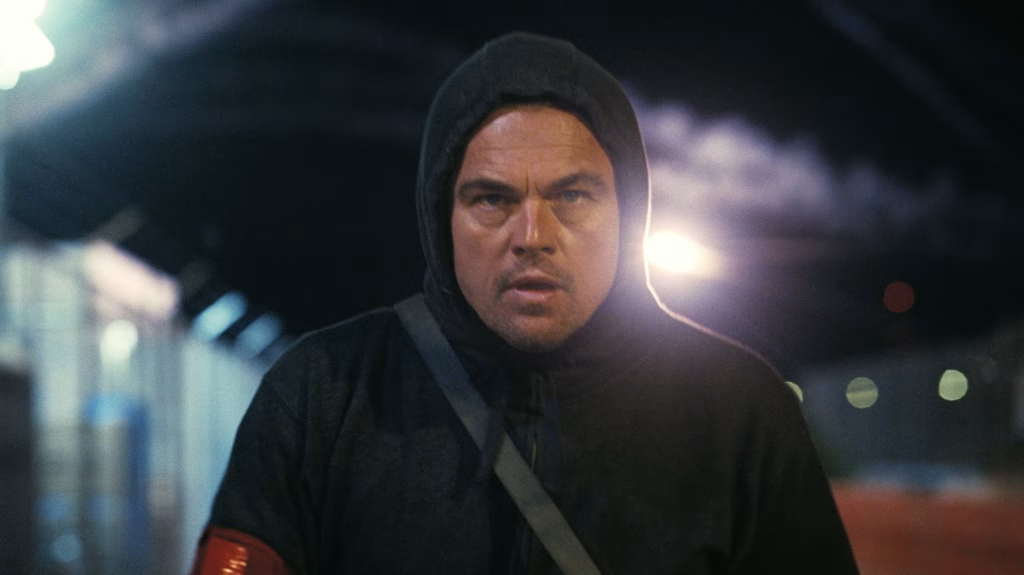
If Bob lives inside paranoia, Lockjaw lives off it. The film shows him rising through the security apparatus, joining the Christmas Adventurers Club, a secret white supremacist society where powerful men in Christmas blazers treat fascism like a festive hobby. He is terrified that his sexual relationship with Perfidia and his mixed-race daughter will be exposed and ruin his status.
Lockjaw’s whole ideology is about purity and control. He calls immigrants an infestation, treats dissent like treason, and hides his own desires behind uniforms and medals. The more he fears discovery, the more violent he becomes. He hires bounty hunters, orders raids on Baktan Cross, and uses drug enforcement as cover for ethnic cleansing. Paranoia, for him, is not a private torment. It is policy.
Willa’s Perspective and Inherited Distrust
The longer the film sits with Willa, the clearer it becomes that she is the one living with everyone else’s mistakes. She discovers that her mother betrayed the French 75 and that Lockjaw is her biological father. She realizes that the sanctuary around her is the product of carefully maintained lies.
Trust, for her, is not some abstract theme. It is whether she believes anything Bob says ever again, or Perfidia’s letter when it finally shows up, full of apologies and promises. It is whether she believes the adults who call themselves revolutionaries are actually fighting for something better or just replaying old grudges.
The Final Chase and Choosing Trust
The climactic highway sequence looks like pure action spectacle: multiple cars, rolling hills, blind summits, people with guns in every vehicle. Underneath the choreography, the same theme is still humming.
Tim, the Christmas Adventurers enforcer, barrels down the road full of ideological certainty. Willa drives with a survivor’s paranoia, counting every curve, planning the crash that will give her a sliver of advantage. Bob is in a third car, somewhere between those two poles. He is frantic and terrified, but he is also finally trying to show up as a parent rather than a ghost from an old revolution.
Why Paranoia Feels Like the Real Villain

Lockjaw dies. The Christmas Adventurers close ranks. The French 75 has already been scattered or killed. What lingers is the feeling that everyone in One Battle After Another will spend the rest of their lives negotiating with the fears that got them this far.
Bob and Willa drive home into a future that is still dangerous. Perfidia is still out there, promising to reunite with them. The state has not suddenly become kind. Sanctuary cities are still one election away from being wiped off the map. Yet the film ends with a father giving his daughter his blessing to leave for a protest, trusting her choices instead of trying to lock her in another safe house.
That is the closest thing the story offers to victory. The battles, literal and metaphorical, keep coming. The real antagonist is the temptation to give in completely to suspicion, to live only in passwords and exit plans. When One Battle After Another works, it is not only because the set pieces are wild or the performances are sharp. It is because, under all that noise, it understands a very modern fear: that trusting anyone in a world like this is the most radical act left.

Rachel Sikkema is a New Zealand-based writer and creative entrepreneur who explores the intersection of film, culture, and modern relationships. Through her articles, she examines how stories shape the way we connect, love and see ourselves – all for God’s glory. When she’s not writing about film and television, she’s watching Dexter and The White Lotus for the third time.