
Some thrillers only feel alive when a car flips or a gun goes off. The Rip works differently. It can park the camera in a hallway, let two people stand there breathing, and somehow make you feel like you’re the one about to get caught. You’re watching cops in a house, in a neighborhood that looks normal enough, and your shoulders still creep up toward your ears.
That tension comes from craft, sure, but it also comes from what the story quietly promises you: someone is going to crack, and you won’t know who until it’s too late.
The Setting Turns Into a Pressure Cooker
The story traps its characters in a confined space and then keeps tightening the screws. The Tactical Narcotics Team has to count the money on site, which sounds procedural until you realize what that means in practice. They cannot just grab the cash and leave. They have to stay put, exposed, and focused, while everyone’s nerves vibrate.
This is where director Joe Carnahan’s approach shines. He understands that a contained location can feel bigger than an entire city if it becomes a cage. A closed door becomes a plot point. A narrow staircase turns into a tactical problem. A normal living room starts to feel like a stage where one wrong glance will set off the next disaster.
The Camera Behaves Like It Doesn’t Trust Anyone
The tension in the “nothing is happening” scenes often comes from how the camera positions you. It rarely feels neutral. It feels like it’s watching, waiting, and judging.
In a movie about cops who may or may not be crooked, the camera’s suspicion becomes contagious. You start noticing where people stand in the frame, who blocks the exit, who lingers behind someone’s shoulder a second too long. When Lieutenant Dane Dumars (Matt Damon) holds eye contact a beat past normal, your brain starts doing math you never asked it to do.
The Performances Sell Paranoia in Tiny Doses

The film has the advantage of casting actors who know how to play tension without waving their arms around. Damon’s Dane carries an exhausted intensity, the kind that reads as competence until it starts reading as control. Ben Affleck’s J.D. Byrne can look steady and rattled in the same scene, which is exactly what you want in a story where loyalty shifts under pressure.
The supporting cast deepens that unease. Steven Yeun’s Detective Mike Ro brings a watchfulness that feels like a shield and a secret at once. Teyana Taylor’s Detective Numa Baptiste has the kind of direct, unsentimental energy that can either keep a team grounded or expose how fragile it really is.
The Movie Keeps Danger Off-Screen on Purpose
One of the oldest tricks in suspense is letting your imagination do the worst work, and The Rip leans into that. The film often suggests threats rather than displaying them.
You hear something outside before you see it. You sense a presence before anyone enters the room. That makes “nothing happening” scenes feel like the moment right before impact.
The Story Makes Every Conversation Feel Like a Negotiation
Even when characters are talking about logistics, the dialogue has a second layer. Who is asking a real question, and who is fishing? Who is sharing information, and who is controlling the room?
Once the team finds the cash, the film treats basic communication like a battlefield. Small lines land with extra weight because everyone has something to lose. A simple “Where were you?” can sound like an accusation. A casual joke can feel like a probe.
Time Becomes the Real Villain
The film constantly reminds you that the clock is ticking, even when nobody says it out loud. Counting money takes time. Securing a scene takes time. Waiting for backup, or choosing not to call it, takes time. Every minute they stay in that house increases the odds that someone else finds out what they’re sitting on.
That’s why the slow scenes work. They’re not filler. They are the cost of being stuck.
The Moral Tension Is Stronger Than the Physical Tension
A shootout can spike your heart rate for a few minutes. Moral dread can hang around for an entire movie. The Rip knows that the most frightening question is not “Will they survive?” It’s “Who are they, really?”
Once the possibility of theft enters the room, every character becomes a suspect. The money turns into a test. Some people fail quietly. Some people fail loudly. The film keeps you tense in the quiet moments because you’re watching for the first crack, the first rationalization, the first lie that turns a team into enemies.
The Sound Design Makes Ordinary Things Feel Loaded
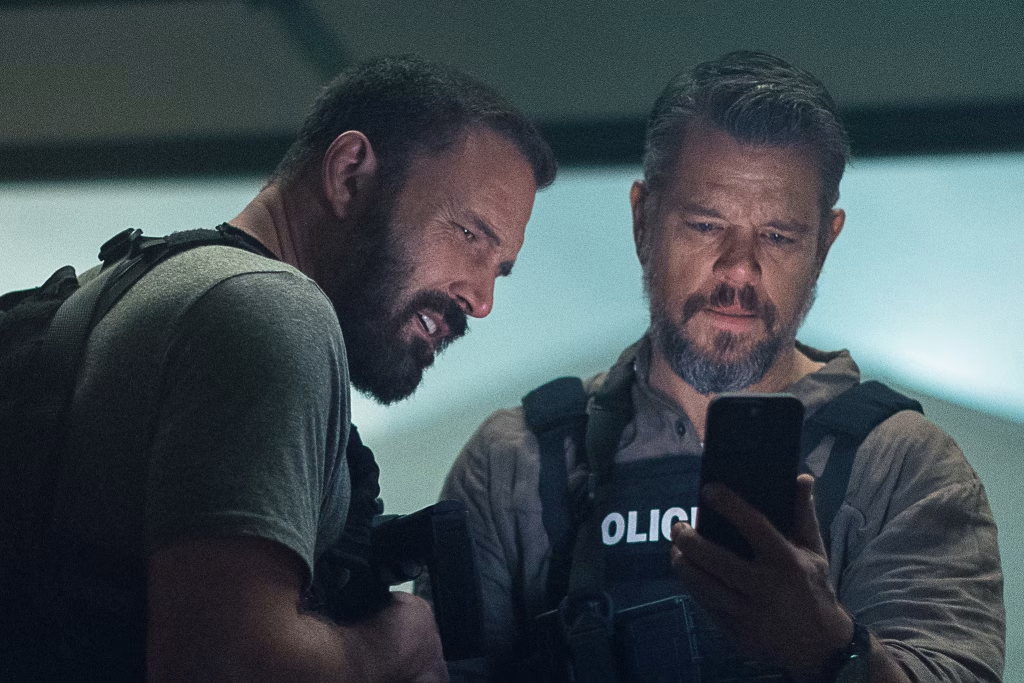
You can feel how much attention the movie pays to small noises. Fabric shifting when someone moves. A chair leg scraping. A distant engine. A phone buzz that may or may not happen, because even the possibility of contact feels dangerous.
When a movie builds tension through sound, it changes how you watch. You stop relaxing into the visuals and start listening. That’s why a scene can look still while feeling hectic. Your body stays braced because your ears are waiting for the signal that everything is about to go wrong.
The Film Uses “Routine” as Camouflage for Chaos
A smart choice The Rip makes is grounding its tension in procedure. These are cops. They have rules, habits, and muscle memory.
You see it in how they handle weapons, how they control rooms, how they talk in clipped, practiced lines. Then you see the routine start bending. You watch the line between professional and personal blur. When a thriller makes routine feel unstable, you feel tense even in stillness because you sense the foundation shifting.
The tension stays because the movie never gives you a clean release
Some films let you exhale after each big moment. The Rip often refuses that comfort. Even when a scene ends, it leaves behind a question. Even when someone “wins” a beat, the next beat feels worse.
The reason The Rip feels so tense even when nothing is happening is that the movie treats stillness as the most dangerous part of the night. Action is the explosion. Stillness is the fuse. When the film gets quiet, it’s not resting. It’s listening, measuring, and waiting for somebody to make the choice that ruins everything.

Rachel Sikkema is a New Zealand-based writer and creative entrepreneur who explores the intersection of film, culture, and modern relationships. Through her articles, she examines how stories shape the way we connect, love and see ourselves – all for God’s glory. When she’s not writing about film and television, she’s watching Dexter and The White Lotus for the third time.