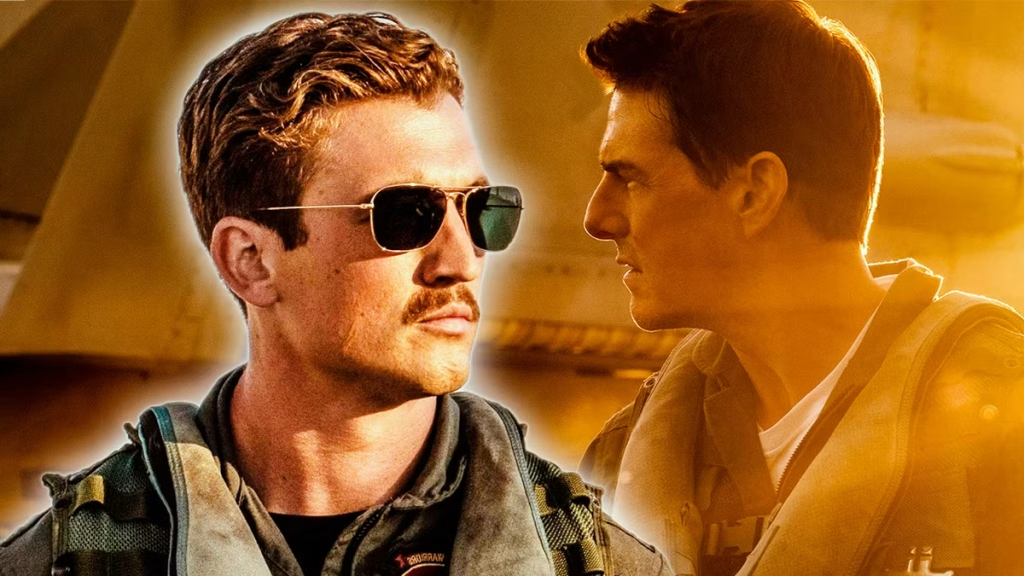
The moment Top Gun: Maverick starts throwing jets around the sky, you can feel the difference.
Not in some vague “this looks good” way either. You feel it in your shoulders. In the way the cockpit seems too small for a human face. In the way the plane banks and your stomach quietly goes, right, this could get ugly. The movie has a physical charge that a lot of modern blockbusters keep chasing with more pixels and more noise and somehow less tension.
That is the trick Maverick understands. Tension comes from risk you can believe in.
The film does not just use practical action because practical action sounds classy in interviews. It uses it because real movement, real force, and real strain make the audience lean in faster than a hundred weightless digital near-misses ever could. The action feels dangerous before the script even starts raising the stakes. That gives the whole movie a tighter pulse.
A lot of blockbusters want you to admire the spectacle. Top Gun: Maverick wants you to survive it for two hours.
Quick Answer: Top Gun: Maverick builds tension by making every flight feel immediate, physical, and easy to follow. The film combines practical aerial action with clear mission stakes, so each turn, climb, and close call carries real suspense. Because the danger always feels readable, the movie keeps the audience locked in from one cockpit sequence to the next.
The Planes Feel Heavy
This sounds basic, but it matters.
In Top Gun: Maverick, the jets have weight. They do not glide around the frame like shiny desktop graphics. They take space. They fight against the air. They turn with effort. They roar past the camera like machines that could actually tear a body apart if something goes wrong.
That weight changes how the audience reads every scene.
When Maverick pushes the Darkstar too far early on, the sequence lands because the aircraft feels real enough to break. The vibration, the pressure, the speed, the way the whole thing seems to be straining against its own design. You do not need the movie to deliver a big speech about danger. The machine tells you.
The same thing happens in the training runs. Every low pass, every steep climb, every punishing turn feels expensive in human terms. You can sense how much work the plane is doing, which means you can also sense how much punishment the pilot is absorbing.
Modern action often chases size. Maverick chases force. That is why it hits harder.
The Actors Look Like They Are Actually Going Through It
One of the smartest decisions in the film was putting the cast through real flight conditions instead of faking the whole thing from the neck up.
You can see it all over their faces. Cheeks pull tight. Eyes water. Breathing gets rough. Sweat shows up in all the least glamorous places. These actors do not look like movie stars politely pretending to be uncomfortable in front of a wind machine. They look rattled. They look nauseous. They look one bad turn away from rethinking every career decision that led them here.
That gives the action tension at a microscopic level.
When Rooster hesitates during a maneuver, you are not just processing plot. You are watching a human body under pressure. When Phoenix and Bob lock in, the calm has a cost behind it. When Maverick pushes too hard, Cruise does not need to explain anything. The stress is sitting right there in his face.
This is where practical action becomes emotional action.
The body tells the truth faster than dialogue does. A line can say the mission is brutal. A close-up of someone trying to keep it together while their brain gets shaken around inside a fighter jet says it better.
That kind of physical honesty makes the whole movie tenser because the audience never fully relaxes into “it’s just effects.” The performers keep reminding you that the air itself is a threat.
The Movie Teaches You How the Danger Works

Another reason the action feels so sharp is that Top Gun: Maverick respects geography and procedure.
It wants you to understand the mission.
That might sound nerdy. It is also a huge part of why the final act works so well. The film spends its middle section training the audience almost as much as it trains the pilots. We learn the canyon route, the altitude demands, the tiny strike window, the brutal climb, the missile threat, the timing problem. By the time the real mission begins, the viewer knows exactly where the pain points are.
That clarity creates tension because every mistake means something.
In a muddier action movie, characters dodge explosions and the audience just waits for the next loud event. Here, one late turn can make your pulse jump because the movie already showed you the consequence of being late. One extra second of hesitation matters. One bit of miscommunication matters. One pilot freezing up matters.
The film does not bury tension under confusion. It builds tension out of understanding.
That is a big reason it feels different from a lot of current blockbusters. So many action scenes want to overwhelm. Maverick wants to involve. It wants you mentally riding along, tracking the route, bracing for the climb, already dreading the missiles before they appear.
It turns the audience into nervous copilots.
The Camera Stays Close to the Fear
There is a discipline to the way Top Gun: Maverick shoots action that keeps tension alive.
The film gives you beautiful wide shots, sure. It knows when to show a jet screaming across the landscape or cutting through cloud like a blade. But it never drifts so far into spectacle that it forgets the person inside the machine. The camera keeps snapping back to faces, breathing, instruments, and the tiny shifts that tell you panic is one heartbeat away.
That balance matters.
If the camera stayed wide all the time, the action would become abstract. If it stayed inside the cockpit nonstop, the audience would lose the shape of the scene. The movie keeps toggling between the scale of the flight and the claustrophobia of being trapped inside it.
That contrast builds tension almost scene by scene.
You get the rush of speed, then the suffocating reminder that a human being is strapped into that rush. You get the beauty of the sky, then the uglier reality of somebody fighting nausea and fear while trying to hit a mark at impossible speed.
The practical action helps the camera because there is something real to observe. It can linger on vibrations, on how the light hits the cockpit glass, on the weird physical awkwardness of a body taking that much force. Those details make the danger feel lived in rather than designed afterward on a computer.
The Practical Action Makes the Quieter Scenes Stronger Too
This is the part people sometimes miss.
Practical action does not only improve the action scenes. It gives the quieter scenes more weight because the audience has felt the danger up close. The emotional material sits on top of something physical, not theoretical.
Take the conflict between Maverick and Rooster.
That tension already has emotional history behind it, but it gains extra charge once the movie starts putting both men through real aerial punishment. Maverick is not just asking Rooster to trust his judgment in the abstract. He is asking him to trust it inside a cockpit, at speed, while his body is getting hammered and every bad memory about Goose lives one inch behind his eyes.
That is why the practical action matters to character. It keeps the emotional stakes from floating off into drama-only territory.
The same thing goes for Hangman (Glen Powell). His swagger works because the flying feels real enough that swagger seems costly. Phoenix feels impressive because the movie has shown us what competence looks like under actual pressure. Bob becomes lovable because calm and precision feel valuable when the physical conditions are this punishing.
Real action creates a real world, and a real world makes character choices feel heavier.
The Final Mission Pays off Everything the Practical Action Set Up

By the time the movie reaches the canyon run, the practical action has done its full job.
The jets feel heavy. The actors look battered. The audience understands the route. The bodies inside the planes feel vulnerable. All the movie has to do now is tighten the screws.
And it does.
The final mission is such a satisfying piece of blockbuster filmmaking because it turns all that physical credibility into pure tension. The canyon walls feel too close. The timing feels cruel. The climb feels punishing. The missile locks feel terrifying because the movie has taught you exactly how trapped these pilots are once everything starts moving.
Then the emotional stakes slide right into the center of it.
Rooster’s hesitation matters because the flying feels real. Maverick taking the hit for him lands because the threat feels real. Rooster going back for Maverick works because the audience has already experienced how insane that choice is in physical terms, not just dramatic ones. The stolen F-14 sequence gets away with its slightly ridiculous old-school glee because the movie has banked so much practical credibility before it.
That is the reward.
The action becomes bigger without becoming weightless. That is rare.
The Movie Trusts Danger More Than Spectacle
In the end, what makes Top Gun: Maverick’s practical action so effective is that it trusts danger.
Not noise. Not chaos. Danger.
The film understands that tension grows when the audience can feel the difference between a close call and a fake one. A real aircraft banking through space at speed carries a different energy than a digital object doing gymnastics in a software package. A face reacting to genuine force carries a different truth than a performance stitched into a green-screen environment later. A clear route with meaningful risks builds more suspense than all the collapsing cities in the world if the audience never knows what to hold onto.
That is what Maverick gets so right.
The practical action gives the movie shape, strain, and consequence. It makes the skies feel less like a special-effects playground and more like a place where one wrong move could ruin everything. And because the film keeps that danger alive in the frame, every mission, every maneuver, and every sacrifice feels sharper.
You are not just watching planes do cool things.
You are watching people survive machinery, gravity, memory, and fear all at once. That is why the tension sticks.

Rachel Sikkema is a New Zealand-based writer and creative entrepreneur who explores the intersection of film, culture, and modern relationships. Through her articles, she examines how stories shape the way we connect, love and see ourselves – all for God’s glory. When she’s not writing about film and television, she’s watching Dexter and The White Lotus for the third time.