
Benoit Blanc (Daniel Craig) walks into a room like he’s wandered out of a porch-swing story, all polite vowels and folksy charm. He sounds like he’d compliment your pie, ask after your mama, and then apologize for taking up your time.
That’s the trick. In the Knives Out movies, Blanc’s Southern gentleman routine is not a quirky character garnish. It’s a working disguise, and it keeps paying off because people keep underestimating what a courteous man can do when he’s paying attention.
The Persona Is a Permission Slip for Other People to Talk Too Much
Blanc behaves like someone who enjoys conversation for its own sake. He gives people space, lets them ramble, and rarely pounces at the exact moment you expect. His manners create a false sense of safety, like he’s a guest at your party rather than the person quietly inventorying every lie in the room.
It’s a pressure-release valve. A suspect who feels cornered will shut down. A suspect who feels indulged will start decorating the truth, and those decorations are where the fingerprints live. If you’ve ever watched someone talk themselves into a mistake because they felt comfortable, you already understand Blanc’s best method.
The Act Also Misdirects the Audience
The franchise trains viewers to take Blanc as entertainment first and threat second. He arrives late in the first film, then turns into a delightfully theatrical presence, the sort of detective who talks in metaphors and seems mildly amused by human mess. The charm invites you to treat him as the colorful tour guide rather than the sharp instrument moving the plot.
That audience-level misdirection matters because Johnson’s mysteries often hinge on what we assume is “obvious.” If Blanc looked and sounded like a standard hardboiled investigator, we’d brace for competence. Instead, the movies encourage a tiny bit of doubt. Is he actually great, or is he simply loud? That question buys the story time to hide its real mechanisms in plain sight.
“Southern Gentleman” Also Functions as Moral Camouflage
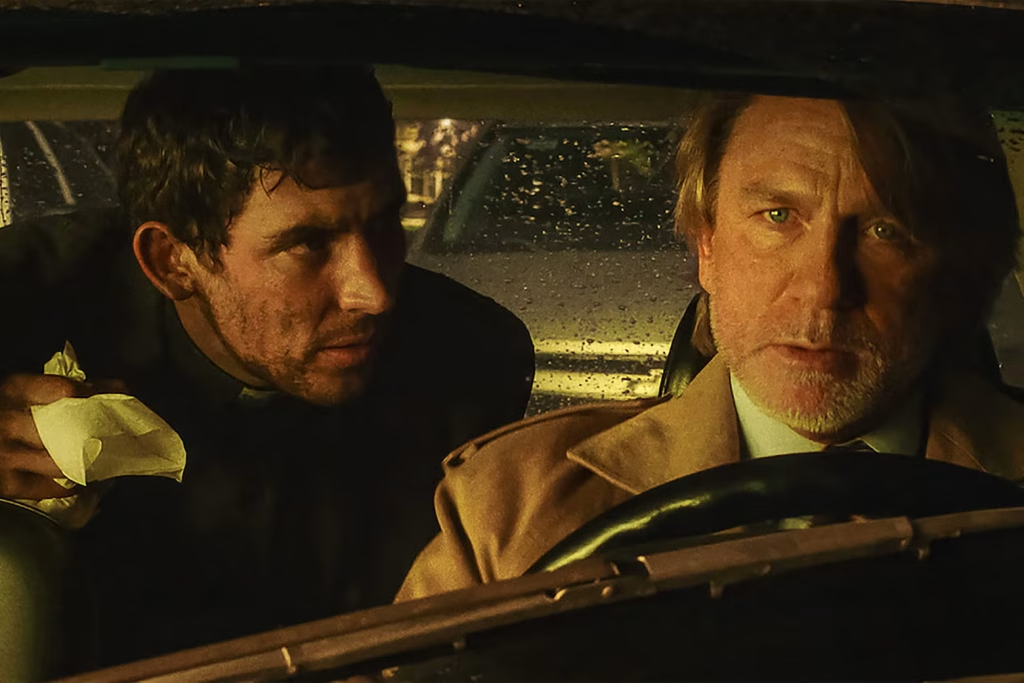
There’s something disarming about a man who seems committed to politeness. Politeness reads as nonjudgmental, and nonjudgmental reads as safe. Blanc uses that to get people to confess emotionally before they confess factually.
He’ll listen as if he’s your confidant, then circle back later with a detail that proves he never stopped collecting evidence. The sweetness becomes cover for scrutiny.
Wake Up Dead Man Pushes That Performance Into a New Setting
Wake Up Dead Man: A Knives Out Mystery drops Blanc into a world that practically runs on presentation: a church community in upstate New York, a closed circle of familiar faces, and a murder with “impossible crime” energy. Blanc is called in to untangle a death that plays out around Good Friday ritual, power dynamics, and the kind of quiet resentments that simmer for years behind “God bless you.”
The setting raises the stakes for his persona, because church spaces come with their own etiquette. People guard reputations like they’re sacred objects. A brusque outsider would get stonewalled. A courteous Southern gentleman who knows how to charm a room can slip past defenses that might stop a more obviously confrontational detective.
The Bigger the Cast, the More Valuable the “Non-Threatening” Mask Becomes
One reason the Knives Out format stays addictive is that each entry surrounds Blanc with a fresh set of suspects who all have a different reason to shape the story. Wake Up Dead Man gives him an ensemble that includes Josh O’Connor, Glenn Close, Josh Brolin, Mila Kunis and others.
In a crowded suspect pool, a detective has to become a social engineer. Blanc’s gentleman routine helps him float between circles without triggering immediate alarm. He can sit with grieving parishioners, trade words with authority figures, and coax information from people who don’t think they’re confessing anything. It’s investigative work disguised as good manners.
The Persona Isn’t Fake, but It Is Weaponized
Here’s the key: Blanc doesn’t feel like someone inventing a Southern identity from scratch. He feels like someone amplifying parts of himself on purpose. That’s what makes the act so slippery. If it were fully artificial, suspects would sense the seams. Instead, it reads as sincere enough to be ignored.
But sincerity does not cancel strategy. A person can be warm and still be dangerous, and Blanc is dangerous in a way that makes guilty people nervous once they realize what they’re dealing with. His politeness keeps the conversation flowing, and his intelligence quietly decides which parts of that conversation matter.
Johnson’s Real Magic Is Making the Disguise Part of the Theme

The Knives Out films keep returning to the idea that everyone is playing a role. Families play “loving,” billionaires play “visionary,” communities play “upright,” and ideologues play “hero.” Wake Up Dead Man leans into that cultural performance even harder by putting faith, authority, and public morality into the room with the murder.
Blanc’s Southern gentleman persona fits this thematic world perfectly because it’s a role that manipulates expectations. It reminds us that presentation can be both mask and confession. Blanc performs warmth, and the suspects perform innocence, and the story dares you to tell the difference between someone who’s acting and someone who’s revealing themselves.
The Misdirection Works Because We Want to Believe It
Part of the fun is that viewers want Blanc to be the charming eccentric. We like the accent. We like the manners. We like the sense that the chaos has a tour guide who can laugh lightly while everyone else panics. That affection is exactly what makes the persona such effective misdirection.
The truth is simpler and sharper: Blanc has built a detective identity that encourages underestimation. It pulls secrets out of proud people, it blunts hostility, and it buys him time to see the shape of the whole puzzle. By the time suspects realize the gentleman is not there to be decorative, he’s already in the center of the donut hole, smiling politely while the walls close in.

Rachel Sikkema is a New Zealand-based writer and creative entrepreneur who explores the intersection of film, culture, and modern relationships. Through her articles, she examines how stories shape the way we connect, love and see ourselves – all for God’s glory. When she’s not writing about film and television, she’s watching Dexter and The White Lotus for the third time.