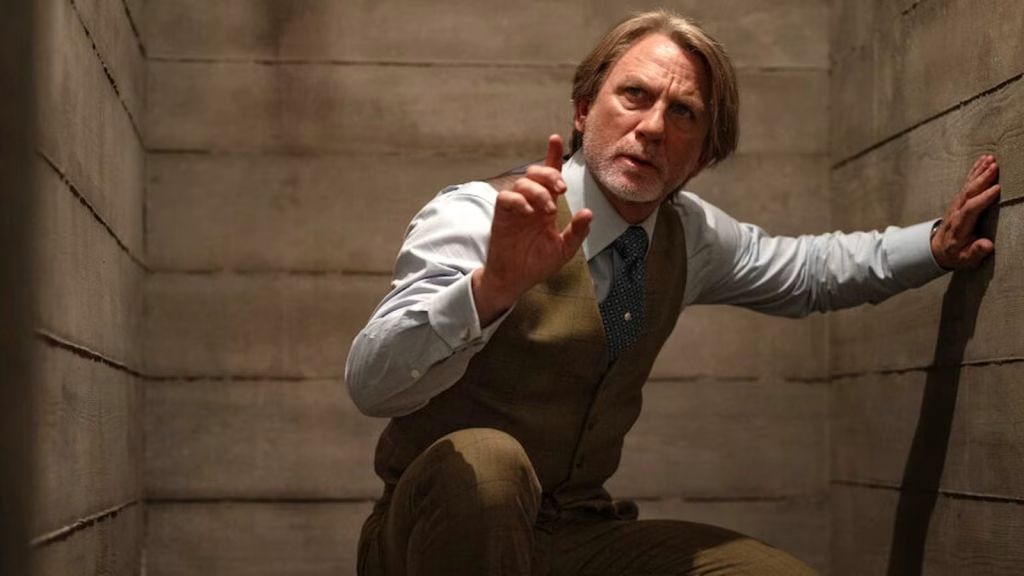
Most franchises, once they hit “three movies,” start sanding down their sharp edges. They settle into a routine. They learn what the audience claps for and then they keep handing it back, warm and reliable, like a blanket you can quote along with. The Knives Out movies keep doing something else.
They make you laugh, sure. They give you the pleasure of watching Benoit Blanc (Daniel Craig) talk in circles until the circles turn into a trap. But they also keep shifting the ground under your feet, so the experience never fully turns into background noise.
Comfort Franchises Promise Familiarity, and This Series Keeps Dodging It
Comfort viewing works because it trains your brain. You know the rhythm. You know where the laughs land, when the needle drop hits, and how the mystery will politely explain itself in the final ten minutes. When a franchise becomes comfort food, the surprises still arrive, but they arrive inside a well-lit, predictable container.
Knives Out keeps rejecting that container. It carries a recognizable brand of pleasure, the witty interrogation, the social skewering, the “wait, rewind that” clue placement, but it refuses to stabilize into one definitive vibe. The films want you alert. They want you watching faces instead of waiting for your favorite recurring beat to show up on schedule.
Rian Johnson Keeps Changing the Room, Not Just the Wallpaper
A comfort franchise often changes the wallpaper while keeping the same floor plan. Knives Out changes the floor plan.
Even on a basic, practical level, each movie rebuilds its world from scratch. New social class ecosystem. New kind of rich people. New kind of lies. New rules of who holds power in the room, and how they perform innocence when the door locks.
That matters because mystery stories can get stale fast. The second you can predict how the film will judge its characters, the entire whodunit starts feeling like paperwork. Johnson keeps the moral weather unpredictable. He takes the pleasure of solving and pairs it with the unease of realizing that solving does not automatically restore order.
Benoit Blanc Stays the Anchor, but the Anchor Keeps Moving

Benoit Blanc remains the connective tissue, and Craig clearly enjoys making Blanc both brilliant and faintly ridiculous. Yet even Blanc never settles into a purely comforting role, like a detective mascot who arrives to reset the board and wink at the camera.
Across the films, Blanc feels less like a fixed hero and more like a lens the story can tint. Sometimes he plays as an amused observer of chaos. Sometimes he becomes the only adult in a room full of people speed-running their own downfall. And sometimes, as the series goes on, he reads as a man with his own private code that the cases keep testing.
The Satire Refuses to Freeze Into a Single Target
Another way comfort sets in is when a series picks its favorite enemy and keeps punching the same spot. Knives Out keeps shifting its aim.
The films do not only mock wealth in a generic way. They chase different masks wealth wears: respectability, victimhood, trendiness, righteousness, taste. They show how power learns new language to keep itself looking innocent. That gives the movies a strange freshness even when the structure feels classic, because the social material never feels like yesterday’s leftovers.
Wake Up Dead Man Leans Into Dread, and That Is Not an Accident
With Wake Up Dead Man: A Knives Out Mystery, the refusal of comfort gets louder. The film plants Blanc in a setting that naturally carries weight: a church, a congregation, a space built for guilt, performance, confession, and secrets dressed up as virtue. The cast lineup telegraphs a twisted little ecosystem immediately, from Josh O’Connor as Father Jud Duplenticy to Josh Brolin as Monsignor Jefferson Wicks.
This is where the franchise’s anti-comfort mission becomes clearest. A third film could have played it safe: another sunny location, another stylish party, another frothy sense that the worst people in the world are also kind of fun.
The Series Treats “Tone” Like Part of the Mystery
What’s clever is how the franchise makes tone part of the game. In a typical comfort series, tone stays stable so you can relax into it. Here, tone becomes a clue. The shift tells you what kind of lies you’re dealing with.
When the world is bright and glossy, the lies often look like branding. When the world turns darker, the lies start sounding like doctrine. In Wake Up Dead Man, the emotional vocabulary changes. People are not only trying to look rich or smart. They are trying to look righteous. They are trying to justify themselves, to be forgiven before they are even accused.
The Mechanics Keep Evolving So the Audience Can’t Go On Autopilot

Comfort franchises teach the audience how to watch them. Eventually, viewers develop a sixth sense for the formula. The movie becomes a track you can hum. Knives Out keeps messing with that training.
It loves classic mystery mechanics, but it also loves reconfiguring how information flows. It plays with what you think you’ve seen, what you think you know, and what the characters want you to assume. It rewards attention, then punishes complacency. That push-pull creates a specific kind of tension: you feel invited to solve, but you also feel challenged, like the film is daring you to keep up.
Why Refusing Comfort Is the Point
The irony is that the franchise’s refusal to become comforting is what makes it satisfying. It keeps the pleasures of a big crowd-pleaser, the stars, the jokes, the momentum, but it refuses to let those pleasures turn into a lullaby. It keeps asking what a mystery is for. Entertainment, yes. But also exposure. A way of dragging the nice-looking stories into the light and watching them squirm.
If Wake Up Dead Man feels darker, it fits the franchise’s mission. Comfort franchises reassure you that the world returns to normal. Knives Out keeps suggesting that “normal” is often the most suspicious thing in the room.

Rachel Sikkema is a New Zealand-based writer and creative entrepreneur who explores the intersection of film, culture, and modern relationships. Through her articles, she examines how stories shape the way we connect, love and see ourselves – all for God’s glory. When she’s not writing about film and television, she’s watching Dexter and The White Lotus for the third time.