Some films feel like they are trying very hard to tell you what they mean. Train Dreams is not one of them. It moves quietly, sometimes so quietly that you almost have to lean toward it. That is a big part of why it lingers. This is a film about grief, memory, and the strange loneliness of living through a whole life that history barely notices.
At the center is Robert Grainier, played by Joel Edgerton, a working man whose life unfolds in the early twentieth century American West. He is not a big talker. He works, he loves, he loses, he keeps going. On paper that may sound simple. In the film, it feels enormous. That is really the key to understanding Train Dreams.
It Is Really About How a Life Feels From the Inside
One of the most affecting things about Train Dreams is that it does not reduce Robert to a lesson or a symbol. He is not there to stand in for every man. He is not built like a prestige movie hero who has one giant speech and one giant breakdown. He feels more like a real person does.
That is what gives the film its emotional pull. It is not racing toward one big twist or one clean statement about what life means. It is watching how a person is shaped over time by work, love, routine, tragedy, and memory. A life is not one event. It is the slow pileup of a thousand days, and this movie understands that better than most.
There is something almost sneaky about how moving that becomes. A small domestic moment lands hard. A quiet absence lands even harder. By the time the film has spent enough time with Robert, you start to feel how much a single life can hold without ever announcing itself.
Grief Is the Shadow Over the Whole Story
If I had to boil the meaning of Train Dreams down to one idea, it would probably be this: grief does not arrive, make its speech, and leave. It settles in. It changes the air. It becomes part of how a person sees everything after.
The film handles that beautifully because it does not overplay it. Robert is not the kind of character who narrates his pain in neat little paragraphs. He carries it in his silence and in his distance. Joel Edgerton plays him with a kind of inward heaviness that feels right for this material. You can sense the weight even when he says very little.
That is where the title starts to feel especially important. Train Dreams is not just a nice poetic phrase. Dreams are slippery. They blur time. They pull the past into the present. They make something lost feel briefly near again, then gone. That is what grief does too. It scrambles the clock. A memory can feel more immediate than the room you are standing in.
The Film Understands Loneliness in a Very Specific Way
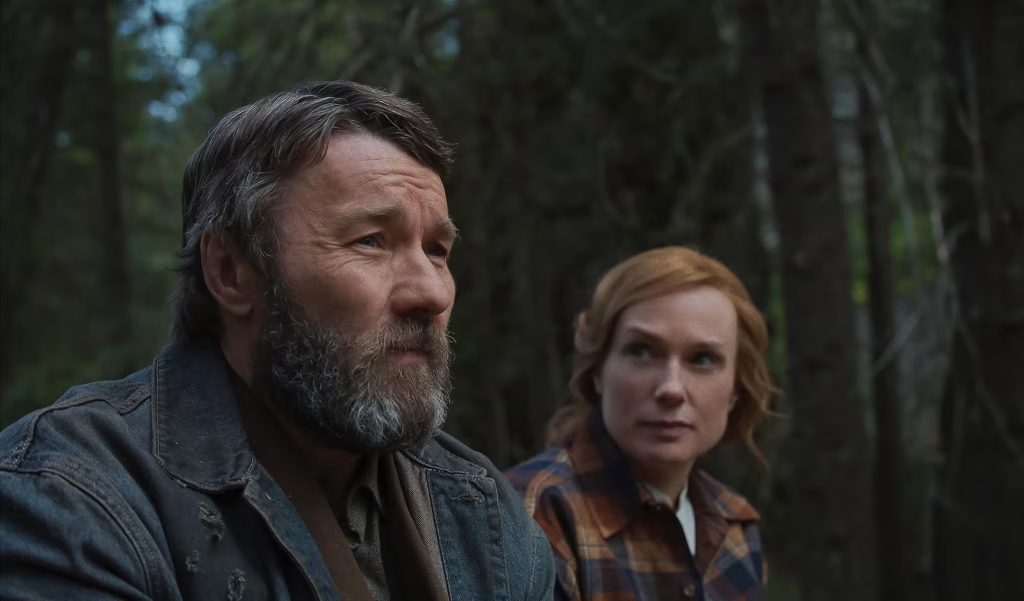
There is loneliness in this movie, but not the dramatic kind. It is quieter than that. It is the loneliness of a man who keeps functioning.
That gives the film a lot of its ache. Robert is shaped by a world where men are expected to push forward and keep their feelings mostly to themselves. He lives close to hardship, close to physical labor, close to danger. The film never romanticizes that too much. There is dignity in his endurance, sure, but there is pain in it too. Survival has a cost.
His relationship with Gladys, played by Felicity Jones, matters so much because it gives the film warmth without turning sentimental. Their connection feels lived in rather than overly polished. It feels precious because the film understands how fragile happiness can be. That fragility is part of what makes the story hurt.
Nature Matters More Than People at First Realize
The landscapes in Train Dreams are not there just to look beautiful, though I am sure they do plenty of that. They matter because they constantly remind you how small a human life can seem against the world. Forests, mountains, rail lines, weather, open space. All of it creates a feeling that Robert is living inside something bigger and older than himself.
That matters because the film is also about change. Robert is part of a world being built and reshaped. Railroads expand. Industry pushes forward. The land is worked on, cut through, used. He is part of that movement, even while the film seems to quietly mourn what gets lost in the process.
It gives the story a strange tension. Human beings are always busy building, moving, naming, claiming. Meanwhile the natural world just keeps existing on its own terms. There is something humbling in that. Maybe even a little spooky. The film seems to understand that people pass through, but the land remembers something different.
The Dreamlike Feeling Is the Point
I suspect some people will watch Train Dreams and wish it were a bit more direct. A bit more explained. A bit more eager to tie things up. I get that. But I also think the hazy, drifting quality is exactly why the film works.
Life rarely feels neat while you are living it. You do not always know what chapter you are in. You do not realize certain moments matter until much later. Some memories stay sharp, others blur, and some come back years later for no obvious reason at all.
What the Movie Is Really Saying

At its heart, Train Dreams is saying that an ordinary life is not a small thing. That is the whole magic trick of it. Robert Grainier is not famous. He is not especially powerful. He is not the kind of man movies usually center with this much patience and care. And yet the film treats his inner life as something vast.
That is what gives the story its emotional force. It is about how people carry loss. It is about the way memory keeps love alive while also making pain harder to escape. It is about loneliness, yes, but also endurance. Not heroic endurance in the chest-thumping sense. Just the plain, difficult endurance of waking up and continuing after your world has changed.
What makes Train Dreams meaningful is that it understands how much of life happens quietly. The biggest things that happen to us are not always public. Sometimes they are private griefs, passing seasons, old memories, a face you cannot forget, a life that looks modest from the outside and feels immense from within.
That is why the film sticks. It looks at one man’s life and finds something huge there. Not because he was extraordinary in the usual way, but because being human is already more mysterious, sad, and beautiful than most films know how to admit.

Rachel Sikkema is a New Zealand-based writer and creative entrepreneur who explores the intersection of film, culture, and modern relationships. Through her articles, she examines how stories shape the way we connect, love and see ourselves – all for God’s glory. When she’s not writing about film and television, she’s watching Dexter and The White Lotus for the third time.